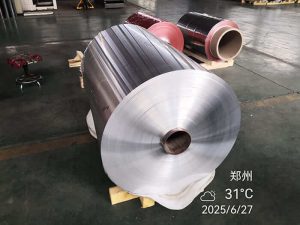
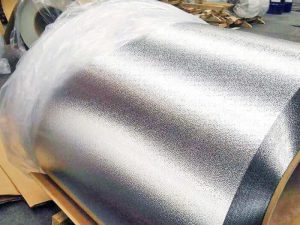
8011 H18 blister aluminum foil: Expert insights, applications, and supplier perspectives
This article presents a comprehensive guide to 8011 H18 blister aluminum foil, focusing on its properties, manufacturing processes, performance in packaging applications, and practical considerations for buyers and specifiers.
It also introduces Huasheng Aluminum as a leading supplier capable of providing high-quality 8011 H18 blister foil, lamination-ready materials, and end-to-end packaging solutions.
The discussion combines data-driven insights, industry benchmarks, and actionable guidance to help manufacturers, brand owners, and converters optimize their blister packaging workflows.
Introduction to 8011 H18 blister aluminum foil
Blister packs are a widely adopted packaging solution for pharmaceuticals, nutraceuticals, consumer healthcare items, and sensitive foods.
The blister foil used in these applications is a specialized aluminum foil that provides barrier performance, formability, and compatibility with sealing layers.
The 8011 H18 variant is among the most popular choices for blister foil due to its combination of ductility, strength, and excellent barrier attributes.
The 8011 alloy belongs to the 8000-series family, which is aluminum with a significant content of manganese and trace alloying elements.
The result is a foil that forms smoothly, resists tearing during high-speed conversion, and maintains barrier integrity when laminated with polymeric sealants and coatings.
The H18 temper denotes a specific level of work hardening—enough to improve strength while preserving adequate malleability for deep-draw forming and reliable curling and sealing during blister process lines.
Key advantages of 8011 H18 blister aluminum foil include:
– Excellent formability for standard blister cavities and unconventional geometries.
– Superior barrier performance against moisture and contaminants when paired with suitable laminates.
– Reliable seal integrity with commonly used pharmaceutical sealants such as heat-sealing coatings and lacquers.
– Consistent thickness tolerances and surface smoothness suitable for high-speed converting equipment.
– Robust compatibility with downstream lamination processes, including cold- and hot-seal laminations, extrusion coatings, and polymeric adhesives.
In practical terms, buyers choose 8011 H18 blister foil when they require a balance of formability, barrier performance, and compatibility with standard lamination chemistries used in pharmaceutical packaging lines.
It is often chosen for tablet and capsule blister packs, sachet packages, and certain food-supplement applications where the foil serves as a protective barrier and a reliable sealing surface.
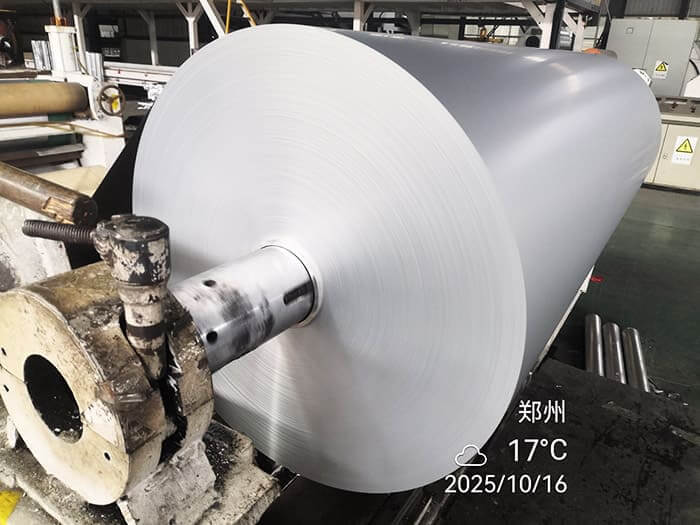
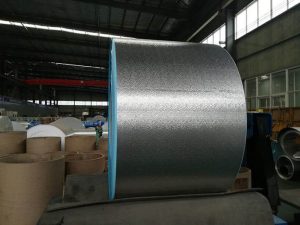
8011 H18 Aluminum Foil Jumbo Roll
Key properties and performance characteristics
Material composition and temper
- Alloy: 8011 (Al-Mn based alloy, optimized for formability and barrier properties)
- Temper: H18 (strain-hardened to a defined level; improves strength relative to O or F temps while maintaining good draw properties)
- Typical thickness range for blister foils: 12 to 40 micrometers (0.012–0.040 mm), with common blister foil being in the 20–30 µm range for the aluminum foil layer and a polymer or lacquer sealant layer applied on the exterior.
- Surface finish: Typically bright, highly uniform surface on the foil side that contacts the product; matte or coated options available on the outer coating surface depending on lamination and packaging requirements.
- Core concept: The combination of a thin, strong foil with an appropriate lamination provides effective barriers against moisture, oxygen, aroma, and contaminants, while enabling reliable sealing and easy opening by consumers.
Mechanical and barrier performance
- Tensile strength (typical for 8011 H18 foil in the standard thickness window): 60–120 MPa (varies with exact thickness and processing history)
- Elongation at break: generally low to moderate, reflecting the ductility and work-hardening state of H18; practical values typically in the 2–10% range for the foil alone
- Puncture resistance: adequate for standard blister packaging lines when combined with proper lamination or coatings; performance is influenced by foil thickness, surface finish, and lamination structure
- Water vapor transmission rate (WVTR): highly dependent on laminate structure; aluminum foil itself provides a strong barrier, while WVTR is dominated by the polymer sealant or laminate layer; typical WVTR for a well-designed blister laminate might be in the low to mid single-digit g/m2/24h range in the presence of breathable laminates, but when a robust foil-metal barrier is used with tight lamination, lower WVTR values are achievable
- Oxygen transmission rate (OTR): similarly influenced by laminate; aluminum foil provides near-zero permeability, while the polymeric layers govern OTR in the finished package
Note: In blister packaging, the aluminum foil layer acts as a primary barrier to moisture and gases, while the lamination—often a combination of polymer films and coatings—provides surface properties for sealing and product presentation.
The 8011 H18 blister aluminum foil is chosen for its compatibility with these laminates and its ability to withstand the mechanical demands of high-speed packaging.
Forming and sealing performance
- Deep-draw capability: 8011 alloys in H18 temper offer good formability in standard blister cavities; the thin foil can be formed into the cavities without cracking while maintaining surface integrity
- Sealing compatibility: compatible with common sealants and seal lacquers used in pharmaceutical packaging, enabling reliable heat-seal bonds or cold-seal processes depending on laminate
- Curl resistance: desirable level of curl control arises from foil thickness, temper, and lamination; appropriate tension management in converting equipment reduces curl-related issues on-line
- Compatibility with printing and marking: the foil surface can be finished to permit printing or laser marking on intended areas, enabling batch codes and product information visible through the laminate structure
Coatings and lamination options
- Polymer coatings: heat-seal coatings, sealing lacquers, or functional barrier coatings applied to the foil prior to lamination to improve adhesion, tear resistance, or barrier properties
- Laminates: commonly uses multilayer structures (polyethylene, polypropylene, PET, or polyamide layers) to achieve the desired moisture barrier, chemical resistance, and sealing characteristics
- Barrier enhancements: additional coatings (e.g., fluorinated coatings for chemical resistance) or adhesive layers to improve lamination strength and product compatibility
- Consumer-facing aesthetics: outer laminate can be designed for glossy or matte finishes and include inked or printed branding visible through the laminate
Manufacturing and supply chain considerations
Manufacturing process overview
- Rolling and annealing: the base aluminum foil is produced through a series of rolling steps, with intermediate anneals to achieve the desired thickness and surface properties
- Tempering: post-work hardening steps produce H18 temper, achieving the required strength and formability balance
- Surface treatment: standard mechanical polishing or surface finishing to achieve the target surface quality; optional surface coatings for anti-tingerprint or printability
- Lamination and coating: for blister packaging, the aluminum foil is typically laminated with polymeric films or seal layers; adhesive systems are chosen to maximize bond strength and barrier performance
- Quality control: inline gauges measure thickness consistency; gloss and surface quality checks ensure defect-free foil; transmittance tests, seal strength, and peel tests confirm packaging performance
Typical production capabilities (Huasheng Aluminum context)
- Capacity ranges: Huasheng Aluminum offers flexible production scales, with the ability to supply standard blister foil runs for pharmaceutical customers, as well as custom runs for niche product lines
- Customization options: thickness range, temper control, surface finish, and coating options; ability to produce laminate-ready foil and supply both base foil and finished laminated structures
- Surface and coating partnerships: working relationships with coating suppliers and lamination houses to deliver complete blister packaging solutions
- Quality systems: ISO 9001-compliant production processes; traceability from material batch to finished product
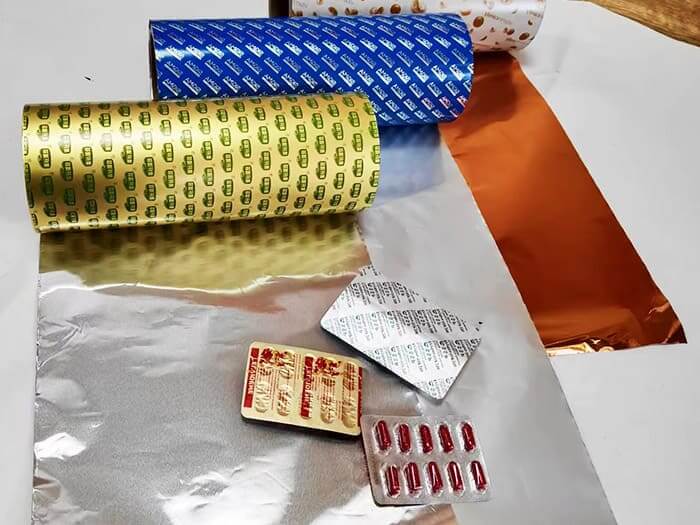
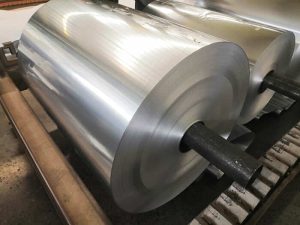
8011 H18 Blister Aluminum Foil
Applications and markets
Primary applications
- Pharmaceutical blister packs: tablets, capsules, and caplets; safety-tab designs; high barrier laminates to preserve product integrity
- Nutraceuticals and dietary supplements: blister packaging for small-volume products with sensitive ingredients
- Food packaging: specific product formats that require barrier protection against moisture and aromas
- Medical devices and diagnostics: sterile barrier packaging employing lidding materials and sealants compatible with 8011 H18 foil
Market-specific considerations
- Regulatory alignment: pharmaceutical packaging requires compliance with pharmacopeias and regulatory frameworks, including packaging performance and seal integrity under storage conditions
- Consumer safety: tamper-evidence features and easy-open designs are critical; foil-laminate structures must support these attributes
- Sustainability and recycling: aluminum foil is highly recyclable; packaging designers should consider end-of-life recycling pathways and minimize lamination layers where feasible
Quality assurance, certifications, and compliance
Certifications and standards
- ISO 9001: Quality management systems for manufacturing and supply
- ISO 14001: Environmental management (where applicable)
- Customer-specific supplier quality agreements and audits
- GMP/GLP considerations for pharmaceutical packaging supply chains
- Compliance with relevant regional packaging standards and regulatory requirements for pharmaceutical and food packaging
In-process and finished-product testing
- Thickness tolerance checks: inline gauges to ensure foil thickness within specified ranges
- Surface inspection: visual and automated inspections for surface defects, pinholes, and scratches
- Seal-strength testing: verify adhesion strength of the seal with specific lid-laminate configurations
- Puncture resistance testing: ensure foil can withstand typical packaging-line mechanical stresses
- Moisture and gas barrier testing: WVTR and OTR evaluation on laminate structures to confirm barrier performance
- Lot traceability: complete traceability from incoming raw material through laminated pack output to final customer
Supplier selection and collaboration with Huasheng Aluminum
- Quality culture: Huasheng Aluminum emphasizes long-term supplier partnerships built on consistent quality, reliability, and service
- Technical support: customers can access technical teams for material specification, testing guidance, and lamination compatibility analysis
- Factory visits: on-site audits and capability assessments are available to verify process controls, equipment maturity, and quality systems
- Customization capacity: ability to tailor thickness, temper, coating choices, and laminate compatibility to meet customer specifications
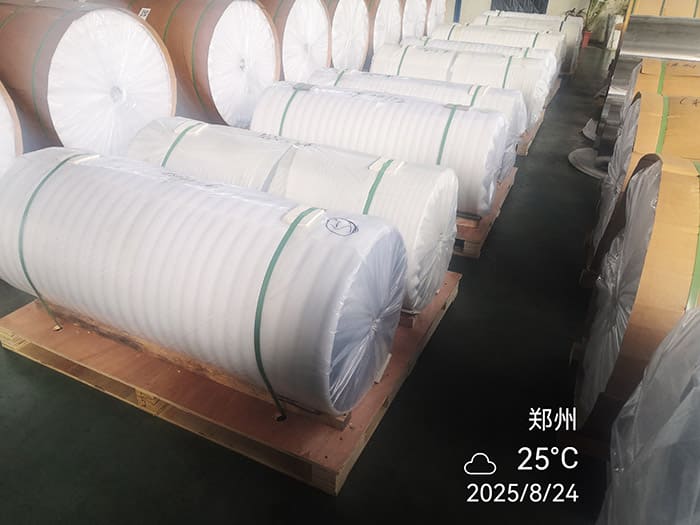
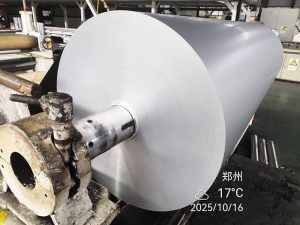
Huasheng Packaged 8011 H18 Aluminum Foil
Comparative analysis: 8011 H18 blister foil vs alternatives
To help procurement and engineering teams make informed decisions, below is a compact comparison of typical alternatives used in blister packaging, with emphasis on alloy, temper, formability, barrier properties, and lamination compatibility.
Table: Key foil options for blister packaging (typical ranges)
| Alloy / Temper |
Typical Thickness (µm) |
Formability |
Barrier performance (foil level) |
Lamination compatibility |
Common applications |
| 8011 H18 blister foil |
12–40 |
Excellent to good; robust in high-speed lines |
Very good; primary barrier with laminate |
Excellent; widely used with standard sealants |
Pharmaceutical blister packs, nutraceuticals |
| 8021-O (annealed) |
12–30 |
Excellent; maximum pliability |
Good; relies more on laminate for barrier |
High compatibility with thin laminates |
Flexible packaging, simple blister-like structures |
| 8079-O or 8006 variants (specialty) |
10–25 |
Moderate; optimized for specific seal and form |
Good to excellent depending on structure |
Good; laminate requirements drive compatibility |
Lightweight packaging with alternative lamination schemes |
| Aluminum foil with hard temper (e.g., 2xxx/7xxx families) |
20–50 |
Moderate; lower formability for deep draws |
High barrier on a metal basis, but notch risk |
Lamination compatibility varies; often used when higher strength is needed |
Specialized packaging with rigid lamination demands |
Notes:
– The 8011 H18 option generally offers a superior mix of formability and barrier performance on a standard blister line, making it a preferred choice for many pharmaceutical and nutraceutical packaging applications.
– 8021-O is commonly used for simpler packaging structures or where maximum formability is required, but barrier requirements depend heavily on laminate structure.
– Actual performance depends on exact thickness, temper, coating/lamination, and line conditions; always validate with supplier-provided data and your own end-use testing.
Packaging structure and lamination options
Lamination concepts for 8011 H18 blister foil
- Laminate A: Aluminum foil / sealant layer / PET or CPP outer film
- Aluminum foil provides barrier against moisture, oxygen, and aromas
- Sealant layer enables heat sealing to the blistered cavities or lid stock
- PET or CPP outer film provides mechanical protection and printability
- Laminate B: Aluminum foil / functional barrier film / sealing layer
- Adds an additional barrier layer to meet stricter WVTR or OTR targets
- Useful for high-value or sensitive products
- Laminate C: Aluminum foil with additional coatings on foil surface (e.g., anti-corrosion or anti-tarnish)
- Used in specialized circumstances
- Lamination considerations
- Adhesive selection: for stability under high-speed processing and storage
- Compatibility with printing and branding: enabling consumer-facing information on outer layers
- Sealing process: compatibility with heat-sealing, impulse sealing, or cold-seal methods
- Regulatory compatibility: ensuring lacquer or coatings used on the foil meet pharmacopeial standards
Lamination performance metrics
- Peel strength: a critical metric to ensure the laminate meets automated opening and consumer handling
- Seal strength: must withstand typical storage and transport conditions without seal failure
- Durability in transport: creasing and mechanical stress resistance on laminated packs
- Barrier retention after lamination: WVTR/OTR performance should be maintained through shelf life
Supplier profile: Huasheng Aluminum
Huasheng Aluminum is a leading supplier in the aluminum packaging industry, with a focused capability in blister foil and lamination-ready materials.
The company emphasizes quality control, customization, and service to customers across global markets. Key strengths include:
- Global supply capability: Ability to serve multinational pharmaceutical companies and regional packaging converters with consistent material performance
- Technical support: Access to materials engineers for material selection, testing protocols, and lamination compatibility
- Certification and quality systems: ISO-based quality management, traceability, and continuous improvement culture
- Customization: Flexibility to adjust thickness, temper, surface finishes, and coating options to meet customer specifications
- End-to-end solutions: From base foil production to laminated packaging solutions, enabling a streamlined procurement process
Huasheng Aluminum’s blister foil products, including 8011 H18 blister aluminum foil, are designed to meet the demanding requirements of pharmaceutical packaging while offering reliability, reproducibility, and performance advantages in modern production environments.
The supplier’s capabilities are well-suited for global manufacturers seeking a trusted partner with scalable capacity and a strong focus on quality and service.
Practical procurement guidance
How to specify 8011 H18 blister foil correctly
- Define the exact alloy and temper: 8011 H18
- State the thickness range and tolerances: e.g., 20–30 µm ±2 µm (confirm with supplier)
- Specify surface finish and coating needs: bare foil, lacquered, or coated surfaces
- Lamination requirements: specify laminate structure, sealant type, and adhesive
- Barrier targets: WVTR/OTR expectations based on product and shelf life
- Regulatory requirements: pharmacopeial or local regulatory expectations for materials in contact with active ingredients
- Quality documentation: provide certificates of compliance, material test reports, and lot traceability
FAQs About 8011 H18 Blister Aluminum Foil
What is 8011 H18 blister aluminum foil, and why is it popular for pharmaceutical packaging?
8011 H18 is an aluminum foil alloy (8000-series) processed to H18 temper, offering good formability, strength, and barrier performance.
It is widely used in pharmaceutical blister packaging due to compatibility with common sealants and laminates, and its ability to form tight seals on high-speed lines.
How does H18 temper affect packaging performance?
H18 temper provides a balance of strength and formability. It improves puncture resistance and line stability while maintaining adequate drawability for blister cavities.
What thickness should be specified for 8011 H18 blister foil?
Typical blister foil applications use foil thickness in the 20–30 µm range, with tolerance depending on supplier capabilities and process controls.
For specialized needs, other thicknesses may be selected within the broader 12–40 µm window.
What lamination options work best with 8011 H18 blister foil?
Common lamination options include polymer-based sealants and coatings, PET/PP outer films, and one or more barrier layers to meet specific WVTR/OTR targets.
The laminate is selected based on product requirements, regulatory constraints, and line capabilities.
Can 8011 H18 blister aluminum foil be used for non-pharmaceutical packaging?
Yes. While widely used in pharma and nutraceuticals, 8011 H18 blister foil is suitable for other sensitive packaging needs that require barrier properties, sealability, and compatibility with lamination.
Conclusion
8011 H18 blister aluminum foil represents an established solution for modern blister packaging needs, delivering a practical balance of formability, barrier performance, and lamination compatibility.
Its performance is intimately tied to the laminate structure and sealant systems chosen for a given product, and successful packaging relies on careful specification, rigorous testing, and close collaboration across the supply chain.
Huasheng Aluminum stands as a credible and capable supplier in this domain, offering not only base foil products but also laminated packaging solutions and technical support to help customers optimize their packaging architectures.
Through a combination of quality assurance, customization options, and a service-minded approach, Huasheng Aluminum can support pharmaceutical, nutraceutical, and consumer packaging programs with consistent material performance across global markets.
If you are specifying 8011 H18 blister foil for a critical packaging program, consider the holistic view: material properties, lamination design, regulatory alignment, process compatibility, and supplier collaboration.
With these elements in place, you can improve on-pack performance, reduce waste, and realize more reliable, consumer-friendly packaging outcomes.
Share with PDF: Download