1. Introduction
8011 Embossed Coated Aluminum Foil is a functional aluminum foil product designed for applications where barrier performance, surface texture, coating functionality, and processing stability all matter at the same time.
It is widely used in packaging, insulation, decorative wrapping, and composite material structures that require more than the performance of plain foil.
When we talk about “Embossed Coated Aluminum Foil,” we’re referring to a sophisticated composite material that integrates three powerful features: the robust performance of an 8xxx series alloy (like 8011), a mechanically created textured surface (embossing), and a functional chemical layer (coating).
This synergistic combination unlocks a new level of performance and aesthetic appeal.
This article will thoroughly explore the structure, intricate manufacturing process, myriad advantages, and diverse applications of 8011 embossed coated aluminum foil, providing an in-depth, multi-faceted analysis for industry professionals and enthusiasts alike.

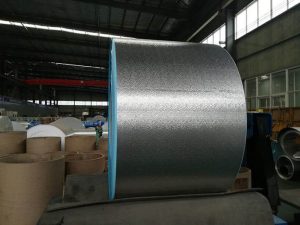
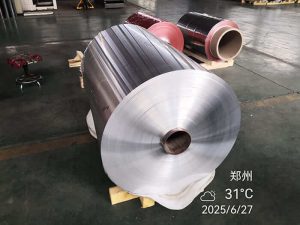
8011 Embossed Coated Aluminum Foil
2. What is 8011 Embossed Coated Aluminum Foil?
2.1 8011 Aluminum Foil Introduction
8011 aluminum foil belongs to the Al-Fe-Si alloy family and is widely used in thin-gauge foil applications.
It is not a high-strength structural alloy. Instead, it is designed for good formability, stable rolling behavior, surface quality, and reliable barrier performance.
8011 is a non-heat-treatable alloy, belonging to the Al-Fe-Si family.
Chemical composition:
- Iron (Fe): 0.6 – 1.0%
- Silicon (Si): 0.5 – 0.9%
- Other elements (Cu, Mn, Mg, Zn, Ti): Trace amounts, typically <0.1% each
- Aluminum (Al): Remainder
Significance of Gauge:
The thickness of the 8011 foil is a critical determinant of its performance, cost, and suitability for specific applications. Common gauges for this product range from 10 microns to 50 microns.
- Thinner Gauges (10-20 micron): Provide exceptional barrier properties with minimal material usage, ideal for flexible packaging where weight and cost are critical. The superior pinhole resistance of 8011 is especially valuable here.
- Thicker Gauges (30-50 micron): Offer enhanced mechanical strength, puncture resistance, and improved rigidity for applications requiring more robust protection or structural support.
Choosing the appropriate gauge involves a careful balance of desired mechanical strength, barrier performance, cost constraints, and downstream processing requirements.
2.2 Embossing
Embossing is a mechanical process that creates a raised or depressed pattern on the surface of the aluminum foil.
This is typically achieved by passing the foil between two engraved rollers: one with a positive (raised) pattern and the other with a negative (depressed) pattern, or sometimes between one engraved roller and a smooth backing roller.
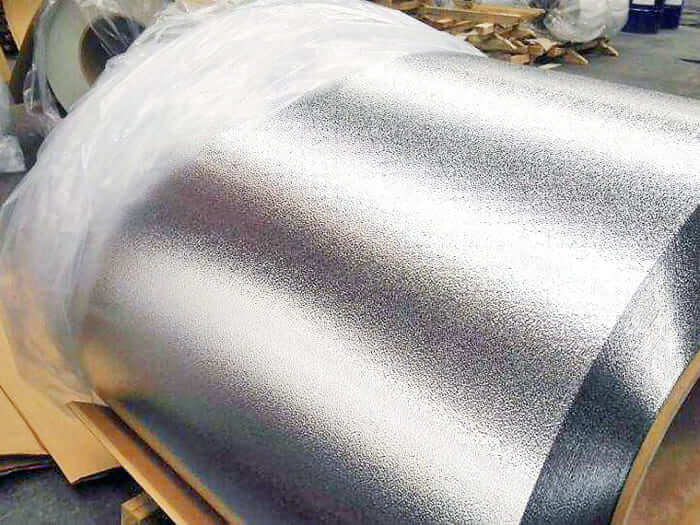
Common patterns include “orange peel,” diamond, parallel lines, or custom designs.

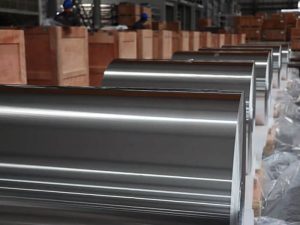
Embossed Aluminum Foil Production
2.3 Coating
The functional coating applied to 8011 embossed aluminum foil is tailored to meet specific end-use requirements:
- Heat Seal Coatings (e.g., PE, PP, PVC, Surlyn): These thermoplastic polymers form a strong, hermetic seal when subjected to heat and pressure. They are crucial for lidding, blister packs, and other sealed packaging, providing reliable bonds to various container materials.
- Protective Coatings (e.g., Lacquers, Varnishes): Applied for abrasion resistance, chemical resistance (e.g., against aggressive product contents), and enhanced corrosion protection for the aluminum substrate. They can also provide a specific gloss level or matte finish.
- Release Coatings (e.g., Silicone-based): Designed to prevent sticking. These are vital for applications like non-stick baking liners, where easy food release is paramount.
- Decorative/Print Primers: Used to improve the adhesion of printing inks, allowing for high-quality, vibrant graphics and branding directly onto the foil surface.
3. Why 8011 is suitable for embossed coated foil
The success of an embossed coated foil depends heavily on the substrate.
8011 is well suited to this role because it supports both embossing and coating without losing the essential properties needed for foil performance.
1. Good formability
8011 foil can be rolled into thin, uniform stock and then embossed without excessive cracking when the temper is properly selected.
2. Stable production behavior
It responds well to industrial foil processing, which helps maintain consistent gauge, flatness, and surface quality.
3. Good corrosion resistance
This is important for food packaging, insulation facings, and other environments where moisture exposure is possible.
4. Strong coating compatibility
8011 accepts a wide range of coatings, including protective, decorative, adhesive, and heat-seal formulations.
5. Balanced strength and flexibility
It is not intended for structural loading, but it provides enough mechanical stability for converting and end use.

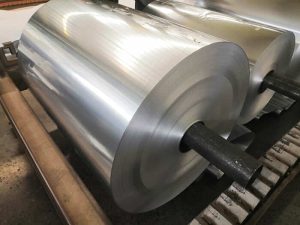
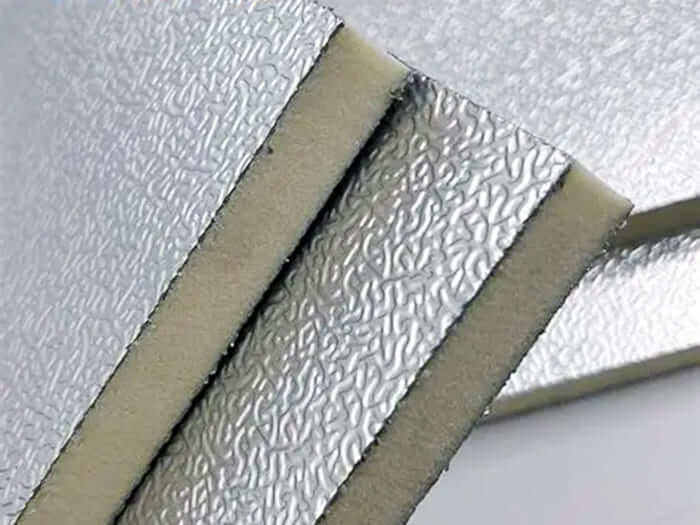
8011 Embossed Coated Aluminum Foil For PIR
4. Manufacturing Process of 8011 Embossed Coated Aluminum Foil
4.1 8011 Alloy Ingot Production
The manufacturing journey commences with the careful casting of 8011 alloy ingots.
This involves melting high-purity aluminum and introducing precise amounts of iron and silicon.
The molten alloy is then cast into large, rectangular ingots through methods like direct chill (DC) casting, ensuring a consistent and homogeneous metallurgical structure essential for subsequent rolling.
4.2 Hot and Cold Rolling
- Hot Rolling: The ingots are pre-heated to temperatures in the range of 400-550°C. They then pass through a series of hot rolling mills, progressively reducing their thickness to an intermediate gauge (e.g., 5-10 mm). This process refines the grain structure, removes casting defects, and improves the overall workability of the alloy.
- Cold Rolling: Following hot rolling, the material undergoes multiple passes through cold rolling mills at ambient temperature. This critical stage reduces the foil to its final desired thin gauge (e.g., 10-50 microns) with high precision. Cold rolling also work-hardens the foil, increasing its tensile strength. Precise control of lubrication and tension is vital to prevent breakage and minimize pinhole formation, particularly as the foil becomes extremely thin.
4.3 Annealing and Surface Pre-treatment
- Annealing: After cold rolling, the foil is typically annealed (heated to a specific temperature, e.g., 250-350°C, and slowly cooled) to achieve the desired temper, usually the ‘O’ (fully annealed/soft) temper. Annealing restores the foil’s ductility, making it soft and pliable, which is essential for embossing and subsequent forming operations without cracking.
- Surface Pre-treatment: A clean and receptive surface is paramount for optimal coating adhesion. The annealed foil undergoes meticulous cleaning (e.g., degreasing) to remove any residual rolling oils or contaminants. Subsequently, techniques like corona treatment (using high-frequency electrical discharge to modify the surface energy) or the application of a thin primer layer enhance the foil’s surface adhesion properties, ensuring a strong and lasting bond with the functional coating.
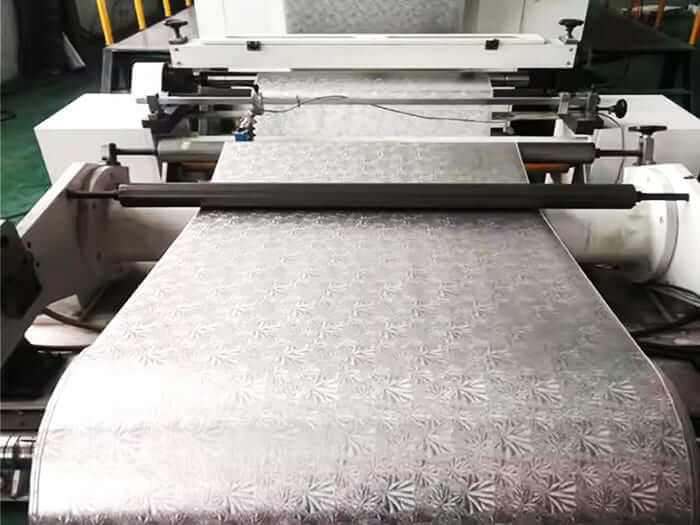
4.4 Embossing Process
The cleaned and pre-treated foil then proceeds to the embossing unit. Here, it passes between a pair of precisely engraved rollers.
The top roller features a raised pattern, and the bottom roller typically has a corresponding depressed pattern (or is a smooth pressure roller).
The pressure and sometimes temperature of these rollers are meticulously controlled to create a uniform, well-defined textured pattern on the foil surface.
The depth and clarity of the embossing are critical for achieving the desired functional and aesthetic benefits.
4.5 Coating Application
The specific functional coating (e.g., PE, lacquer, silicone) is applied to the embossed foil using the most appropriate method:
- Extrusion Coating: For PE/PP, molten polymer is extruded as a continuous film directly onto the embossed surface and immediately cooled to bond.
- Gravure or Roller Coating: For liquid lacquers, primers, or release coatings, a controlled amount of liquid is transferred to the embossed foil via engraved or smooth rollers.
Control over coating thickness, viscosity, and application speed ensures a uniform and consistent functional layer, even across the textured surface.
4.6 Curing/Drying
Following coating, the material undergoes a curing or drying process. For extrusion coatings, rapid cooling sets the polymer.
For liquid coatings, the foil passes through a drying oven where solvents evaporate, and the coating cures, ensuring complete setting and optimal performance characteristics.
4.7 Slitting and Winding
The final stage involves precision slitting of the wide rolls of 8011 embossed coated aluminum foil into narrower widths according to customer specifications.
Advanced slitting machines with precise tension control ensure clean, straight-cut edges and tightly wound rolls.
Careful winding onto core materials prevents telescoping, creasing, or other damage that could affect performance on downstream packaging or processing lines.
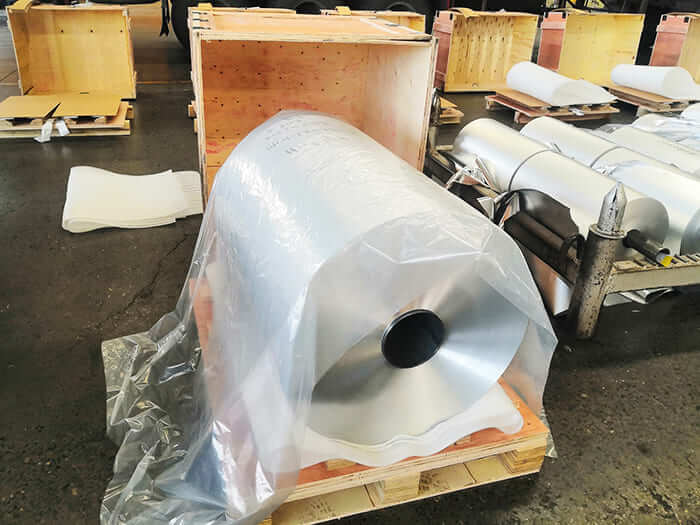
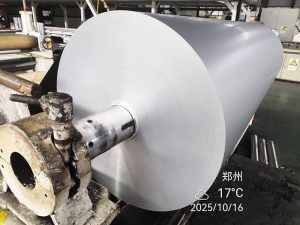
Huawei Packaged Aluminum Foil Jumbo Roll
5. Core Advantages of 8011 Embossed Coated Aluminum Foil
The synergistic integration of 8011 alloy, embossing, and specific coatings bestows 8011 embossed coated aluminum foil with a formidable array of advantages and performance attributes for diverse applications.
5.1 Enhanced Barrier Performance
- Superior Pinhole Resistance of 8011: The 8011 alloy’s inherent metallurgical structure significantly reduces the occurrence of microscopic pinholes during rolling, especially at thinner gauges. This foundational strength is then complemented by the coating.
- Continuous Protective Coating: The functional coating provides an additional, continuous, and often impermeable layer. This combination delivers an exceptional barrier against:
- Moisture Vapor (H2O): Typically achieving a WVTR (Water Vapor Transmission Rate) of <0.01 g/(m².24h) at 38°C and 90% RH.
- Oxygen (O2): Exhibiting an OTR (Oxygen Transmission Rate) of <0.01 cm³/(m².24h.atm) at 23°C and 0% RH.
- Light (UV and visible spectrum): Providing virtually 0% light transmission.
- Aroma Transfer: Preventing the loss of volatile flavor compounds and the ingress of unwanted odors.
This comprehensive barrier critically extends product shelf life and preserves sensory qualities.
5.2 Improved Formability and Dead-Fold Characteristics
- Embossing’s Contribution: The textured surface from embossing significantly enhances the foil’s flexibility and reduces its “spring-back” tendency. This allows the material to hold its formed shape much better, a property known as dead-fold.
- Reduced Tearing: Embossing distributes stress more evenly during forming, making the foil less prone to tearing or cracking during deep drawing, bending, or wrapping operations. This is vital for complex packaging shapes like tray forming, bottle cap liners, or intricate confectionery wraps.
5.3 Functional Sealing/Release Properties
- Tailored Coatings: The applied coating directly dictates the interface behavior. Heat seal coatings (e.g., PE, PP) enable strong, consistent, and often peelable seals to various substrates, with customized peel strengths (e.g., an average peel strength of 2-5 N/15mm for an easy-peel application). Release coatings (e.g., silicone) provide precise non-stick properties (e.g., release force can be tuned from 10-50 mN/cm). This customization is crucial for packaging functionality.
5.4 Aesthetic Appeal and Brand Differentiation
- Tactile and Visual Premium: Embossing adds a unique tactile texture and visual depth, imparting a premium and sophisticated feel to the product. This helps differentiate brands in a crowded market.
- Enhanced Printability: When combined with print primers, the foil offers an excellent surface for high-quality, vibrant graphics, product information, and branding elements, boosting shelf appeal.
5.5 Handling and Processing Benefits
- Reduced Sticking: The textured surface minimizes contact between stacked layers of foil, preventing blocking or sticking and facilitating smoother unwinding from rolls.
- Improved Grip: The embossed pattern can offer better grip for handling by consumers.
- Masking Imperfections: Embossing can effectively mask minor surface imperfections on the base foil, improving the overall aesthetic quality.
5.6 Chemical and Abrasion Resistance
- Protective Coatings: Lacquers or specialized polymer coatings create a durable layer that shields the aluminum substrate from corrosive product contents (e.g., acidic foods, aggressive chemicals) or external mechanical abrasion, thereby extending the product’s integrity and lifespan.
5.7 Thermal Stability
- The inherent thermal stability of 8011 aluminum alloy, coupled with the appropriate coating, ensures the material maintains its integrity and functional properties across a wide temperature range, from deep freezing to baking (for ovenable applications) or sterilization processes.
6. Diverse Applications of 8011 Embossed Coated Aluminum Foil
The multi-functional nature of 8011 embossed coated aluminum foil makes it highly versatile, finding critical applications across numerous industries:
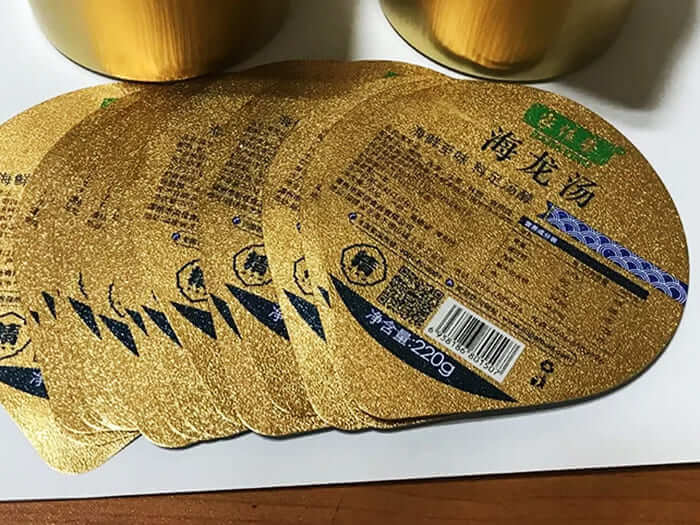
Packaging Used 8011 Embossed Coated Aluminum Foil
6.1 Food Packaging
- Bottle/Jar Cap Liners: Widely used as part of induction seal liners or press-in liners for food, beverage, and condiment bottles/jars. The coating provides the hermetic seal and tamper evidence.
- Dairy Lidding: For yogurt, cream cheese, individual dessert cups. Embossing aids in easy peel functionality, while the coating ensures a strong, hygienic seal to plastic containers.
- Food Trays/Containers: For ovenable ready meals or airline catering. Embossing adds rigidity and allows for complex forming, with coatings providing non-stick properties or sealing capabilities.
- Confectionery/Chocolate Wrappers: Embossed for a premium feel and superior dead-fold, allowing the wrapper to hold its twisted shape, while coatings protect against moisture and preserve freshness.
- Baking Applications: Silicone-coated, embossed foils serve as non-stick baking liners or grill toppers, offering easy release and heat distribution.
6.2 Pharmaceutical Packaging
- Blister Pack Lidding: Forms the crucial lidding for pharmaceutical blister packs, sealing against PVC/PVDC/PVCTFE films. Embossing can be used for brand identification or to create a matte finish, while the coating provides a sterile, child-resistant, yet peelable seal, protecting active ingredients from moisture and light.
- Medical Device Packaging: For single-use medical devices requiring a sterile barrier and conformable packaging.
6.3 Industrial Applications
- HVAC Ducting/Insulation: Embossed foil, often with a coated adhesive backing, provides flexible and durable insulation jacketing for HVAC ducts and pipes, offering thermal reflectivity and moisture barrier.
- Cable Shielding: Used in communication and power cables as an electromagnetic interference (EMI) shield. Embossing enhances flexibility and reduces signal interference.
6.4 Household Applications
- Heavy-Duty Aluminum Foil: Some premium household foils are embossed for increased strength, flexibility, and non-stick properties (if coated).
- Barbecue Liners: Embossed for rigidity and easier handling on grills.
7. Comparison with similar products
| Product / Material |
Barrier Performance |
Surface Appearance |
Stiffness After Treatment |
Coating Compatibility |
Cost Efficiency |
Main Advantage |
Main Limitation |
Typical Use |
| 8011 Embossed Coated Aluminum Foil |
Excellent |
Very good |
Improved |
Excellent |
High |
Balanced function and appearance |
Requires controlled processing |
Packaging, insulation, decorative foil |
| Plain 8011 Aluminum Foil |
Excellent |
Fair |
Lower |
Very good |
High |
Simple and economical |
Less visual appeal and lower surface body |
General foil applications |
| 8079 Embossed Coated Foil |
Excellent |
Very good |
Improved |
Excellent |
Medium |
Similar functional performance |
Not always preferred for every process |
Packaging and laminated products |
| Embossed PET Film |
Good |
Very good |
Good |
Good |
Medium |
Lightweight and decorative |
Lower barrier than aluminum foil |
Decorative and laminate products |
| Coated Paper Laminates |
Moderate |
Good |
Moderate |
Good |
Medium |
Easy to print and handle |
Lower moisture barrier |
Light packaging and wrapping |
| Aluminum Composite Laminate |
Excellent |
Very good |
Very good |
Excellent |
Lower |
High-end functional structure |
More complex and costly |
Premium industrial and packaging applications |
8. Conclusion
8011 Embossed Coated Aluminum Foil is a highly practical engineered material that combines the barrier performance of aluminum foil, the surface benefits of embossing, and the functional value of coating.
It is widely used because it offers a strong balance of appearance, durability, processability, and cost efficiency.
The 8011 alloy provides a reliable substrate. Embossing improves texture, stiffness, and handling.
Coating adds the final functional layer needed for the target application. Together, these elements create a foil product that can meet demanding requirements in packaging, insulation, and industrial use.
In short, 8011 embossed coated aluminum foil is not just a decorative foil. It is a multi-functional material designed to perform consistently in modern production systems and real-world applications.
FAQs About 8011 Embossed Coated Aluminum Foil
Why emboss 8011 aluminum foil?
Embossing improves appearance, grip, body, and surface functionality while keeping the foil lightweight.
What does the coating do?
The coating can provide protection, printability, sealing ability, or decorative effect depending on the application.
Is 8011 suitable for thin foil products?
Yes. 8011 is widely used in thin-gauge foil manufacturing because it offers stable processing and good formability.
Does embossing reduce barrier performance?
The foil substrate still provides excellent barrier performance, though final performance depends on the complete product structure.
Where is coated embossed foil most commonly used?
It is commonly used in packaging, insulation facings, laminated structures, and decorative protective applications.