| Alloy | 3003 |
| Temper | O, H14 |
| Diameter Range (mm) | 100-1400 mm |
| Thickness Range (mm) | 0.2-10 mm |
| Applications | Pressure Cooker |
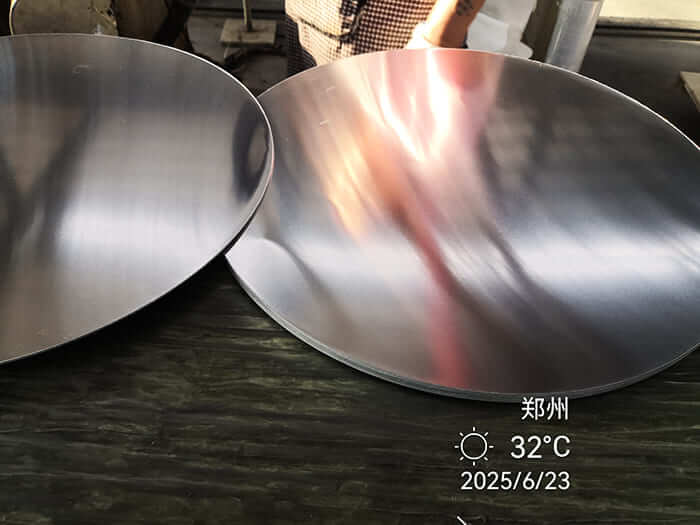
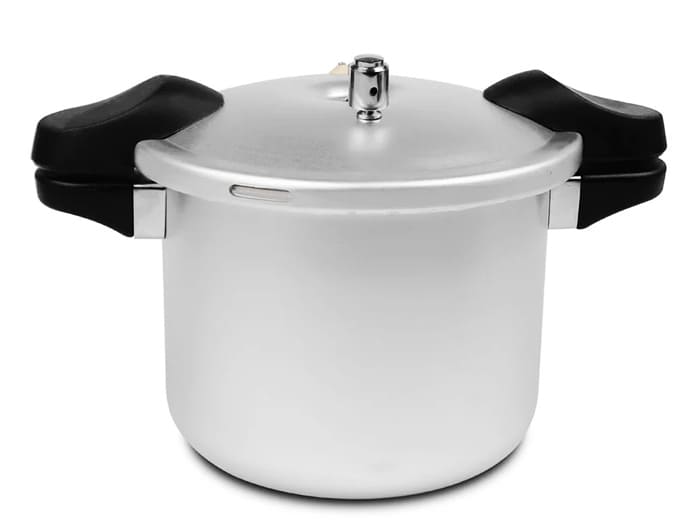
3003 aluminum circle for pressure cooker is a specially engineered circular blank that serves as the foundational material for manufacturing pressure cooker bodies and inner liners.
As pressure cookers operate under elevated internal pressure (typically 0.7-1.0 bar above atmospheric pressure) and high temperatures (up to 120°C), the base material must possess exceptional strength, thermal conductivity, and structural integrity.
3003 aluminum alloy, with its manganese content of 1.0-1.5% , delivers an optimal balance of mechanical strength (tensile strength 150-180 MPa in H14 temper), formability (elongation ≥8% in H14 temper), and corrosion resistance, making it the preferred material for pressure cooker manufacturing.
The aluminum circle serves as the starting blank for deep drawing the one-piece seamless pot body—a design critical for withstanding internal pressure without leakage.
This comprehensive analysis explores the material’s metallurgical composition, mechanical properties, manufacturing processes, application requirements, and comparative advantages, providing a definitive reference for pressure cooker manufacturers, quality engineers, and procurement specialists.
3003 Aluminum Circle for Pressure Cooker
3003 aluminum belongs to the aluminum-manganese (Al-Mn) series of non-heat-treatable alloys.
Its properties are primarily controlled through cold working rather than heat treatment.
The manganese addition provides solid-solution strengthening, making it approximately 20% stronger than commercially pure aluminum (1100 series) while maintaining excellent formability.
The chemical composition of 3003 aluminum alloy is tightly controlled to ensure consistent performance:
| Element | Content (wt. %) | Function and Effect |
|---|---|---|
| Aluminum (Al) | Balance | Forms the alloy matrix, ensuring basic plasticity and thermal conductivity |
| Manganese (Mn) | 1.0–1.5% | Primary strengthening element; improves strength, corrosion resistance, and deep drawing performance |
| Iron (Fe) | ≤ 0.7% | Impurity element; limited amounts refine grains, excess reduces plasticity |
| Silicon (Si) | ≤ 0.6% | Impurity element; slight influence on formability, must be controlled |
| Copper (Cu) | 0.05–0.20% | Residual element; excess reduces corrosion resistance |
| Zinc (Zn) | ≤ 0.10% | Residual element with minor impact on properties |
| Others (each) | ≤ 0.05% | Prevent adverse effects on alloy performance |
| Others (total) | ≤ 0.15% | Ensures compositional uniformity and stable properties |
For pressure cooker applications, two primary tempers are commonly specified, depending on the forming requirements and final strength needs:
| Temper | Characteristics | Tensile Strength (MPa) | Elongation (%) | Application |
|---|---|---|---|---|
| O Temper (Annealed) | Fully soft, maximum ductility | 110-140 | ≥20 | Multi-stage deep drawing, complex shapes requiring severe deformation |
| H14 Temper (Half-Hard) | Strain-hardened, balanced properties | 150-180 | ≥8 | Standard pressure cooker bodies—optimal balance of formability and final strength |
The H14 temper is most commonly specified for pressure cookers, providing sufficient formability for the deep drawing process while delivering the mechanical strength necessary for pressure containment in the final product.
Other available tempers include H12, H16, H18, H22, H24, H26, and H32, which offer different balances of strength and ductility for specialized applications.
The specific properties of 3003 aluminum circle, particularly in the ‘O’ temper, are crucial for its pressure cooker application:
| Property | Value (O Temper) | Relevance for Pressure Cookers |
| Density | ~2.73 g/cm³ | Lightweight, easy to handle, reduced shipping costs. |
| Melting Point | ~630-655 °C | Sufficiently high to withstand cooking temperatures (max ~121°C under pressure) without risk. |
| Thermal Conductivity | ~193 W/(m·K) | Excellent: Rapid and even heat distribution, fast cooking, energy efficiency, prevents hot spots. |
| Coefficient of Thermal Expansion | ~23.2 µm/(m·°C) | Important for dimensional stability during heating/cooling cycles. |
| Tensile Strength | 110-140 MPa (16-20 ksi) | Sufficient strength to safely contain internal pressure (e.g., 15 psi operating pressure is ~0.1 MPa). |
| Yield Strength | 40-75 MPa (6-11 ksi) | Resistance to permanent deformation under normal operating conditions. |
| Elongation (% in 50mm) | 20-30% | Excellent Formability: Allows for severe deep drawing into complex cooker body shapes without fracture. |
| Hardness (Brinell) | ~35 HB | Moderately soft, easy to form, but can be susceptible to scratching if not surface-treated. |
| Corrosion Resistance | Good (atmospheric, fresh water) | Resists common food acids and alkalis; generally suitable for food contact, though prolonged contact with highly acidic/alkaline food should be managed. |
3003 aluminum circles for pressure cooker applications are manufactured to precise specifications to ensure consistent forming behavior and final product performance:
| Parameter | Typical Range | Tolerance |
|---|---|---|
| Diameter | 200 – 500 mm (depending on capacity) | ±0.5 mm |
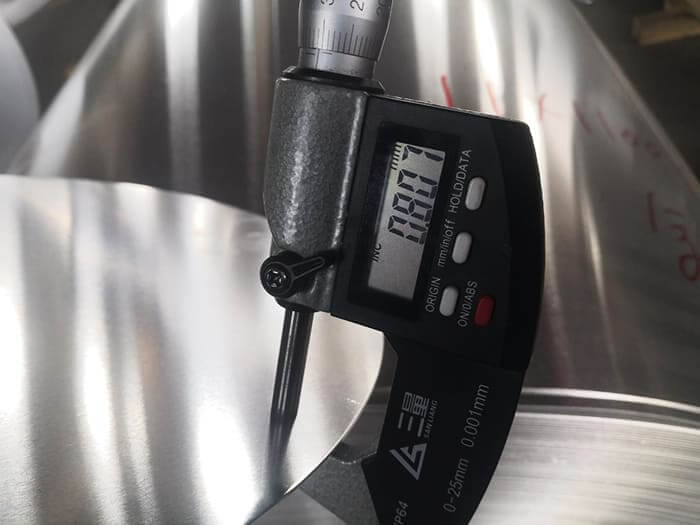
| Thickness | 2.0 – 4.0 mm (pressure-rated) | ±0.05 – 0.10 mm |
| Thickness Gradient | ≤ 0.03 mm across disc | Ensures uniform wall thickness after drawing |
| Flatness | ≤ 2 mm per meter | Ensures proper material flow during forming |
| Surface Roughness (Ra) | 0.2 – 0.8 μm | Affects coating adhesion |
| Edge Condition | Burr-free, smooth | No cracks or tears that could initiate forming defects |
| Surface Finish | Mill finish | Clean, oil-free, defect-free |
Standard specifications are available in thicknesses from 0.50 mm to 6.00 mm and diameters from 100 mm to 1200 mm, conforming to international standards including GB/T3880-2006, ASTM B209, and EN 573.
3003 Aluminum Circle Thickness Measurement
The selection of 3003 aluminum circles for pressure cooker manufacturing is driven by multiple compelling advantages that address the demanding requirements of pressure vessel applications.
Pressure cookers require a seamless, one-piece body to ensure structural integrity under pressure. 3003 aluminum’s excellent formability enables:
The O temper offers elongation ≥20% , making it ideal for complex, multi-stage deep drawing operations.
Pressure cookers must withstand repeated pressurization cycles without failure. 3003-H14 temper delivers:
| Safety Requirement | How 3003 Addresses It |
|---|---|
| Pressure resistance | Tensile strength 150-180 MPa withstands operating pressure (0.7-1.0 bar) plus safety margin |
| Burst pressure margin | Typically designed for 3-5× operating pressure |
| Cyclic pressure fatigue | Good fatigue resistance for thousands of pressurization cycles |
| Deformation resistance | Yield strength 130-160 MPa prevents bulging under pressure |
Cooking efficiency depends critically on heat transfer. 3003 aluminum offers:
3003 aluminum circles for pressure cookers must meet stringent food contact regulations, including:
The natural oxide layer on aluminum is stable and inert, preventing interaction with food during cooking.
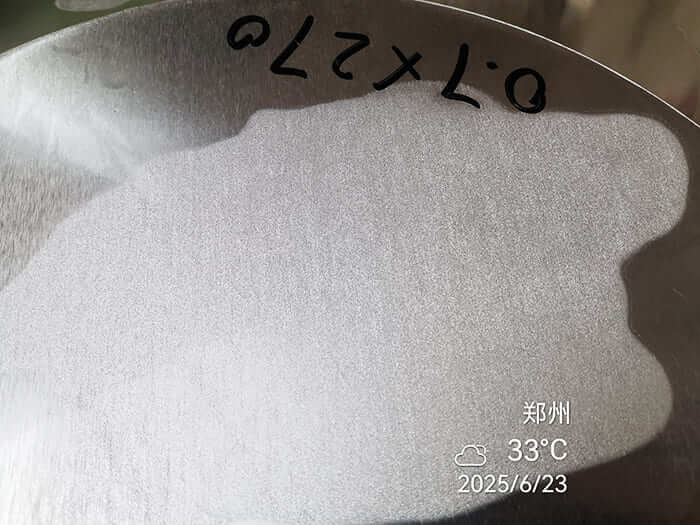
Huawei Aluminum Disc Grain Size Test
While not as corrosion-resistant as stainless steel, 3003 provides adequate protection for pressure cooker applications:
3003 aluminum offers an optimal balance of performance and cost:
To meet the strict requirements of pressure cookware, the manufacturing process of 3003 aluminum alloy circles must be tightly controlled at every stage.
The manufacturing journey begins with high-purity aluminum ingots (typically ≥99.7% Al).
Precise amounts of manganese (1.0-1.5% ) are added as an alloying element to achieve the target composition. Key steps include:
The rolling process progressively reduces aluminum thickness through multiple stages:
| Stage | Description | Key Controls |
|---|---|---|
| Homogenization Annealing | Heat treatment to eliminate segregation and internal stress | Temperature uniformity, soak time |
| Hot Rolling | Initial breakdown of cast structure at elevated temperature | Temperature control, surface quality |
| Cold Rolling | Progressive thickness reduction at room temperature | Roll clarity, surface roughness, rolling oil |
| Intermediate Annealing | Stress relief and grain recrystallization (as required) | Temperature profile, atmosphere control |
| Finish Rolling | Final gauge achievement to specified thickness | Speed, tension, X-ray gauging |
| Leveling | Tension leveling for flatness improvement | Roll configuration, tension control |
DC (Direct Chill) hot rolled material is preferred for cookware applications due to its excellent deep drawing and spinning characteristics.
Annealing is a critical thermal treatment that determines the final temper and formability of the circles:
| Parameter | O Temper Specification | H14 Temper Specification |
|---|---|---|
| Annealing Temperature | 350-420°C | 250-350°C |
| Purpose | Complete recrystallization, maximum ductility | Partial annealing, balanced properties |
| Grain Size Control | Fine, uniform grains (20-50 μm) | Controlled grain structure |
| Cooling Rate | Slow, controlled | Controlled to achieve target temper |
Depending on the final application and customer requirements, circles may receive surface treatments:
| Treatment | Purpose | Application |
|---|---|---|
| Degreasing | Remove rolling oils and contaminants | All circles before packaging |
| Chemical Polishing | Improve surface brightness | Premium cookware |
| Mechanical Polishing | Achieve specific surface finish | Visible surfaces |
| Anodizing | Hard, durable surface | Enhanced durability and aesthetics |
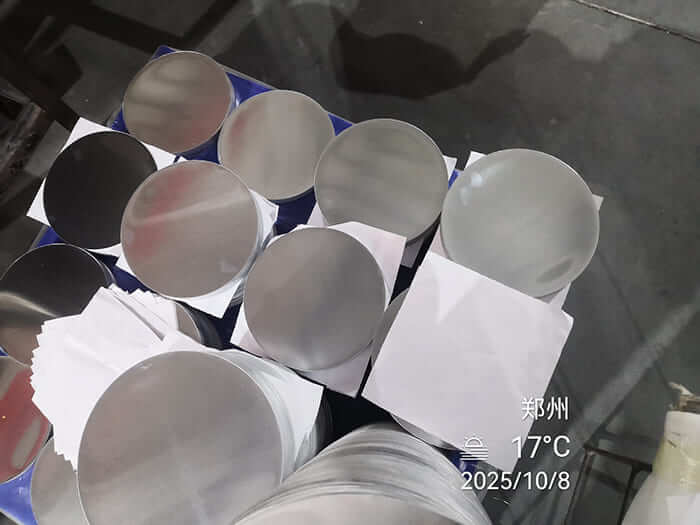
3003 Aluminum Circle Production
Disc blanking converts the sheet or coil into individual circular blanks through precision stamping:
Process Parameters:
High-precision blanking is essential to prevent edge defects and stress concentration that could lead to cracking during deep drawing.
After blanking, circles undergo final inspection and are packaged for shipment.
Standard packaging includes bubble plastic bag inside, anti-moisture paper wrapping, carton covering, and wooden pallets for sea-worthy export.
3003 aluminum alloy circles find extensive application in pressure cooker manufacturing, serving as the base material for critical components.
The primary application is in gas and electric pressure cookers for domestic use. These require:
Typical thickness for household pressure cookers ranges from 1.2 mm to 2.0 mm after forming.
3003 Aluminum Circle Household Pressure Cooker
Large-capacity pressure cookers for restaurants and catering services demand:
3003 aluminum circles are also used in specialized applications:
Beyond traditional pressure cookers, 3003 aluminum circles are used for:
In the field of pressure cooker manufacturing, the main alternative materials for 3003 aluminum alloy circles include stainless steel, 5052 aluminum alloy, and pure aluminum (1050/1060).
The following comprehensive comparison table integrates all key dimensions to help manufacturers select the optimal material for their specific application requirements.
| Comparison Dimension | 3003 Aluminum | Stainless Steel (304) | 5052 Aluminum | 1060 Aluminum |
|---|---|---|---|---|
| Tensile Strength (MPa) | 150-180 (H14) | ≥515 | 170-210 | ≤95 (O temper) |
| Yield Strength (MPa) | 130-160 (H14) | ≥200 | 130-180 | 20-30 (O temper) |
| Elongation (%) | ≥8 (H14) | ≤15 (difficult forming) | ≥18 (O temper) | ≥25 (O temper) |
| Deep Drawing Formability | Excellent | Poor | Good | Excellent |
| Thermal Conductivity (W/m·K) | 190 | 15-16 | 170 | 235 |
| Density (g/cm³) | 2.73 | 7.9-8.0 | 2.68 | 2.71 |
| Corrosion Resistance | Good | Excellent | Excellent | Poor (prone to oxidation) |
| Pressure Resistance | Good | Excellent | Good | Poor |
| Material Cost | Medium-low | High (3-4× 3003) | Medium-high (1.5-2× 3003) | Low |
| Processing Cost | Low | High | Medium | Low |
| Overall Suitability for Pressure Cookers | Excellent | Good | Good | Poor |
| Primary Advantages | Best balance of formability, strength, and cost Excellent thermal performance Lightweight (1/3 weight of stainless steel) |
Highest strength Superior corrosion resistance Premium appearance |
Higher strength than 3003 Excellent corrosion resistance |
Lowest cost Highest formability Best thermal conductivity |
| Typical Applications | Standard household pressure cookers Commercial pressure cookers Mainstream cookware |
High-end pressure cookers Special corrosive environments Premium cookware lines |
Mid- to high-end pressure cookers Applications requiring enhanced corrosion resistance |
Non-pressure cookware Decorative items Applications with minimal strength requirements |
Compliance is non-negotiable for food contact materials.
3003 Aluminum Circle for Pressure Cooker remains one of the most practical raw materials for pressure cooker production because it delivers the exact combination the industry needs: good drawability, reliable corrosion resistance, acceptable strength, and efficient heat transfer.
It is not the strongest aluminum alloy, but it is one of the best-balanced alloys for cookware manufacture.
From a manufacturing standpoint, success depends on more than the alloy number.
The correct temper, controlled blanking, stable thickness, proper annealing, and clean surface handling all determine whether the final cooker meets performance expectations.
For this reason, 3003 is best understood as a system material: its value comes from the interaction between metallurgy and process control.
A1: They combine excellent deep drawing performance, reliable pressure resistance, corrosion resistance, food safety, high thermal conductivity, lightweight design, and cost efficiency. The manganese addition (1.0-1.5%) provides approximately 20% higher strength than pure aluminum while maintaining excellent formability.
A2: O temper offers superior plasticity (≥20% elongation) for complex, multi-stage deep drawing operations. H14 temper provides higher strength (150-180 MPa tensile) for pressure containment, with sufficient formability (≥8% elongation) for most pressure cooker designs. H14 is the standard choice for most household pressure cookers.
A3: 3003 aluminum offers 12× higher thermal conductivity (190 vs. 15-16 W/m·K), is 1/3 the weight (2.73 vs. 7.9 g/cm³), and has lower material and processing costs. Stainless steel provides higher tensile strength (515+ MPa) and superior corrosion resistance. For most household pressure cookers, 3003 aluminum offers the best balance of performance and value.
A4: Typical initial disc thickness ranges from 2.0 mm to 4.0 mm, depending on pressure cooker capacity. After deep drawing, final wall thickness typically ranges from 1.2 mm to 2.5 mm. Larger pressure cookers or commercial units require thicker material.
A5: Yes. 3003 aluminum circles are manufactured to comply with international food contact standards including FDA, EU 1935/2004, LFGB, and GB 4806.9. The natural oxide layer is stable and inert, preventing interaction with food during cooking.
A6: Standard household pressure cookers operate at 0.7-1.0 bar (70-100 kPa) above atmospheric pressure. They are designed with safety margins of 3-5× operating pressure for burst resistance. H14 temper 3003 aluminum provides adequate strength for these requirements.
A7: Pure 3003 aluminum is not magnetic and cannot directly generate heat through induction. For induction cooktops, 3003 aluminum pressure cookers typically incorporate a bonded magnetic stainless steel base layer that couples with the induction field, while the aluminum body provides thermal conductivity and lightweight construction.
1. Introduction 3003 aluminu……
1. Introduction As industrie……
Introduction In the world of……
8011 H18 blister aluminum fo……
Introduction to 1050 Epoxy C……
1. Introduction 8011 Embosse……

Henan Huasheng Aluminum Co., Ltd (HHALU for short), established in 2001, is located in Huiguo Town, the famous Aluminum capital of Henan Province, It's a professional manufacturer and engages in the research, development, production, sales and service of aluminum sheet plate, aluminum coil, aluminum foil, aluminum strip and aluminum circle.
In addition, HHALU also sell aluminum plate for construction and ships, aluminum mirror plate, and automotive aluminum alloy plate.
No.53, Dongming Road, Zhengzhou, Henan, China
Copyright © Huasheng Aluminum 2025. All rights reserved.
