The packaging world increasingly relies on coated aluminum foil to protect products, extend shelf life, and enable efficient manufacturing. Benefits of coated aluminum foil span enhanced barriers, better heat sealing, improved printability, and compatibility with a broad range of contents.
In the contemporary fields of packaging and industrial manufacturing, coated aluminum foil has emerged as an indispensable, high-performance material.
From the food packaging and pharmaceutical blister packs you encounter daily, to the critical components housed within electronic devices, this surface-engineered composite material plays a quiet yet vital role.
Fundamentally, coated aluminum foil is an aluminum foil product that has undergone specialized surface treatment; by applying one or more functional coatings to an aluminum substrate, it acquires comprehensive performance capabilities that far exceed those of standard aluminum foil.
This coating layer—which may consist of polymers, resins, varnishes, or other functional substances—can be tailored to fulfill a diverse range of functions based on specific application requirements, such as moisture resistance, heat sealability, and corrosion resistance.
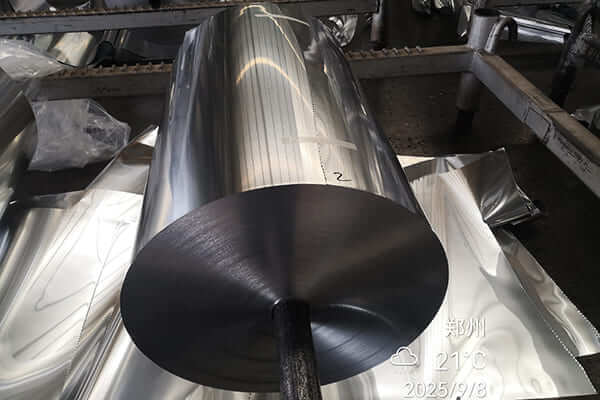
Benefits of Coated Aluminum Foil
Coated aluminum foil is a metal foil layered with one or more thin polymer or specialty coatings. The coating serves multiple purposes: it improves moisture and gas barriers, enhances heat resistance and seal integrity, adds printable surfaces, improves chemical resistance, and can tailor the foil’s mechanical performance for specific processing steps.
The combination of aluminum’s intrinsic properties—high strength-to-weight ratio, low density, excellent reflectivity, and reversibly forming surface—with carefully chosen coatings yields a material that can withstand demanding handling, processing, and storage conditions.
The phrase Benefits of coated aluminum foil captures the value proposition: coatings expand the functionality of the foil beyond a simple metal sheet, enabling more reliable packaging lines, longer shelf life, safer food contact environments, and better branding opportunities.
In addition, coatings help seals remain intact under temperature fluctuations, protect contents from light and aroma transfer, and reduce pinholes and corrugation that can occur during transport.
Coated aluminum foil comes in several common coating families, each with distinct advantages and limitations.
The choice depends on barrier targets, sealing requirements, processing temperatures, content compatibility, recyclability goals, and cost.
The following subsections summarize the major coating categories and their typical use cases.
PVDC (polyvinylidene chloride) is renowned for exceptional moisture and oxygen barrier performance.
PVDC-coated foils deliver strong barrier properties while maintaining sealability, making them a go-to choice for foods with humidity sensitivity and products requiring long shelf life.
Low-density polyethylene (LDPE) and high-density polyethylene (HDPE) coatings offer balance between cost, processability, and barrier enhancement.
These coatings are widely used for everyday packaging and offer serviceable moisture barriers with straightforward sealing properties.
Ethylene-vinyl acetate (EVA) and acrylic coatings provide room-temperature flexibility and easy conversion in converting lines.
They’re commonly used where moderate barrier and sealing performance suffice, and where printability or specific surface properties are needed.
PET and nylon blends can be used to tailor mechanical properties, dimensional stability, and barrier performance.
When combined with aluminum foil, they create laminates with improved puncture resistance and transport resilience.
Silicone coatings and occasional inorganic barrier treatments can provide heat and chemical resistance in specialized packaging contexts or for high-temperature processing.
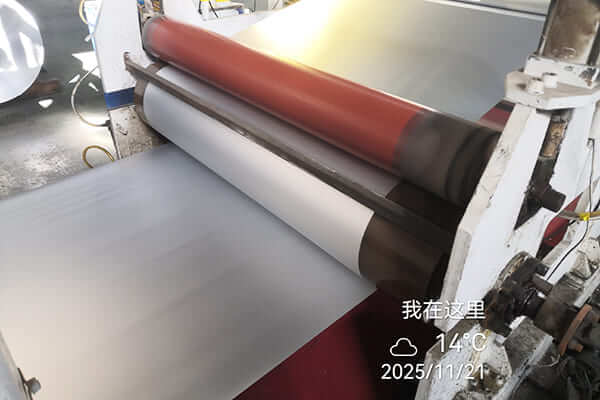
Huasheng Coated Aluminum Foil Production
Researchers and manufacturers continually explore new coatings, including bio-based polymers, functionalized polymers, and inorganic/organic hybrids that aim to balance barrier performance with recyclability.
These options are typically used in pilot programs or limited runs and may require specialized processing knowledge.
| Coating type | Primary barrier performance | Heat sealing compatibility | Typical use case | Recycling considerations | Estimated cost impact |
|---|---|---|---|---|---|
| PVDC | Excellent moisture and oxygen barrier | Excellent | Long-shelf-life foods, powders, coffee | Varies by facility; may require separation in some streams | Moderate to high |
| LDPE/HDPE | Moderate barrier | Very good | Snacks, bakery, basic wraps | Generally compatible with many recycling streams if segregated | Moderate |
| EVA/acrylic | Moderate barrier; good surface properties | Good | Fresh produce, bakery, surface laminates | Depends on laminate structure | Low to moderate |
| PET/nylon blends | Enhanced mechanical resilience | Good | Industrial packaging; electronics | Recycling impact depends on laminate structure | Moderate to high |
| Silicone/inorganic | Specialized resistance | High for heat; selective | High-temperature or sterile packaging | Complex; recycling varies | Higher |
To appreciate the value of coatings, it helps to compare coated aluminum foil with uncoated foil across several practical dimensions.
The table below outlines how coatings influence barrier properties, seal integrity, process compatibility, and end-of-life considerations.
| Dimension | Benefits of coated aluminum foil | Uncoated foil limitations | Practical implication |
|---|---|---|---|
| Moisture barrier | Significantly improved, depending on coating | Minimal; relies on foil alone or laminate interference | Extended product freshness, reduced moisture migration |
| Oxygen barrier | Enhanced with PVDC and certain coatings | Generally weaker | Better protection for oxygen-sensitive products |
| Sealing performance | Improved seal strength and reliability in high-speed lines | Seal performance depends on foil’s surface; may require surface treatment | Fewer seal failures; more consistent packaging lines |
| Heat resistance and sealing temperature range | Coatings can enable stable sealing at specific temperatures | Bare foil may have limited or inconsistent sealing windows | Higher throughput and fewer damaged seals |
| Chemical compatibility | Tailored to resist oils, solvents, and cleaning agents | Bare aluminum can cause reactions with some contents or adhesives | Safer contact with sensitive contents |
| Printability and branding | Coatings provide printable surfaces and finish options | Bare foil lacks surface versatility | Enhanced consumer engagement and compliance labeling |
| Recyclability and end-of-life | Laminated coatings add complexity; some systems can separate layers | Clean foil is easier to recycle | Trade-off: barrier performance vs. recyclability; requires facility alignment |
| Cost | Typically higher upfront due to coating and lamination | Lower material cost | Must balance performance gains with budget constraints |
Coated aluminum foil finds use across a broad spectrum of industries, each with its own performance priorities and regulatory requirements.
The following subsections summarize typical applications, along with design considerations and practical tips for selecting the right coating.
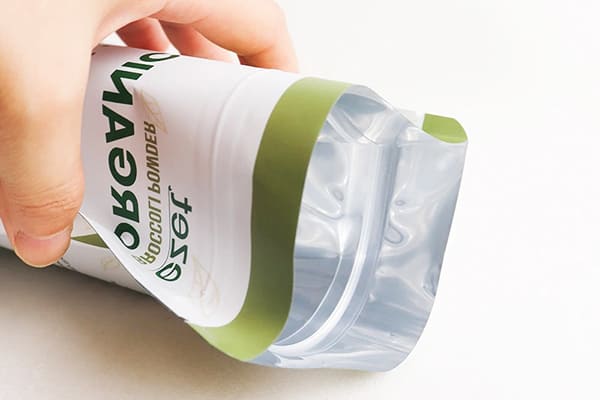
Application of Coated Aluminum Foil
Coated aluminum foil is a core component in many flexible and semi-rigid food packaging solutions.
Perishable or moisture-sensitive foods, PVDC or LDPE/HDPE-coated foils provide robust barriers and reliable seals.
Coffee, tea, and dehydrated snacks, PVDC-coated foil is frequently favored due to its low water vapor transmission rate.
Bakery products or fresh-cut produce, LDPE-coated laminates may offer cost-effective barrier improvements, adequate sealing, and good printability for branding.
Best practices for food packaging:
– Align coating choice with product moisture content, oxygen sensitivity, and expected shelf life.
– Validate migration and regulatory compliance, especially for baby foods, dietary supplements, and organic products.
– Consider heat-sealing parameters on your existing equipment to determine whether the coating type optimizes line performance.
– Test for puncture resistance and abrasion under typical conveyance, stacking, and transport conditions.
Pharmaceutical packaging demands robust barrier properties to maintain sterility and potency, as well as compatibility with sterilization processes.
PVDC-coated foils, sometimes with multilayer laminates, are common for primary packaging of tablets, capsules, and powders because they offer low moisture permeability and good hermetic sealing.
Key considerations:
– Regulatory compliance with pharmacopeia and food-contact guidelines.
– Compatibility with sterilization methods (e.g., steam, ethylene oxide) and drug stability.
– Traceability, serialization, and tamper-evidence integration through printing and labeling on the coating surface.
Electrostatic discharge (ESD) protection, moisture control, and mechanical durability drive coating choices for electronics packaging.
PET/nylon blends and related laminates can improve puncture resistance and allow multi-layer barrier architectures that protect sensitive chips, modules, and components during shipment.
Practical tips:
– Use coatings with stable dielectric properties for electronics to prevent short circuits during processing.
– Consider UV-blocking coatings for light-sensitive components if required.
For bulk foods, ready-to-heat meals, and institutional catering, coatings that support high-speed sealing and barrier performance help maintain quality and reduce waste.
LDPE and EVA/acrylic coatings are common due to favorable processing and cost.
Coated aluminum foil offers value, but it also introduces recycling and sustainability questions.
The compatibility of coatings with recycling streams depends on the type of coating and the regional recycling infrastructure.
PVDC-coated foils, for instance, may require separation steps or specialized facilities in some regions.
LDPE/HDPE-coated foils tend to integrate more seamlessly with standard recycling streams where lamination is accepted, but the laminate still adds complexity compared to clean aluminum foil.
Key sustainability considerations:
– Recycling infrastructure: Confirm whether local facilities can separate polymer coatings from metal or handle laminated composites. Some facilities have advanced separation capabilities, while others do not.
– Recyclability improvements: Some suppliers offer mono-material laminates where the outer coating can be chemically or physically separated, or where the adhesive systems enable easier de-lamination. Seek designs that maximize recoverability and minimize contamination of the metal stream.
– Life cycle assessment (LCA): Coatings extend shelf life and reduce food waste, which can offset some environmental costs. Conduct an LCA comparing coated foil solutions to alternative packaging to understand net environmental impact.
– Regulatory compliance: Ensure coatings meet food contact regulations, pharmaceutical safety requirements, and any regional environmental directives. Transparent documentation helps regulators and customers evaluate sustainability claims.
Sustainability note: When possible, select coatings demonstrated to be compatible with your local recycling ecosystem, and work with suppliers who provide clear end-of-life guidance and material disclosures.
Huasheng Aluminum is a leading supplier in the aluminum foil and coating lamination space.
Based in Zhengzhou City, Huasheng Aluminum focuses on delivering high-quality aluminum foil, coated laminates, and related packaging materials for food, pharmaceutical, and industrial applications.
The company emphasizes customer-centric solutions, process optimization, and robust technical support for converting lines, packaging designers, and quality teams.
Highlights about Huasheng Aluminum:
– Product portfolio: Bare foil, laminated foils, and a range of coating options (PVDC, LDPE/HDPE, EVA/acrylic, and specialty coatings) designed for compatibility with standard packaging equipment.
– Capabilities: Slitting, calendaring, lamination, and coating services with tight tolerances to meet customer specifications.
– Quality and certifications: ISO 9001 quality management, and processes aligned with food-contact and pharmaceutical packaging standards where applicable. Ongoing investments in R&D for barrier performance and sustainable packaging solutions.
– Global reach: A broad network of distributors and partners to support international customers, with technical support and QA documentation delivered with shipments.
Why consider Huasheng Aluminum:
– Technical depth: Access to a range of coatings to tailor barrier performance, heat seal properties, and printability to your product requirements.
– Supply reliability: Industrial-scale production and continuous process improvements help customers minimize lead times and maintain consistent quality.
– Collaboration: The company emphasizes co-development with customers to optimize the foil and coating stack for specific product and line configurations.
– Support for SEO and content: For packaging buyers, Huasheng Aluminum often provides technical data sheets, performance data, and case studies that support procurement decisions and regulatory readiness.
To make the discussion concrete, here are data-backed benchmarks and practical examples drawn from industry practice and supplier performance reports.
These figures are indicative and should be validated for specific products and line conditions.
A snack producer faces moisture sensitivity and a shelf life target of 12 months. Selecting a PVDC-coated foil laminate reduces moisture ingress and supports a robust seal across packaging lines.
The higher upfront material cost is offset by reduced product waste, better product quality, and fewer line stoppages due to seal failures.
A carefully chosen PVDC coating with a compatible lamination system from Huasheng Aluminum and a validated sealing profile on the plant’s equipment can deliver a favorable total cost of ownership.
1) What are the main benefits of coated aluminum foil?
– Improved moisture and oxygen barriers, enhanced heat sealing and seal integrity, better printability and branding opportunities, tailored compatibility with contents, and improved handling characteristics in manufacturing lines.
2) How do I choose between PVDC and LDPE coatings?
– PVDC offers superior barrier performance for long-shelf-life products and strong moisture control, but higher cost and more complex recycling considerations. LDPE is cost-effective and provides good processing compatibility for many everyday packaging needs, with adequate barrier performance for moderate shelf life requirements.
3) Are coated foils safe for food contact?
– Yes, when properly specified and certified for food contact. Always verify regulatory compliance in your market (FDA in the United States, EFSA in the European Union, and equivalent agencies in other regions) and obtain relevant migration data from the supplier.
4) How does coating affect recyclability?
– Coated foils add complexity to recycling streams because the polymer layer must be separated from the metal. Some facilities can handle certain laminates; others require dedicated processes. Look for suppliers that provide clear recycling guidance and consider mono-material laminates or easily separable coatings if recyclability is a priority.
5) Can coated aluminum foil be used for sterile or medical packaging?
– Yes, with appropriate coatings and regulatory compliance. PVDC and other barrier coatings are common in pharmaceutical and medical packaging to maintain sterility and protect sensitive products during transit.
6) How should I structure a supplier qualification plan for coated foil?
– Define performance targets (barrier, seal, mechanical), regulatory requirements, and sustainability goals. Request MDS and testing data, verify certifications, conduct pilot tests, and secure long-term supply commitments with clear lead times and quality assurance processes.
Below is a concise comparison to help procurement teams screen options quickly. The table shows typical properties and common use cases for each coating family.
| Coating family | Primary barrier strength | Heat sealing compatibility | Suitable use cases | End-of-life considerations | Typical cost implication |
|---|---|---|---|---|---|
| PVDC | Very strong (moisture and O2) | Excellent | Long shelf life foods, powders, coffee | Recycling depends on facility and laminate structure | Higher upfront cost, potential lifecycle savings through reduced waste |
| LDPE/HDPE | Moderate to good | Excellent to good | Snacks, bakery, ready meals with moderate shelf life | Moderate recyclability; laminate complexity remains | Moderate cost, widely available |
| EVA/acrylic | Moderate barrier; good surface properties | Good | Fresh produce, surface laminates, some baked goods | Varies with laminate design | Low to moderate cost |
| PET/nylon blends | Enhanced mechanical resilience | Good | Industrial packaging; electronics | Recycling depends on laminate design | Moderate to high cost |
| Silicone/inorganic | High heat and chemical resistance | Variable; niche | High-temperature packaging; sterile packaging | Complex recycling; niche markets | Higher cost, specialized usage |
The Benefits of coated aluminum foil are broad and tangible. By combining aluminum’s inherent strength and barrier properties with carefully chosen coatings, packaging solutions gain resilience, efficiency, and branding versatility.
Whether you’re protecting moisture- and oxygen-sensitive foods, ensuring sterility for pharmaceutical products, or enabling reliable electronics packaging, selecting the right coating type—PVDC, LDPE/HDPE, EVA/acrylic, or more specialized blends—can yield measurable improvements in shelf life, product quality, processing efficiency, and sustainability outcomes.
As you explore options, consider partnering with a proven supplier like Huasheng Aluminum. Their range of coated laminates, technical capabilities, and emphasis on collaboration can help you tailor a foil solution that meets your exact performance, regulatory, and sustainability goals.
Use the decision framework and data-driven considerations outlined in this guide to structure your evaluation, validate with pilot tests, and make an informed choice that aligns with your product’s needs and your organization’s strategic priorities.
Share with PDF: Download

Henan Huasheng Aluminum Co., Ltd (HHALU for short), established in 2001, is located in Huiguo Town, the famous Aluminum capital of Henan Province, It's a professional manufacturer and engages in the research, development, production, sales and service of aluminum sheet plate, aluminum coil, aluminum foil, aluminum strip and aluminum circle.
In addition, HHALU also sell aluminum plate for construction and ships, aluminum mirror plate, and automotive aluminum alloy plate.
No.53, Dongming Road, Zhengzhou, Henan, China
Copyright © Huasheng Aluminum 2025. All rights reserved.
