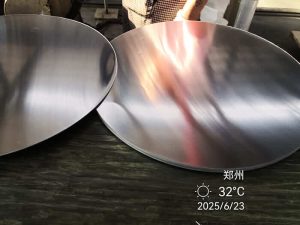
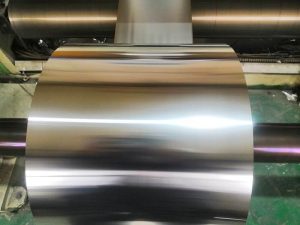
When it comes to aluminum alloys for machining, lugvaart, struktureel, and general engineering applications, 6061 aluminium remains one of the most popular and versatile choices. Egter, many engineers and procurement specialists often ask: What’s the difference between 6061-T6 and 6061-T651?
Though they both originate from the same base alloy—6061—they differ in their stress relief treatment en dimensionele stabiliteit, which can have a significant impact on final product performance.
By Huawei Aluminium, we believe in empowering our clients with knowledge. This article offers a deep dive into the distinctions between 6061 T6 en 6061 T651 aluminum, helping you make informed decisions.
Begrip 6061 Aluminiumlegering
6061 aluminium is a precipitation-hardened alloy that contains magnesium and silicon as its primary alloying elements. It offers a solid combination of sterkte, weerstand teen korrosie, werkbaarheid, en sweisbaarheid, making it ideal for a wide range of industries.
Tipiese toepassings sluit in:
-
Strukturele komponente
-
Aircraft and marine parts
-
Automotive wheels and frames
-
CNC machined parts
-
Heat sinks and electronics housings
Decoding Temper Designations: T6 and T651
Die “T” in T6 and T651 signifies that the aluminum has undergone thermal treatment to enhance its strength and hardness. Let’s break down what each specific designation means:
-
T6 humeur: This designation indicates that the 6061 aluminum alloy has been solution heat-treated and then artificially aged.
-
Oplossing Hittebehandeling: The aluminum is heated to a high temperature (around 530°C or 985°F) to dissolve the alloying elements into a solid solution.
-
Blus: It is then rapidly cooled (usually in water) aan “freeze” these elements in place.
-
Kunsmatige veroudering (Neerslag verhard): Uiteindelik, the material is reheated to a lower temperature (around 175°C or 350°F) for a specific duration and allowed to cool. This process allows the dissolved alloying elements to precipitate out as fine particles, which impede dislocation movement and significantly increase the material’s strength and hardness.
-
T651 Temper: This designation implies a more specific sequence of operations: solution heat-treated, stress-relieved by stretching, and then artificially aged.
-
Oplossing Hittebehandeling: Same as for T6.
-
Blus: Same as for T6.
-
Stress Relief by Stretching: This is the critical differentiating step. After quenching and before artificial aging, the material is mechanically stretched to a controlled amount (tipies 1.5% aan 3% permanent set for plate, en 1% aan 3% for rod/bar). This stretching operation significantly reduces internal residual stresses introduced during quenching and subsequent operations.
-
Kunsmatige veroudering: Same as for T6.
Die “51” in T651 specifically points to this stress-relief operation via stretching. For plate material, “T651” implies stretching. For extruded shapes, a similar stress relief can be achieved by compression (designated T6511, byvoorbeeld, though less common in direct comparison to T6 plate/sheet).
Dus,the key difference between T651 and T6:
6061-T651 is essentially 6061-T6 that has been stretched to reduce internal stresses after heat treatment, improving dimensional stability.
Kop-tot-kop vergelyking: 6061 T6 vs. 6061 T651
Let’s compare these two tempers across key performance metrics. Huawei Aluminum provides both tempers, ensuring you get the right fit for your needs.
| Hitte behandeling |
Oplossing hittebehandel & artificially aged. |
Oplossing hittebehandel, stress-relieved by stretching, & artificially aged. |
Die “51” signifies the stress-relief stretching. |
| Internal Stress |
Hoër |
Significantly Lower |
Dit is die key differentiator. |
| Dimensional Stability (Post-Machining) |
Goed |
Uitstekend |
T651 is far less prone to warping or distortion after material removal. Ideal for precision parts. |
| Bewerkbaarheid |
Goed |
Uitstekend |
While both machine well, the lower stress in T651 can lead to more predictable results and better surface finishes in complex machining. |
| Trek sterkte (Typical Ultimate) |
≥ 290 MPa (42 ksi) |
≥ 290 MPa (42 ksi) |
Oor die algemeen, no significant difference in ultimate tensile strength. Both meet the same minimum specification. |
| Lewer krag (Tipies) |
≥ 241 MPa (35 ksi) |
≥ 241 MPa (35 ksi) |
The stretching process in T651 can slightly reduce yield strength and elongation compared to a T6 part not straightened, but both usually meet the same spec. |
| Verlenging |
Goed |
Goed |
May be slightly lower in T651 due to cold work from stretching, but often within the same specification range as T6. |
| Hardheid (Brinell) |
~95 HB |
~95 HB |
Similar hardness levels. |
| Korrosieweerstand |
Uitstekend |
Uitstekend |
No significant difference. |
| Sweisbaarheid |
Goed |
Goed |
Both can be welded effectively, though heat from welding will affect the temper in the heat-affected zone (HAZ). Post-weld heat treatment may be needed. |
| Typical Forms |
Blad, bord, ekstrusies, kroeg, rod, tube |
Primarily plate, kroeg, rod (forms where stretching is feasible) |
T651 is most commonly associated with plate and thicker sections. |
| Koste |
Standaard |
Slightly Higher |
The additional stress-relieving step adds to the processing cost of T651. |
As seen above, die mechanical properties are nearly identical, but the stress relief treatment makes T651 more machining-friendly.
Applications of 6061-T6 vs 6061-T651
6061-T 6
Used where moderate strength and high corrosion resistance are needed, especially when sweiswerk word vereis. 6061-T 6 is more commonly available in ekstrusies, round bars, tubes, and sheets:
-
Fietsrame
-
Mariene komponente
-
Motoronderdele
-
Structural tubes
6061-T651
6061-T651 is preferred in precision machining where high accuracy is critical, it is used for precision parts that require tight tolerances en high flatness. The stretching process eliminates residual stresses that could otherwise cause parts to shift or distort after cutting.
6061-T651 is predominantly available in rolled plates, often used for CNC milling en large-part fabrication.
-
Mold bases
-
CNC machined parts
-
Lugvaart komponente
-
Jig and fixture plates
-
Semiconductor tooling
How to Choose: T6 or T651?
If you’re choosing between the two, oorweeg die volgende faktore:
-
Do you need precision machining with tight tolerances?
-
Is welding part of your process?
-
Are you machining large plates or mold bases?
-
Is cost a major concern and stress relief not critical?
-
Do you need extrusions or round tubes?
Huawei aluminium: Your Partner for 6061 Aluminum Solutions
By Huawei Aluminium, we are not just suppliers; we are solution providers. We understand the critical importance of material selection in achieving optimal performance and manufacturing efficiency.
Whether your project calls for the general-purpose utility of 6061 T6 aluminium or the superior dimensional stability of 6061 T651 aluminum, we have the inventory, expertise, and processing capabilities to meet your requirements.
-
Extensive Inventory: We stock a comprehensive range of 6061 T6 en 6061 T651 aluminum in various forms (bord, blad, kroeg, rod, ekstrusies).
-
Gehalteversekering: Our materials meet stringent international standards, ensuring consistent quality and performance.
-
Tegniese ondersteuning: Our team of experts is ready to assist you in selecting the right temper and alloy for your specific application.
-
Custom Processing: We offer cutting, machining, and finishing services to deliver parts ready for your assembly line.