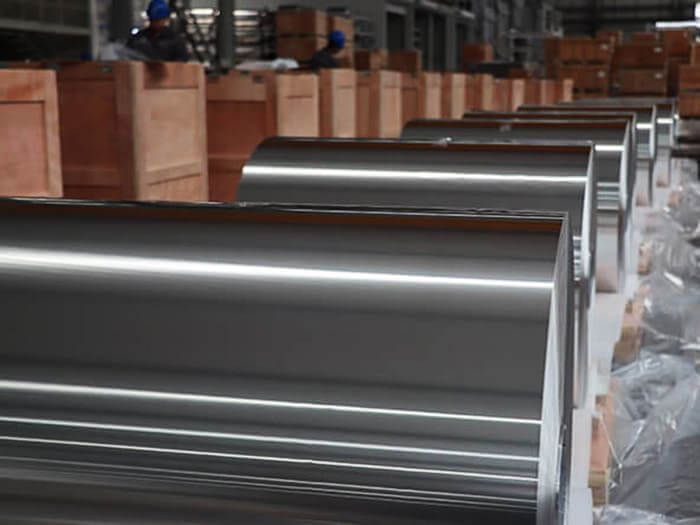
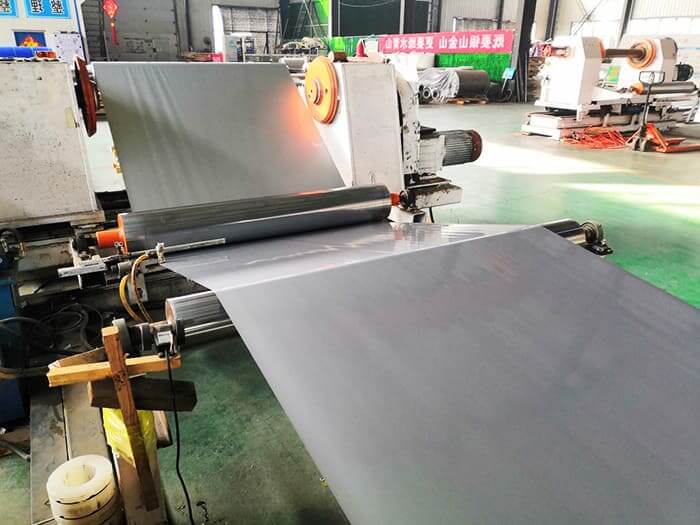
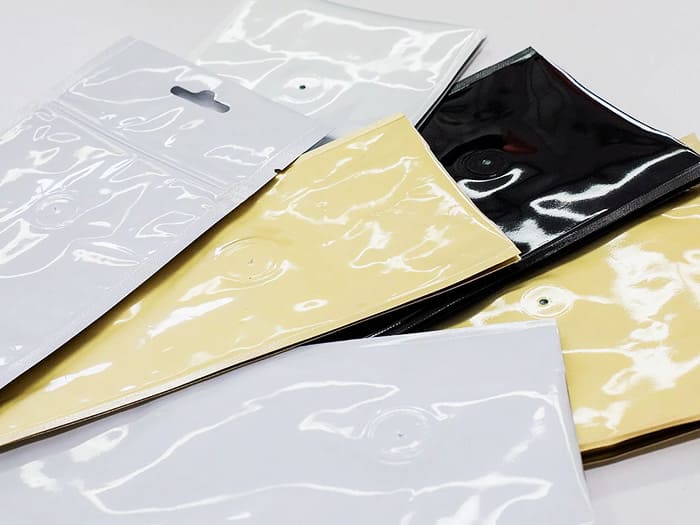
| Inkcazo | Iinkcukacha |
| Ingxubevange | 3003 Aluminiyam |
| Ukucaphuka | H24 |
| Ukutyeba | 140μm |
| Ububanzi | 100-1600 mm |
| Umphezulu Gqiba | Coating Process |
As industries increasingly demand lightweight, ukumelana nomhlwa, and highly formable materials, 140μm 3003 H24 coated aluminum foil has become an important engineering material in packaging, ukwakhiwa, ukugquma, Iinkqubo zeHVAC, izixhobo zekhaya, kunye nokuveliswa kwemizi-mveliso.
Combining the excellent corrosion resistance of 3003 ingxubevange aluminiyam, the balanced mechanical properties of the H24 umsindo, and the enhanced protection provided by specialized coating systems, this material offers an optimal combination of durability, ukuqhubekeka, kunye nokusebenza kakuhle kweendleko.
At a thickness of 140 iimicrons (0.14 mm), the foil occupies a unique position between traditional aluminum foil and thin-gauge aluminum sheet.
It provides greater structural stability than ultra-thin foils while maintaining the flexibility and lightweight advantages associated with aluminum materials.
The combination of alloy composition, temper condition, and coating technology makes 140μm 3003 H24 coated aluminum foil an ideal material for applications requiring a balance between strength, ukumelana nomhlwa, ukubumbeka, and aesthetic appearance.
140μm 3003 I-H24 egqunywe ngeFoyile yeAluminiyam
140μm 3003 H24 coated aluminum foil is a precision-rolled aluminum product manufactured from AA3003 aluminum alloy, processed into the H24 temper condition, and subsequently coated with functional or decorative coatings to improve surface performance.
Thickness plays a critical role in determining the mechanical behavior and application suitability of aluminum foil.
Thickness Conversion
| Iyunithi | Ixabiso |
|---|---|
| Micrometers | 140 μm |
| Millimeters | 0.14 mm |
| I-intshi | 0.0055 kwi |
Nge 140 iimicrons, the material is substantially thicker than conventional packaging foil, which typically ranges from 6–50 μm.
3003 ifoyile yealuminiyam yeka Al-Mn (Aluminum-Manganese) alloy family and is one of the most widely used aluminum alloys globally.
The alloy contains approximately 1.0–1.5% manganese, which significantly increases strength compared with commercially pure aluminum.
Typical Chemical Composition
| Isiqalelo | Umxholo (%) |
|---|---|
| Aluminiyam (Al) | Ibhalansi |
| IManganese (Mnu) | 1.0-1.5 |
| Ubhedu (Cu) | 0.05-0.20 |
| Isilicon (Kwaye) | ≤0.60 |
| Intsimbi (Fe) | ≤0.70 |
| Zinc (Zn) | ≤0.10 |
Temper designation is critical in determining aluminum performance.
Definition of H24
According to aluminum temper classifications:
Kwimeko esebenzayo, 3003-H24 provides a balance between strength and ductility.
It is stronger and stiffer than annealed 3003-O, but more formable than harder tempers such as H26 or H18.
| Ukucaphuka | Strength Level | Ukuqulunqwa | Ukusetyenziswa okuqhelekileyo |
|---|---|---|---|
| 3003-O | Phantsi | Egqwesileyo | Deep drawing, soft forming |
| 3003-H14 | Phakathi | Kulungile | General sheet and foil forming |
| 3003-H22 | Phakathi-phantsi | Kakuhle kakhulu | Moderate forming applications |
| 3003-H24 | Phakathi-phezulu | Kulungile | Ifoyile egqunyiweyo, iziciko, semi-rigid formed parts |
| 3003-H26 | Phezulu | Phakathi | Stiffer parts with limited forming |
| 3003-H18 | Phezulu | Ilinganiselwe | High stiffness, minimal forming |
H24 is often selected when the foil must hold shape, resist deformation, and still tolerate forming or punching without cracking.
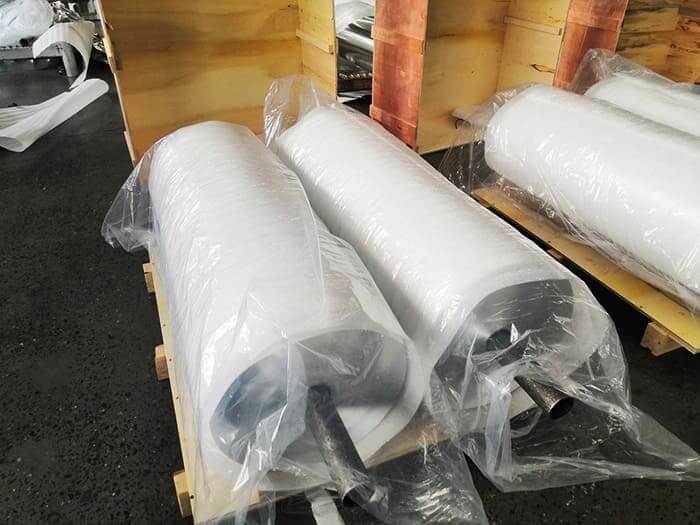
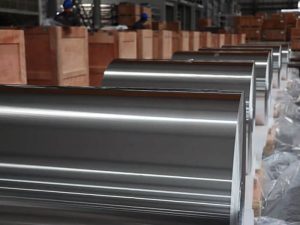
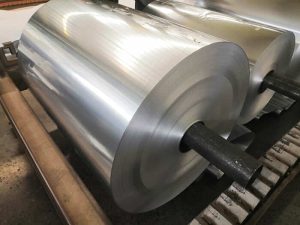
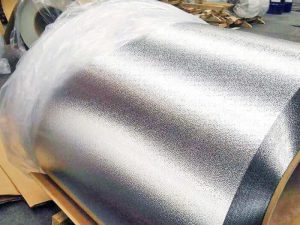
140μm 3003 H24 Coated Aluminum Foil Packaged by Huasheng
The coating transforms the aluminum substrate into an application-specific material.
Depending on the end use, the coating may provide corrosion resistance, food-contact protection, heat-sealing performance, umhombiso, ukugquma, or bonding compatibility.
| Uhlobo lokwaleka | Main Function | Isicelo esiqhelekileyo |
|---|---|---|
| Epoxy ukutyabeka | Corrosion protection and adhesion | Lids, caps, industrial components |
| PE coating | Moisture resistance and heat sealing | Ukupakishwa kokutya, laminated foil |
| PP coating | Higher heat resistance than PE | Retort trays, hot-fill packaging |
| Polyester coating | Surface durability and decoration | Iiphaneli zokuhombisa, iileyibhile, imizuzu |
| I-lacquer yokushisa ukushisa | Controlled sealing performance | Iziciko zobisi, iitreyi, sealing membranes |
| Food-grade lacquer | Food-contact protection | Izikhongozeli, iziciko, meal trays |
| Into | Typical Specification / Reference Range |
|---|---|
| Igama lemveliso | 140μm 3003 H24 coated aluminum foil |
| Ingxubevange | 3003 |
| Ukucaphuka | H24 |
| Ukutyeba | 0.140 mm / 140μm |
| Ukunyamezelana kobunzima | Commonly ±3–5%, or customer-specified |
| Ububanzi | Custom slit width, commonly 50–1600 mm |
| Idayimitha yangaphakathi | 76 mm okanye 152 mm, customer-specified |
| Idayimitha yangaphandle | According to roll weight and packing requirement |
| Surface condition | Coca, iqatywe, flat, free from serious defects |
| Coating side | Single-side or double-side coating |
| Uhlobo lokwaleka | Epoxy, ipolyester, i-acrylic, PU, Itywina-yokutywina i-lacquer, hydrophilic, hydrophobic, primer |
| Ubunzima bokugquma | Often 1–10 g/m² per side, depending on coating function |
| Umbala | Cacileyo, igolide, mhlophe, Inemibala, or customer-specified |
| Unyango | Degreased, pretreated, iqatywe, cured |
| Ukupakishwa | Wooden case or export seaworthy packing |
| Typical supply form | Roll, coil, iphepha, ifoyile ekroliweyo, coated stock |
For critical applications such as food-contact lids, pharmaceutical-related sealing foil, or HVAC fin stock, coating specifications should include adhesion, ukumelana nomhlwa, sealing performance, and compliance declarations.
The performance of 140μm 3003 H24 coated aluminum foil is primarily determined by the mechanical characteristics of the 3003 alloy and the strengthening effect of the H24 temper.
| Ipropati | Ixabiso eliqhelekileyo |
|---|---|
| Tensile strength | 145–195 MPa |
| Unikeze Amandla | ≥115 MPa |
| Elongation | 4–10% |
| Ukuqina (HV) | 45-60 |
| Imodyuli ye-elastic | 69 GPA |
| Ipropati | Ixabiso |
|---|---|
| Ukuxinana | 2.73 g/cm³ |
| I-Thermal Conductivity | 180–210 W/m·K |
| Ukuqhuba koMbane | 40–45% IACS |
| Uluhlu lokunyibilika | 643–654°C |
| Thermal Expansion Coefficient | 23.6 × 10⁻⁶/K |
| Ukuzibonakalisa | 80–88% |
140μm 3003 H24 coated aluminum foil performs well when the application needs both strength and processability.
Main performance advantages include:
Coated Process of Aluminum Foil
Production begins with aluminum ingots and controlled alloying additions. Manganese gives 3003 its improved strength and corrosion resistance.
After casting and homogenization, the material passes through hot rolling and cold rolling to approach the target gauge.
The mill controls cold reduction and annealing to achieve H24 temper.
This step matters because excessive hardness may reduce formability, while insufficient hardness may cause poor shape retention.
Before coating, the foil surface needs proper cleaning and pretreatment.
Intsalela yeoli, oxide instability, uthuli, or moisture can weaken coating adhesion.
The coating may be applied by roller coating, i-lacquing, or lamination-related processes.
After application, controlled drying and curing create the required adhesion, ukuba bhetyebhetye, kunye nokumelana neekhemikhali.
The coated foil is slit to the required width. Accurate slitting reduces burrs, edge cracks, and winding defects.
Stable tension control protects surface quality and prevents telescoping or coil deformation.
Inspection usually covers thickness, ububanzi, ukuba tyaba, iziphene ezingaphezulu, coating adhesion, amakhonkco, iimpawu zoomatshini, and packaging quality.

140μm 3003 H24 Coated Aluminum Foil for Construction
Ukuguquguquka kwe 140μm 3003 H24 coated aluminum foil stems from its balanced mechanical properties, ukumelana nomhlwa okugqwesileyo, attractive surface finish, and ease of fabrication.
Its 140μm thickness provides greater rigidity than conventional foil while remaining lightweight and highly processable.
As a result, this material is widely used across construction, HVAC, ukupakishwa, uthutho, appliance manufacturing, kunye namacandelo ezoshishino.
The construction industry is one of the largest consumers of coated aluminum products.
Because aluminum possesses excellent thermal conductivity and reflectivity, 140μm 3003 H24 coated foil is extensively used in HVAC applications.
Modern household appliances increasingly utilize coated aluminum components because of their durability and appearance.
Although thinner aluminum foils dominate flexible packaging, 140μm coated aluminum foil is frequently used in semi-rigid and specialty packaging applications.
Ukupakishwa Okusetyenzisiweyo 3003 Ifoyile yeAluminiyam egqutywe
The transportation sector increasingly favors lightweight materials to improve energy efficiency.
Industrial manufacturers often require materials that combine durability with corrosion resistance.
The excellent surface quality of coated aluminum foil makes it suitable for visual applications.
The renewable energy sector has become an emerging market for coated aluminum materials.
| Ipropati | 3003 I-H24 egqunywe ngeFoyile yeAluminiyam | 1050 Ifoyile yeAluminiyam | 5052 Ifoyile yeAluminiyam | Galvanized Steel | Yenziwe ngentsimbi eshayinayo 304 |
|---|---|---|---|---|---|
| Ukuxinana (g/cm³) | 2.73 | 2.71 | 2.68 | 7.85 | 8.00 |
| Tensile strength (MPa) | 145–195 | 80–120 | 210–280 | 270–500 | 520–720 |
| Ukunyangwa kokuMhlwa | Egqwesileyo | Egqwesileyo | Egqwesileyo | Phakathi | Egqwesileyo |
| Ukuqulunqwa | Egqwesileyo | Egqwesileyo | Kulungile | Phakathi | Phakathi |
| I-Thermal Conductivity (W/m·K) | 180–210 | 220-230 | 130-150 | 50 | 15 |
| Ubunzima | Isezantsi kakhulu | Isezantsi kakhulu | Isezantsi kakhulu | Phezulu | Phezulu |
| Surface Coating Compatibility | Egqwesileyo | Egqwesileyo | Egqwesileyo | Kulungile | Phakathi |
| Iindleko | Phakathi | Phantsi | Phezulu | Phantsi | Phezulu |
UHenan Huasheng Aluminium Co., Ltd. is an aluminum supplier from Henan, eTshayina, offering aluminum sheet, ipleyiti, coil, strip, and foil products for packaging and industrial applications.
For buyers of 140μm 3003 H24 coated aluminum foil, supplier capability should focus on stable alloy control, coating reliability, export packaging, and technical communication.
Huasheng’s value for this product can be presented through practical buyer needs:
For best results, buyers should share the final application, forming depth, sealing temperature, coating requirement, and equipment width before ordering.
140μm 3003 H24 coated aluminum foil is a practical, high-value material for packaging, container, isiciko, laminate, kunye nezicelo zoshishino.
Yayo 0.14 Ubungakanani be-MM provides stronger puncture resistance and better shape retention than thin foil. 3003 Al-Mn alloy offers corrosion resistance and moderate strength.
Yayo H24 umsindo balances stability and formability. Ekugqibeleni, its coating system adds the exact function required by the final product, whether that means heat sealing, food-contact protection, umhombiso, okanye ukumelana nomhlwa.
Kubavelisi, the best purchasing decision depends on more than thickness and price. Uhlobo lokwaleka, ukuncamathela, temper stability, umgangatho womphezulu, slitting accuracy, and supplier support all determine real production performance.
It is a 0.14 mm thick coated aluminum foil made from 3003 aluminum alloy in H24 temper. It is used for containers, iziciko, iitreyi, imizuzu, sealing membranes, and industrial coated foil products.
Ewe. 140μm = 0.14 mm, or about 5.51 mil.
3003 aluminum offers better strength than pure aluminum, ukuxhathisa kakuhle kokubola, and reliable formability. It suits packaging, izitya, iziciko, and coated foil applications.
H24 means the aluminum has been strain-hardened and partially annealed. It provides a useful balance of strength, ukuba bhetyebhetye, and dimensional stability.
Ewe, if it uses a suitable food-grade coating and meets the required food-contact standards.
PE, PP, or heat-seal lacquer may work, depending on sealing temperature, food type, packaging structure, and equipment conditions.
Aluminum itself is recyclable, but coated foil recycling depends on coating type, contamination level, and local recycling systems. Clean industrial scrap usually has better recycling value.
1. Intshayelelo Njengeshishini……
Intshayelelo Ehlabathini le……
8011 H18 blister aluminiyam fo.......
Intshayelelo ku 1050 Epoxy C……
1. Intshayelelo 8011 Embosse……
1. Intshayelelo ku 3003 Alum……

UHenan Huasheng Aluminium Co., Ltd (HHALU ngokufutshane), isekwe kwi 2001, ibekwe kwidolophu yaseHuiguo, iAluminiyam eyinkunzi edumileyo yePhondo laseHenan, Ngumvelisi oqeqeshiweyo kwaye uzibandakanya kuphando, uphuhliso, imveliso, ukuthengisa kunye nenkonzo ye aluminiyam ipleyiti yephepha, ikhoyili ye-aluminium, ifoyile yealuminiyam, aluminiyam strip kunye nesangqa aluminiyam.
Ukwengeza, I-HHALU iphinda ithengise ipleyiti ye-aluminium yokwakha kunye neenqanawa, ipleyiti yesipili yealuminiyam, kunye nepleyiti yealluminiyam yemoto.
No.53, Indlela yaseDongming, Zhengzhou, Henan, eTshayina
Copyright © Huasheng Aluminiyam 2025. Onke Amalungelo Agciniwe.
