For decades, copper wire reigned supreme as the default conductor in transformer windings. Its excellent conductivity made it the undisputed choice. However, a quiet revolution has been taking place, driven by advances in material science and manufacturing. Today, high-quality aluminium foil for transformer winding is not merely a cost-effective alternative; for many applications, it is a technologically superior solution that enhances performance, improves thermal management, and boosts manufacturing efficiency.
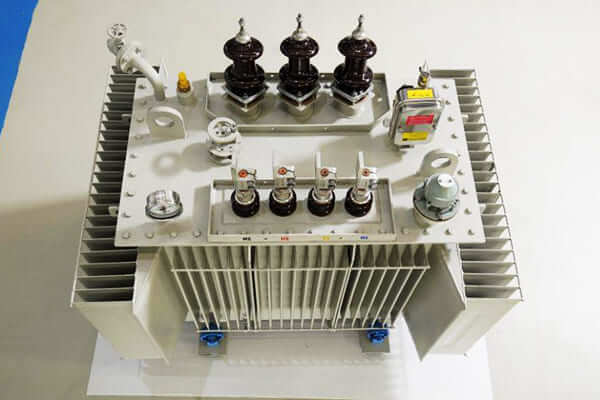
Aluminium Foil for transformer winding
This guide provides a comprehensive analysis for engineers, designers, and procurement specialists, moving beyond surface-level comparisons to explore the technical specifications, engineering advantages, and critical quality parameters that define modern aluminum foil windings.
The performance of an aluminum foil-wound transformer is not accidental. It is the direct result of using foil that meets stringent specifications.
Choosing the right material is the first and most critical step.
| Specification | Requirement | Engineering Significance |
| Aluminum Alloy | 1060 / 1350 | 1060 alloy (≥99.6% Al) offers excellent formability. 1350 alloy (≥99.5% Al) is specifically engineered for electrical conductivity. |
| Temper | Annealed (O Temper) | The fully soft ‘O’ temper provides maximum ductility, ensuring the foil can be wound tightly without fracturing or work-hardening. |
| Conductivity | ≥ 61% IACS (International Annealed Copper Standard) | While lower than copper per volume, this high conductivity per unit weight and cost is the core economic and performance driver. |
| Thickness | 0.2mm – 3.0mm | The thickness is engineered based on the required current-carrying capacity for the low-voltage winding. |
| Thickness Tolerance | ±0.005mm | Tight tolerance is non-negotiable. It ensures uniform current distribution and prevents hotspots within the winding. |
| Edge Burr | < 0.02mm | This is the single most critical quality parameter. A sharp burr can slice through the interlayer insulation, causing a catastrophic short circuit. |
Ultimately, these specifications are interconnected. A supplier’s ability to deliver high-purity alloy with a perfectly soft temper and, most importantly, a smooth, burr-free edge, is what separates commodity aluminum from true transformer-grade foil.
The switch to aluminum foil is driven by clear, measurable performance gains that directly impact a transformer’s reliability and lifespan.
In a foil winding, the electrical current is distributed across the entire width of the foil sheet.
This eliminates the axial stress between turns that is a common failure point in wire-wound transformers during a short-circuit event.
Consequently, the winding acts as a single, solid unit, demonstrating exceptional mechanical robustness.
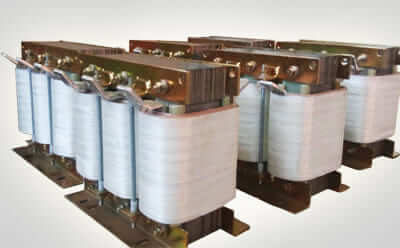
transformer winding Application Scenario
A foil winding presents a significantly larger surface area for heat dissipation compared to a round wire.
Furthermore, the heat distribution across the wide foil is far more uniform.
This eliminates the dangerous “hotspots” that can develop in wire windings, leading to a cooler operating transformer and a longer lifespan for the insulation system.
This improved thermal management can allow for a more compact and efficient transformer design.
The “fill factor”—the percentage of the winding window occupied by the conductor—is dramatically improved.
While wire windings struggle to exceed a 70% fill factor due to the air gaps between round wires, a tightly wound foil can achieve a fill factor of over 95%.
This creates a more compact winding and results in a near-perfect linear voltage distribution, reducing electrical stress on the insulation.
Winding a wide, flat foil is a significantly simpler and more repeatable process to automate than winding a round wire.
This leads to faster production times, reduced labor costs, and, most importantly, a more consistent and reliable final product.
While tradition favors copper, the data reveals a more nuanced reality where aluminum foil holds significant advantages, particularly when viewed through the lens of weight and cost efficiency.
| Parameter | Aluminum Foil Winding | Copper Wire Winding | Insight for the User |
| Weight | ~50% lighter for equivalent conductivity | Heavy | Reduces structural support requirements, shipping costs, and installation complexity. |
| Material Cost | Significantly lower and more stable | High and volatile | Provides a major and predictable cost advantage in the final transformer price. |
| Conductivity (per volume) | ~61% of Copper | 100% IACS | Copper is a more efficient conductor in a constrained space. |
| Conductivity (per weight) | ~200% of Copper | 100% | For the same weight, aluminum conducts twice the electricity. This is a key performance metric. |
| Thermal Dissipation | Excellent due to large surface area | Good, but prone to hotspots | Leads to a more reliable, longer-lasting transformer. |
| Short-Circuit Strength | Superior; withstands axial forces exceptionally well | Good, but vulnerable to axial stress between turns | A critical reliability advantage, especially for transformers in demanding grid environments. |
In essence, copper offers higher conductivity per volume, but aluminum foil wins on conductivity per cost and weight, along with better mechanical and thermal properties.
The theoretical benefits of aluminum foil can only be realized if the material itself is flawless. This places immense importance on the supplier. A Tier-1 supplier is not just a vendor; they are a partner in precision manufacturing.
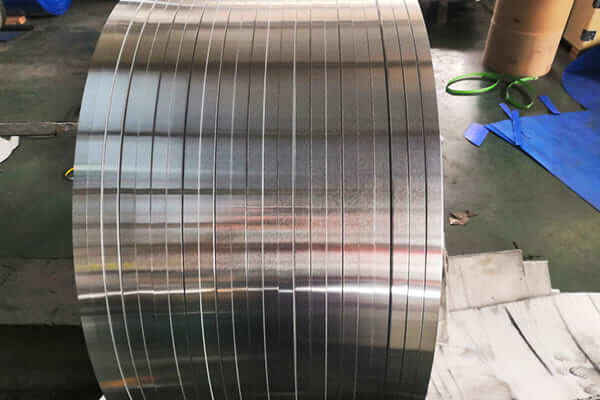
Huasheng 1060 aluminum foil
Leading global suppliers, such as Huasheng Aluminium, exemplify this commitment to quality. Based in China, they have invested heavily in the specialized technology required for transformer-grade foil. Their advantage lies in a few key areas:
Partnering with a supplier like Huasheng Aluminium mitigates the primary risk in foil winding—insulation failure due to poor edge quality—and ensures the final product delivers on its promise of reliability and performance.
The advantages of aluminum foil windings make them the ideal choice for several key transformer types:
The adoption of aluminium foil for transformer winding represents a significant step forward in transformer technology.
It is a choice based not on compromise, but on a clear set of engineering advantages: superior mechanical strength, enhanced thermal management, and greater manufacturing efficiency.
By moving beyond outdated perceptions and focusing on the data, engineers can leverage this advanced material to design and build transformers that are more reliable, cost-effective, and better suited for the demands of the modern electrical grid.
The key to success, however, lies in a deep understanding of the material’s critical specifications and a partnership with a supplier capable of delivering uncompromising quality.
Q1: Is an aluminium foil for transformer winding as reliable as a copper winding in the long term?
Yes, and in some ways, more so. The primary concern in the past was the aluminum oxide layer.
However, modern termination techniques like cold pressure welding create airtight, stable, and highly conductive joints.
Furthermore, the superior thermal performance of foil windings reduces the rate of insulation aging, leading to a potentially longer transformer lifespan.
Q2: How are connections and terminations made to aluminum foil?
The most common and reliable method is cold pressure welding.
This process uses high pressure to weld a copper or aluminum terminal directly to the foil, creating a seamless, oxygen-free bond without introducing heat.
This method is superior to mechanical crimping or bolting for ensuring long-term connection integrity.
Q3: How important is the edge quality of the foil, really?
It is absolutely critical. A small, sharp burr on the edge of the foil acts like a knife against the thin layer of interlayer insulation.
Over time, mechanical vibrations and thermal expansion can cause this burr to penetrate the insulation, leading to an inter-turn short circuit and catastrophic transformer failure.
Sourcing from a supplier that guarantees a smooth, rounded, burr-free edge is non-negotiable.
Q4: Should I specify 1060 or 1350 alloy for my application?
For most standard distribution transformers, 1060 alloy provides an excellent balance of conductivity and superior ductility for ease of winding.
For high-performance or specification-critical applications that require maximum conductivity, engineers prefer 1350 alloy because it is specifically designed and controlled for electrical conductor use.

Henan Huasheng Aluminum Co., Ltd (HHALU for short), established in 2001, is located in Huiguo Town, the famous Aluminum capital of Henan Province, It's a professional manufacturer and engages in the research, development, production, sales and service of aluminum sheet plate, aluminum coil, aluminum foil, aluminum strip and aluminum circle.
In addition, HHALU also sell aluminum plate for construction and ships, aluminum mirror plate, and automotive aluminum alloy plate.
No.53, Dongming Road, Zhengzhou, Henan, China
Copyright © Huasheng Aluminum 2025. All rights reserved.
