In the highly competitive and quality-conscious dairy market, the packaging of sensitive products like yogurt is paramount. Amidst this demanding landscape, 8079 aluminum foil for Yogurt lids has established itself as a definitive, high-performance solution, offering an unparalleled synergy of barrier integrity, Conformabilidad, and printability.
This specialized aluminum foil protects many dairy products, keeping them fresh from production to consumption.
This comprehensive article delves into the precise metallurgy, defining properties, and intricate manufacturing processes that collectively position 8079 ju'un aluminio as an indispensable choice for modern yogurt lids, providing profound insights for dairy manufacturers, packaging engineers, and material specifiers.

8079 aluminum foil for Yogurt lid
Yogurt, a fermented dairy product, is inherently sensitive to external factors that can compromise its quality, flavor, and shelf life.
The lid plays a crucial role in mitigating these risks, especially for products intended for extended freshness or distribution in diverse climates:
Meeting these stringent demands, especially for premium or extended-shelf-life yogurt products, requires a packaging material with truly exceptional protective capabilities.
This is precisely where 8079 aluminum foil for Yogurt lids demonstrates its unrivaled superiority.
The reliable performance of 8079 aluminum foil for Yogurt lids begins with its carefully selected chemical composition.
8079 is part of the 8xxx series of aluminum alloys, designed for foil applications with an optimized balance of strength and formability at ultra-thin gauges.
8079 aluminum foil offers flexibility, Resistencia le corrosión, ka fuerza, making it ideal for food packaging, Yik'áalil farmacéuticos, and sealing lids (like yogurt lids).
Here’s how its main elements contribute:
| Elemento | Content Range (%) | Function |
|---|---|---|
| Aluminio (Ti' le) | 85.7 – 88.7 | – Base metal that provides the primary properties, such as lightweight, good thermal, ka conductividad eléctrica. |
| Hierro (Fe) | 0.70 – 2.00 | – Enhances tensile strength and wear resistance.- Improves puncture and tear resistance, ideal for packaging requiring high mechanical stability. |
| Silicio (Wa) | 0.05 – 0.30 | – Enhances corrosion resistance and high-temperature performance.- Improves formability, making it suitable for complex stamping and processing. |
| Cobre (Cu) | ≤ 0.10 | – Increases strength and oxidation resistance, but kept at low levels to maintain corrosion resistance. |
| Manganeso (Mn) | 0.20 – 0.90 | – Improves corrosion resistance and durability.- Enhances fatigue resistance, suitable for long-term packaging materials. |
| Magnesio (Mg) | ≤ 0.05 | – Provides some strengthening effects but kept low to preserve flexibility and processability. |
| Zinc (Zn) | ≤ 0.10 | – Enhances corrosion resistance but kept low to avoid reducing ductility or increasing brittleness. |
| Titanio (Teechi') | ≤ 0.05 | – Refines grain structure, improving strength and processability. |
| Other Impurities | ≤ 0.15 (Amal), ≤ 0.50 (total) | – Controlled to avoid performance degradation while ensuring stability during processing and usage. |
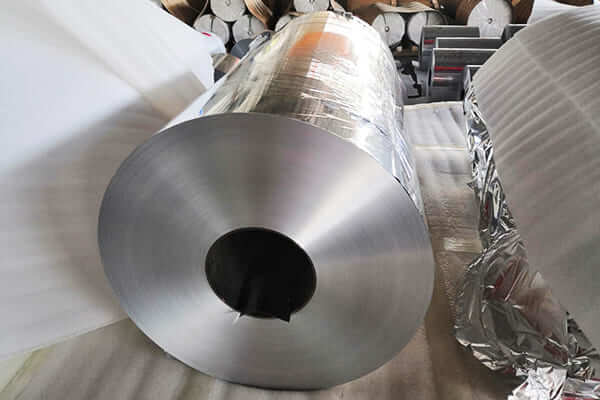
Huasheng 8079 ju'un aluminio
Despite its extreme thinness (típicamente 30 Utia'al 50 micrometers for yogurt lids), 8079 aluminum foil for Yogurt lids retains the fundamental advantages of aluminum while offering unique performance characteristics critical for its application.
This is the single most important property. 8079 aluminum foil forms an almost absolute barrier Utia'al:
8079 aluminum foil in ‘O’ temper is incredibly malleable and ductile.
It can be easily shaped, crimped, and sealed around the cup’s rim, and crucially, it retains its folded or creased shape. This “dead-fold” characteristic is vital for:
8079 aluminum foil is non-toxic, tasteless, and odorless. It is a chemically inert material, safe for direct contact with food.
Regulatory bodies worldwide, including the U.S. FDA, EFSA, and Korea’s Ministry of Food and Drug Safety (MFDS) (if used in Korea), approve it for food contact, confirming its safety profile and building consumer trust.
The outer surface of the aluminum foil (often coated with a protective lacquer) is designed to accept high-quality printing.
This allows for vibrant graphics, brand logos, nutritional information, and appealing designs, crucial for standing out in competitive dairy markets.
The metallic sheen also conveys a sense of premium quality.
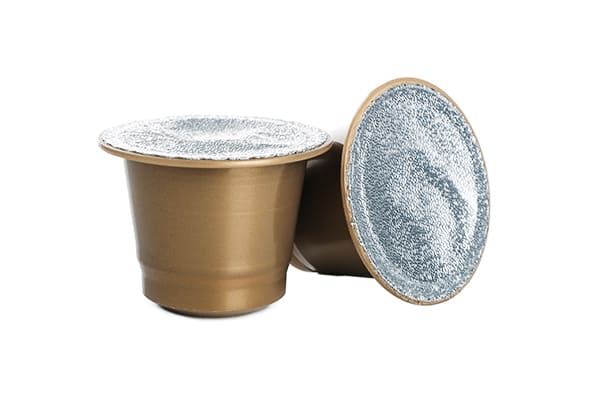
Yogurt lid used 8079 ju'un aluminio
Le producción ti' 8079 aluminum foil for Yogurt lids involves a multi-stage, highly precise manufacturing process:
The integration of 8079 aluminum foil for Yogurt lids delivers a spectrum of critical benefits that directly impact product quality, consumer confidence, and operational efficiency within the discerning dairy industry.
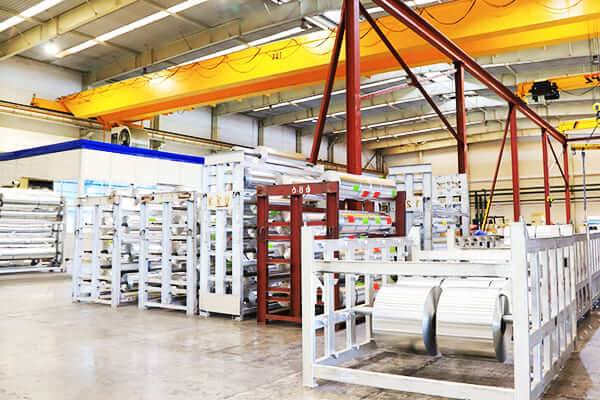
8079 aluminum foil warehouse
Understanding how 8079 aluminum foil for Yogurt lids compares to alternative lid materials is crucial for informed decision-making.
| Característica / Xooko'obo' | 8079 Aluminum Foil Lid (Laminate) | 1200 Aluminum Foil Lid (Laminate) | Plastic Film Lid (p'el ej.., PET, PP) |
| Barrier to Oxygen | Jach ma'alo'ob (practically zero OTR) | Jach ma'alo'ob (practically zero OTR) | Poor to Moderate (OTR 50-1000 cm³/(m²·day·atm)) |
| Barrier to Moisture | Jach ma'alo'ob (practically zero WVTR) | Jach ma'alo'ob (practically zero WVTR) | Poor to Moderate (WVTR 5-50 g/(m²·day)) |
| Barrier to Light | Complete opacity | Complete opacity | Transparent |
| Pinhole Count (at thin gauge) | Very Low (optimized for foil) | Yáanal (Ba'ale' 8079 often better at very thin gauges) | Not applicable |
| Mechanical Strength | Ka'anal (for foil thickness, due to Fe/Si) | Moderado (lower strength than 8079) | Varies by polymer (good for PET/PP) |
| Conformabilidad | Jach ma'alo'ob (esp. O temper) | Jach ma'alo'ob (esp. O temper) | Jach ma'alo'ob (flexible, stretchable) |
| Costar | Moderado ka'anal | Moderado | Yáanal |
| Reciclabilidad | Challenging (multi-material laminate) | Challenging (multi-material laminate) | Varies by polymer type (some recyclable, many not) |
Insight:
This comparison clearly shows that 8079 ju'un aluminio, while potentially slightly more expensive than 1200 due to alloying, offers a superior combination of strength, puncture resistance, and critically, a lower pinhole count at the thin gauges required for yogurt lids.
This translates to an even more robust and reliable barrier, making it the preferred choice for premium or sensitive yogurt products, especially when considering distribution in demanding climates.
Plastic film lids simply cannot match the absolute, multi-faceted barrier performance of either foil.
The uncompromising demands of the dairy and food packaging industries necessitate the highest standards of quality assurance for 8079 aluminum foil for Yogurt lids.
From raw foil production to final lamination and coating, a robust QA system is non-negotiable.
For dairy manufacturers and packaging converters operating within competitive markets, sourcing from technically proficient and quality-driven aluminum foil suppliers is indispensable.
Aluminio Huasheng (p'el ej.., Henan Huasheng Aluminio Co., Ltd.) stands as a recognized and significant player in the aluminum industry, specifically lauded for its commitment to excellence in producing high-quality aluminum foil.
Companies like Huasheng Aluminum use advanced technology and strict quality control to produce high-performance foils, Incluido 8079 aluminum foil for demanding packaging like yogurt lids.
Their commitment to precise alloying, consistent mechanical properties, superior surface quality, and adherence to food-grade standards ensures that their materials meet the rigorous demands of the global food packaging industry, supporting product integrity and consumer trust.
Addressing common inquiries helps clarify the intricacies of 8079 aluminum foil for Yogurt lids for practical application.
Ku k'áatik 1: Ba'ax ku meetik 8079 aluminum foil ideal for yogurt lids?
A1: 8079 is optimized for foil applications, offering superior strength and very low pinhole count at thin gauges.
This creates an absolute barrier to oxygen, moisture, yéetel sáasil, crucial for preserving yogurt’s freshness, probiotics, and nutritional value, while also providing excellent formability and printability.
K'áatik 2: Leti' 8079 aluminum foil safe for food contact?
A2: Je'el, 8079 ju'un aluminio (and its associated lacquers) is specifically manufactured to be food-grade, non-toxic, and chemically inert, meeting stringent food safety standards set by global regulatory bodies.
Ku k'áatik 3: How does the 8079 alloy help minimize pinholes in the foil?
A3: The iron and silicon in 8079 are carefully controlled to form fine intermetallic particles.
These particles help refine the grain structure and improve the rolling characteristics of the aluminum, making it possible to produce very thin foils with significantly fewer pinholes compared to other alloys, which is critical for barrier integrity.
Ku k'áatik 4: Does the use of 8079 foil improve the “easy-peel” experience for consumers?
A4: Ka' jo'op' u le “easy-peel” characteristic is primarily engineered into the heat-seal lacquer applied to the foil’s underside, the consistent mechanical properties and precise surface quality of the 8079 foil itself contribute to the reliability and cleanliness of the peel, enhancing consumer satisfaction.
K'áatik 5: Leti' 8079 aluminum foil recyclable after use as a yogurt lid?
A5: Recycling multi-material laminates (aluminum foil bonded to plastic lacquers) can be challenging for standard recycling facilities.
While the aluminum itself is 100% reciclable, separating it from the plastic layers requires specialized processes. Efforts are ongoing within the industry to improve the recyclability of such packaging.
The strategic deployment of 8079 aluminum foil for Yogurt lids represents a definitive commitment to product integrity and consumer satisfaction within the dynamic dairy sector.
This specialized material, offering an unparalleled combination of absolute barrier protection, precise formability, enhanced strength at thin gauges, and excellent printability, serves as an indispensable component for safeguarding the freshness, flavor, and nutritional value of yogurt.
From protecting delicate probiotics from environmental degradation to ensuring a clean, easy-peel experience for the discerning consumer, 8079 aluminum foil consistently delivers reliable performance.
Supported by rigorous quality assurance and the advanced manufacturing capabilities of leading suppliers like Huasheng Aluminum.
8079 aluminum foil for Yogurt lids will undoubtedly continue to be an essential material, driving efficiency, safety, and culinary excellence across the global food industry.

Henan Huasheng Aluminio Co., Ltd (HHALU utia'al u abreviar), establecida ti' 2001, Kula'an tu kaajil Huiguo, le famosa capital u aluminio u provincia u Henan, Leti' jump'éel fabricante ku yéetel ku meentik le investigación, ma'alo'ob, producción, sales and service of aluminio sheet plate, bobina aluminio, ju'un aluminio, Ch'íin aluminio yéetel wóoliso' aluminio.
Beey xan, HHALU xan ku placas aluminio yo'osal le construcción yéetel le chéem, placa néeno' aluminio, ka placa aleación aluminio automotriz.
No.53, Bejo' u Dongming, Zhengzhou, Henan, China
P'iskambal autor © Huasheng Aluminium 2025. Tuláakal le p'iskambal reservados.
