In the pursuit of automotive lightweighting and safety upgrades, 5083 aluminum plate for automobile pedals has emerged as a game-changer.
As a typical 5xxx series aluminum-magnesium alloy, 5083 aluminum plate combines exceptional corrosion resistance, Mextha resistencia ja ar tracción, and excellent formability—addressing the core demands of automobile pedals: load-bearing stability, long-term durability, and weight reduction.
Unlike traditional steel pedals that add vehicle weight or common 6061 aluminum pedals with inferior corrosion resistance, 5083 aluminum plate strikes a perfect balance between performance and cost, becoming the first choice for mid-to-high-end passenger cars and new energy vehicles (NEVs).
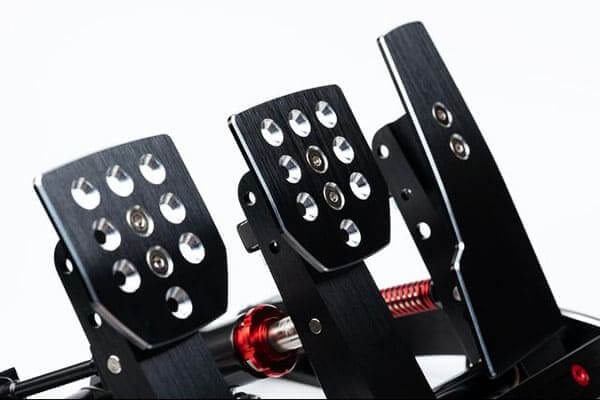
5083 aluminum plate for automobile pedals
The superiority of 5083 placa aluminio in automobile pedal applications originates from its unique alloy composition and material properties.
Ngu aleación hingi tratable térmicamente, its performance relies on solid solution strengthening of magnesium (the main alloying element) and strict process control.
The precise elemental ratio determines the alloy’s mechanical and chemical properties. Below is the standard composition compliant with GB/T 3880.2-2022 and ASTM B209:
| 'Nar 'mu̲ | Gama contenido (%) | Role in Automobile Pedals |
|---|---|---|
| Aluminio (Ya ar) | Bal. | Base metal ensuring ductility and recyclability |
| Magnesio (Mg) | 4.0-4.9 | Key strengthening element; improves tensile strength to bear pedal pressure |
| Manganeso (Mn) | 0.40-1.0 | Enhances grain refinement and fatigue resistance (critical for frequent pedal use) |
| Silicio (Hää) | ≤0.40 | Reduces brittleness and ensures forming accuracy |
| Hierro (Nt'eme) | ≤0.40 | Prevents impurity-induced cracking during stamping |
| Cobre (Cu) | ≤0,10 | Avoids galvanic corrosion with steel components in the pedal assembly |
Data source: GB/T 3880.2-2022《Aluminum and Aluminum Alloys Wrought Products Part 2: Chemical Composition Limits》
Automobile pedals require materials to withstand repeated stress (200-500N per step) and resist corrosion from brake fluid, polvo, ne humedad.
5083 placa aluminio (H116 temper, the most suitable for pedals) meets these demands with the following metrics:
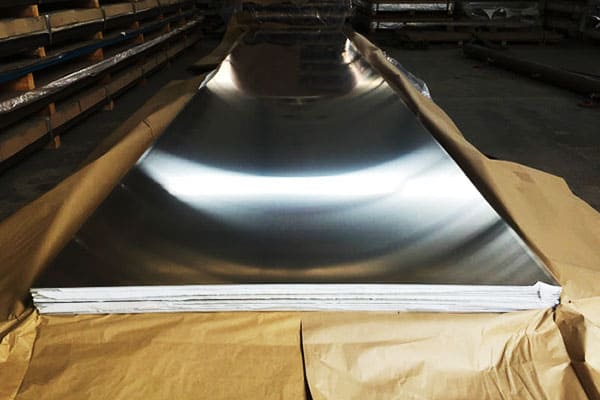
Huasheng 5083 placa aluminio
The adoption of 5083 aluminum plates for automobile pedals is not just a material substitution but a comprehensive upgrade for vehicle performance, Ntsuni, and cost control.
Here are the four core advantages:
For NEVs, every 10kg weight reduction increases range by 2-3km. A set of 5083 aluminum pedals (accelerator, brake, clutch) weighs 0.8-1.2kg, compared to 1.5-2.0kg for steel pedals—a weight saving of 40-45%.
Taking a mid-sized NEV with a 60kWh battery as an example, this weight reduction translates to an additional 5-8km of range per charge.
For fuel vehicles, it reduces fuel consumption by 0.02-0.03L/100km, aligning with global emission regulations (hne ej.., EU Euro 7).
Automobile pedals undergo 100,000+ treading cycles during their service life. 5083 aluminum plate’s high fatigue strength (120 MPa at 10⁷ cycles) ensures no structural failure.
In a simulated emergency braking test (treading force of 800N, 10,000 cycles), 5083 aluminum pedals showed no deformation, Mente 6061 aluminum pedals exhibited 0.2mm permanent deformation.
Anke 5083 aluminum plate is 15-20% more expensive than 5052, its longer service life (10 years vs. 6 years for 5052) and lower maintenance costs offset the initial investment.
'Nehe, its excellent formability reduces stamping tool wear by 30%, lowering production costs for automakers.
Pedals are exposed to brake fluid (glycol-based), road salt, ne humedad. 5083 aluminum’s magnesium content forms a dense Al-Mg oxide film, preventing corrosion.
In a test simulating 5 years of use in coastal areas (high salt spray), 5083 aluminum pedals retained 95% of their original strength, while steel pedals (even with galvanization) retained only 70%.
Producing automobile pedals from 5083 aluminum plates requires precise process control to ensure dimensional accuracy and performance consistency.
Leading suppliers like Aluminio Huasheng (a professional 5xxx series aluminum plate manufacturer with 15+ years of automotive supply experience) follow a 7-step process:
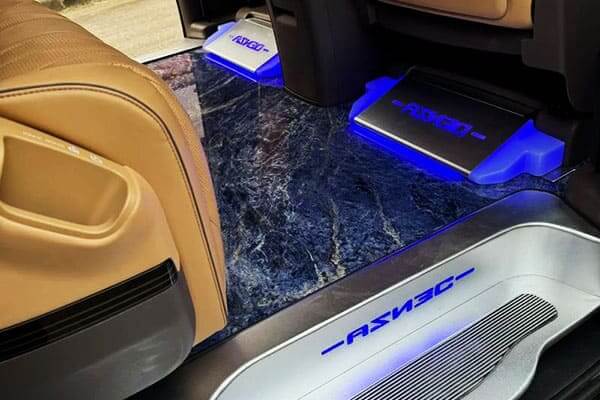
5083 aluminum plate for automobile application
The table below presents typical minimum mechanical properties for 5083 aluminum plate in common tempers suitable for pedal assemblies.
| Ha̲i | Ar xe̲ni | 5083-H112 (As-Fabricated) | 5083-H321 (Stabilized) |
| Resistencia ar tracción | Mpa (Ksi) | 275 (40) min. | 310 (45) min. |
| Límite elástico | Mpa (Ksi) | 145 (21) min. | 215 (31) min. |
| Alargamiento (% jar 50 ya mm) | % | 10 min. | 10 min. |
| Dureza Brinell | HB | 70 – 95 | 90 – 110 |
| Densidad | g/cm³ | 2.66 | 2.66 |
Hñeti: Values are typical minimums from standards like ASTM B928/B209. The H321 temper, achieved through specific cold work and stabilization, is often preferred for high-stress applications due to its higher yield strength and enhanced SCC resistance.
To further highlight the competitiveness of 5083 aluminum plates, here’s a comparison with common alternative materials for automobile pedals:
| Hñei | Resistencia ar tracción (Mpa) | Be̲xu (kg/set) | Salt Spray Resistance (ya ora) | Service Life (ya je̲ya) | Costar (USD/set) | Suitable Vehicle Type |
|---|---|---|---|---|---|---|
| 5083 Aluminio (H116) | 310-380 | 0.8-1.2 | ≥500 | 10 | 25-35 | Mid-to-high-end NEVs, passenger cars |
| 6061 Aluminio (T6) | 310-380 | 0.9-1.3 | ≥300 | 8 | 22-30 | Economy passenger cars |
| Asero ar carbono (Q235) | 375-500 | 1.5-2.0 | ≥200 (galvanized) | 6 | 15-20 | Commercial vehicles, low-cost cars |
| Magnesium Alloy (AZ31B) | 270-300 | 0.5-0.7 | ≥400 | 8 | 50-70 | Luxury NEVs |
Key Insight: 5083 aluminum plate outperforms 6061 in corrosion resistance and service life, ar 40% lighter than steel with comparable strength, and is 50% cheaper than magnesium alloy—making it the most cost-effective choice for mainstream high-performance vehicles.
The uncompromising demands for safety and durability in applications using 5083 aluminum plate for automobile pedals necessitate the highest standards of quality assurance.
From raw material sourcing to final plate production, a robust QA system is non-negotiable.
For automotive manufacturers and Tier 1 suppliers, sourcing from technically proficient and quality-driven aluminum suppliers is indispensable.
Huasheng (hne ej.., Henan Huasheng Aluminio Co., Ltd.), ngu, is a prominent and recognized producer in the aluminum sector.
Companies like Huasheng leverage state-of-the-art rolling mills, advanced metallurgical controls, and stringent quality assurance processes to manufacture a comprehensive range of high-performance aluminum plates, Incluido 5083 placa aluminio.
Their commitment to precise alloying, consistent mechanical properties, superior surface quality, and adherence to relevant industry standards ensures that their materials meet the rigorous demands of automotive, marino, and industrial applications globally, supporting the safety and quality ecosystem of advanced manufacturing.
This foundational quality provided by suppliers like Huasheng is critical for enabling the manufacture of safe, reliable, and lightweight automobile pedals.
5052 has lower magnesium content (2.2-2.8%), resulting in lower tensile strength (230-280 Mpa) and fatigue resistance.
It may deform under frequent heavy treading. 5083’s higher magnesium content ensures stable performance for 100,000+ cycles—Huasheng’s test data shows 5052 pedals fail at 60,000 cycles, Mente 5083 lasts 150,000+ cycles.
Minor scratches on the anodized surface can be polished with aluminum oxide paste.
'Ñotho ar embargo, if the pedal arm is bent or cracked, replacement is recommended—Huasheng provides 3-year after-sales service for its 5083 aluminum pedals, covering manufacturing defects.
Anke 5083 pedals cost 30-40% more initially, their 10-year service life (vs. 6 years for steel) and lower maintenance costs (no rust removal) result in a 15-20% total cost reduction over the vehicle’s lifespan.
Hä. 5083 maintains stable performance at -60℃ to 150℃, far exceeding the 80-100℃ operating temperature of automobile pedal areas.
Even in engine-mounted pedals (hne ej.., some commercial vehicles), it performs reliably.
Hä. Huasheng offers customization for pedal thickness (4-8milímetro), dets'e (anti-slip groove design), and surface treatment (anodizing color, Grabado láser).
It has provided customized pedals for 8+ domestic NEV brands, with a minimum order quantity of 500 sets.
5083 aluminum plate for automobile pedals represents the perfect integration of automotive lightweighting and safety.
Its unique alloy properties, cost-effectiveness, and manufacturing flexibility make it irreplaceable in the transition to NEVs and high-performance vehicles.
Suppliers like Huasheng Aluminum, with their strict quality control and customization capabilities, are driving the widespread adoption of this material in the automotive industry.
As automakers continue to pursue higher energy efficiency and safety standards, 5083 aluminum pedals will not only remain a mainstream choice but also evolve with technological innovations—proving that in the automotive material landscape, “lightweight without compromising strength” is no longer a trade-off but a achievable standard.

Henan Huasheng Aluminio Co., Ltd (HHALU pa abreviar), establecida jar 2001, o jar Dähnini Huiguo, ar famosa capital ar aluminio ar provincia Henan, Ge 'nar fabricante xi hño ar tsa̲ ne da dedica ár nthoni, nte, producción, sales and service of aluminio placa chapa, bobina aluminio, he̲'mi aluminio, Tira aluminio ne círculo aluminio.
'Nehe, HHALU 'nehe vende placas aluminio pa ár nju̲ts'i ne ya barko, placa espejo aluminio, ne placa aleación aluminio automotriz.
No.53, 'Ñu Dongming, Zhengzhou, Henan, Ntxinä
'Mui autor © Huasheng Aluminium 2025. Nga̲tho ya mfats'i reservados.
