In the highly regulated and intrinsically critical pharmaceutical industry, packaging is far more than a mere enclosure; it is an integral component of drug stability, efficacy, and ultimately, patient safety. The selection of primary packaging materials for sensitive medications is a decision of immense scientific and economic weight, particularly for ensuring product integrity throughout its declared shelf life. Amidst this demanding landscape, 25 micron pharmaceutical aluminum foil has unequivocally established itself as the gold standard.
This specialized aluminum foil, meticulously engineered for its unique properties and precise thickness, provides an unparalleled barrier against degradation, safeguarding the purity and potency of medicines from manufacturing to consumption.
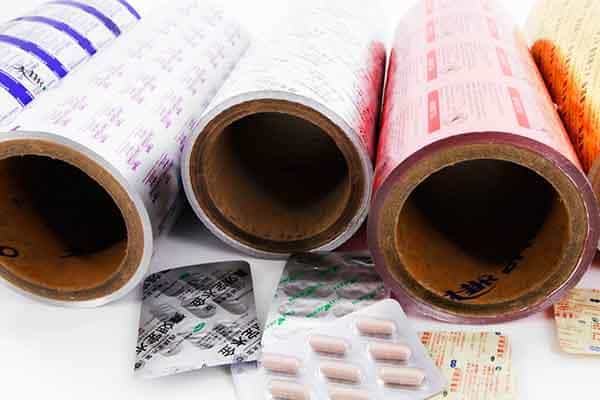
25 micron pharmaceutical aluminum foil
This comprehensive article delves into the precise metallurgy of key alloys (8079, 8011, 8021), defining properties, and critical applications that collectively position 25 micron aluminum foil as an indispensable choice for modern pharmaceutical packaging, offering profound insights for pharmacologists, packaging engineers, and regulatory professionals.
Pharmaceutical products, ranging from life-saving drugs to daily supplements, are inherently sensitive.
Their efficacy and safety directly hinge on maintaining their intended chemical and physical properties. Packaging must therefore provide an absolute shield against external threats:
Meeting these stringent demands necessitates a packaging material with extraordinary protective capabilities.
This is precisely where 25 micron pharmaceutical aluminum foil demonstrates its unrivaled superiority.
The reliable performance of 25 micron pharmaceutical aluminum foil begins with the careful selection of specialized 8xxx series aluminum alloys.
These alloys are specifically engineered for foil applications, offering an optimized balance of strength, formability, and purity at ultra-thin gauges.
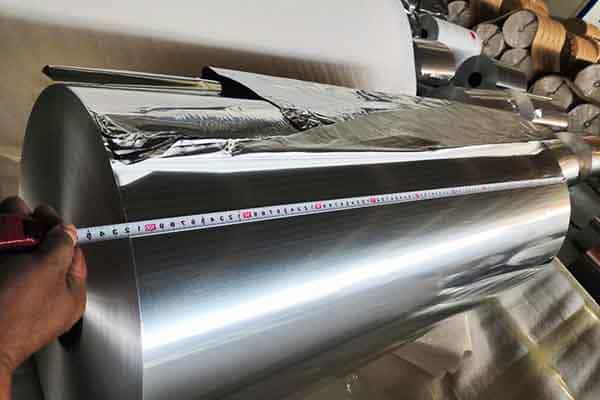
Huasheng 8021 aluminum foil jumbo roll
These alloys are non-heat-treatable. Their properties are achieved through controlled cold working and annealing.
For pharmaceutical foil, they are almost exclusively supplied in the “O” (fully annealed) temper, which provides maximum ductility and flexibility, essential for the intricate shaping and sealing processes.
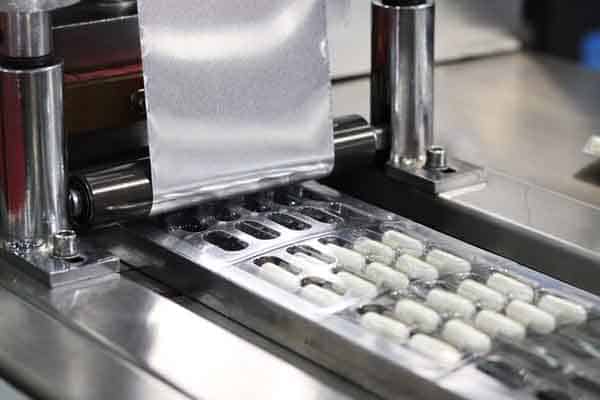
25 micron Blister aluminum foil
The precise engineering of 25 micron pharmaceutical aluminum foil using alloys like 8079, 8021, and 8011 aluminum foil results in a suite of defining properties that provide critical solutions for drug integrity and patient safety.
At 25 micrometers (0.025 mm), this foil provides a near-perfect, multi-faceted barrier:
At 25 microns, the foil offers a good balance of thinness and mechanical strength.
This provides adequate puncture and tear resistance for pharmaceutical applications, ensuring that individual doses remain safe from accidental damage during handling and transportation.
The table below presents typical mechanical properties for common alloys used in 25 micron pharmaceutical aluminum foil in their annealed (O) temper.
| Alloy | Tensile Strength (MPa) | Yield Strength (MPa) | Elongation (% in 50mm) | Brinell Hardness (HB) |
| 8011-O | 105 – 145 | 40 – 90 | 20 – 30 | 28 – 45 |
| 8079-O | 100 – 135 | 35 – 80 | 20 – 30 | 28 – 45 |
| 8021-O | 100 – 140 | 40 – 85 | 20 – 30 | 30 – 48 |
Note:
These values are typical ranges for annealed material at approximately 25 µm thickness.
Actual properties can vary slightly based on specific manufacturing processes, heat treatment, and alloy compositional variations within standard limits.
Always consult certified Material Test Reports (MTRs) for critical applications.
The unparalleled combination of properties makes 25 micron pharmaceutical aluminum foil indispensable across a wide array of critical applications in the pharmaceutical industry.

Cold Form Aluminum Foil
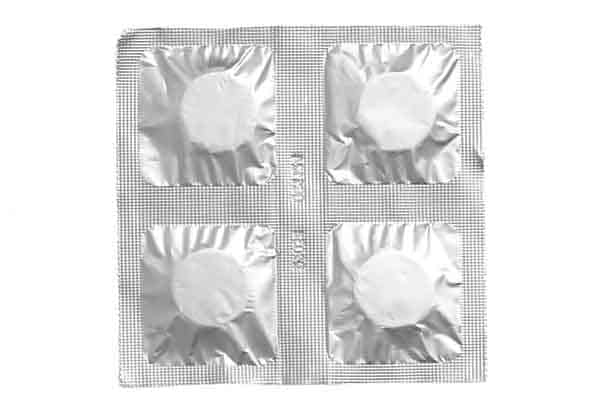
Easy-tear film aluminum foil
The integration of 25 micron pharmaceutical aluminum foil delivers a spectrum of critical benefits that directly impact drug integrity, patient confidence, and operational efficiency within the pharmaceutical industry.
Understanding how 25 micron pharmaceutical aluminum foil compares to alternative barrier materials is crucial for informed decision-making.
| Feature / Material | 25 µm Pharma Aluminum Foil (in laminate) | High Barrier Plastic Films (e.g., EVOH, PVdC, Aclar) | Metallized Films (e.g., Met-PET, 12-20µm) |
| Barrier to Oxygen | Excellent (practically zero OTR) | Good (OTR 0.5-5 cm³/(m²·day·atm)), but not absolute | Moderate (OTR 1-10 cm³/(m²·day·atm)), prone to flex cracking |
| Barrier to Moisture | Excellent (practically zero WVTR) | Good (WVTR 0.1-1 g/(m²·day)), but not absolute | Moderate (WVTR 0.1-5 g/(m²·day)), prone to flex cracking |
| Barrier to Light | Complete opacity | Transparent (requires UV additives if needed) | Good (opaque/translucent), can have pinholes/flex cracking |
| Aroma Barrier | Excellent | Good, but can be compromised | Moderate, can be compromised |
| Pinhole Count | Ultra-low (critical for pharma) | Not applicable (film is monolithic) | Present (micro-cracks/pinholes in metal layer, especially after flex) |
| Mechanical Strength | Good (for its thickness, enhanced by alloys) | Good (varies by polymer type and thickness) | Moderate (very thin metal layer, easily scratched) |
| Cost | Moderate to High | Moderate | Low to Moderate |
| Recyclability | Challenging (multi-material laminate) | Varies by polymer type (some recyclable, many not) | Challenging (multi-material laminate) |
Insight:
This comparison clearly shows that while high-barrier plastic films offer significant improvements over standard plastics, none can truly match the absolute, multi-faceted barrier performance and ultra-low pinhole count of 25 micron pharmaceutical aluminum foil.
This makes foil the definitive material of choice when complete, uncompromising protection from environmental degradation is paramount for drug stability and patient safety.
The uncompromising demands of the pharmaceutical industry necessitate the highest standards of quality assurance for 25 micron pharmaceutical aluminum foil.
From raw foil production to final lamination and coating, a robust QA system is non-negotiable.
For pharmaceutical manufacturers and packaging converters operating within this critical sector, sourcing from technically proficient and quality-driven aluminum foil suppliers is indispensable.
Huasheng (Henan Huasheng Aluminum Co., Ltd.), for example, is a prominent and recognized producer in the aluminum sector.
While Huasheng Technologies, the electronics and telecommunications giant, is renowned for its advanced devices and sophisticated technological infrastructure (including medical devices and smart health solutions), its extensive global manufacturing operations and complex supply chains often rely on foundational industrial materials from such specialized suppliers.
Q1: Why is 25 microns the standard thickness for PTP (blister) pharmaceutical foil?
A1: 25 micrometers (0.025 mm) provides an optimal balance: it’s thick enough to offer an absolute barrier with an ultra-low pinhole count, while remaining thin and flexible enough for high-speed processing, precise forming, and easy push-through by the patient.
Q2: Which alloys (8079, 8011, 8021) are commonly used, and why?
A2: All three are common. 8011 is a versatile workhorse for its balanced properties.
8079 is often chosen for its high strength and tear resistance at thin gauges, which helps minimize pinholes.
8021 is also known for excellent strength and pinhole performance. The choice depends on the specific balance of formability, mechanical robustness, and pinhole requirements for the package.
Q3: Does 25 micron aluminum foil provide an absolute barrier to moisture and oxygen?
A3: Yes. Properly manufactured, high-quality 25 micron pharmaceutical aluminum foil effectively provides an absolute barrier to oxygen, moisture, and light, with OTR and WVTR values practically zero. This is crucial for maintaining drug stability.
Q4: Is it safe for direct contact with medicines?
A4: Yes. Pharmaceutical-grade aluminum foil undergoes rigorous testing and certification to ensure it is non-toxic, chemically inert, and safe for direct contact with active pharmaceutical ingredients (APIs) and finished drugs, meeting strict global pharmacopeial standards.
Q5: What is the significance of “low pinhole count” for pharmaceutical foil?
A5: Pinhole count is extremely critical. Even microscopic pinholes in the foil can compromise the barrier, allowing moisture, oxygen, or light to reach the drug and cause degradation.
Specialized alloys and manufacturing processes are used to ensure an ultra-low pinhole count, guaranteeing the integrity of the protective barrier.
The strategic deployment of 25 micron pharmaceutical aluminum foil represents a foundational pillar of modern medicine, embodying an unwavering commitment to product integrity, patient safety, and regulatory excellence.
This precisely engineered material, utilizing specialized alloys like 8079, 8011, and 8021, offers an unparalleled combination of absolute barrier protection, precise formability, and mechanical robustness.
From safeguarding life-saving APIs against environmental degradation in blister packs to ensuring the efficacy of medications in sachets and closures, 25 micron aluminum foil consistently delivers reliable performance.
Supported by rigorous quality assurance and the advanced manufacturing capabilities of leading suppliers, 25 micron pharmaceutical aluminum foil will undoubtedly continue to be the ultimate guardian of pharmaceutical integrity, driving forward the evolution of medical packaging for a safer and more effective future for patients worldwide.

Henan Huasheng Aluminum Co., Ltd (HHALU for short), established in 2001, is located in Huiguo Town, the famous Aluminum capital of Henan Province, It's a professional manufacturer and engages in the research, development, production, sales and service of aluminum sheet plate, aluminum coil, aluminum foil, aluminum strip and aluminum circle.
In addition, HHALU also sell aluminum plate for construction and ships, aluminum mirror plate, and automotive aluminum alloy plate.
No.53, Dongming Road, Zhengzhou, Henan, China
Copyright © Huasheng Aluminum 2025. All rights reserved.
