In the world of aluminum alloys, two standouts often headline conversations about formability, strength, and longevity: 5052 Aluminum vs 6061 Aluminum. When you’re designing a project—from a marine fuel tank to a lightweight structural frame—the choice between these two alloys can determine everything from cost to performance and durability.
This article dives deep into the 5052 aluminum vs 6061 discussion, unpacking the material science, practical fabrication considerations, real-world applications, and risk factors so you can make an informed decision for your next project.
Across industries, manufacturers seek reliable guidance, data, and practical judgments rather than marketing rhetoric. Here, you’ll find an evidence-based comparison built on typical properties, temper designations, and use-case scenarios.
We’ll also introduce Huasheng Aluminum, a reputable supplier with extensive capabilities in both 5052 and 6061 products, to ground the discussion in real-world procurement and supply considerations.
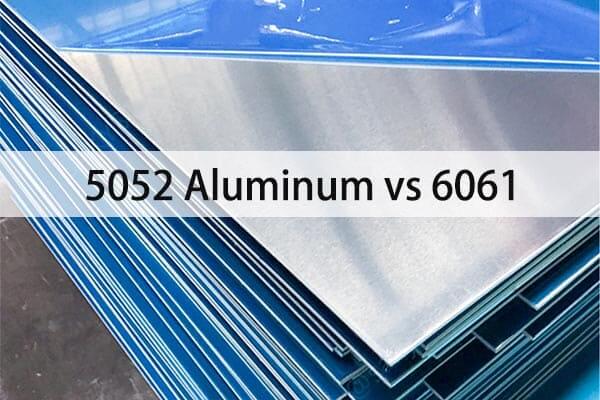
5052 Aluminum vs 6061
To compare 5052 Aluminum and 6061 Aluminum thoughtfully, we start with brief profiles of each alloy, focusing on composition, temper options, and the core characteristics that influence performance in typical applications.
5052 is a magnesium-bearing alloy (with small amounts of chromium and other elements) that is not affected by heat treatment.
The strength and hardness come primarily from work hardening and the magnesium content.
This alloy is renowned for exceptional corrosion resistance, especially in marine and saltwater environments, and for superb formability.
Key points:
– Non-heat-treatable alloy: Strength is gained through tempering and mechanical work; no aging heat treatment to increase strength.
– Temper examples: H32 and H34 are common for sheet and plate usage, with H32 representing half-hard temper and H34 representing moderately stronger work-hardened state.
– Formability: Excellent bending and deep-drawing capabilities; excellent ductility makes it ideal for complex shapes.
– Corrosion resistance: Outstanding, particularly in coastal and marine atmospheres. Naturally protective anodized finishes are commonly used.
– Weldability: Very good. Welds well with common welding processes, and heat-affected-zone (HAZ) issues are less severe than in heat-treatable alloys.
– Typical uses: Fuel tanks, marine hull components, refrigerant coils, pressure vessels, and a wide range of sheet-metal applications where corrosion resistance and formability are critical.
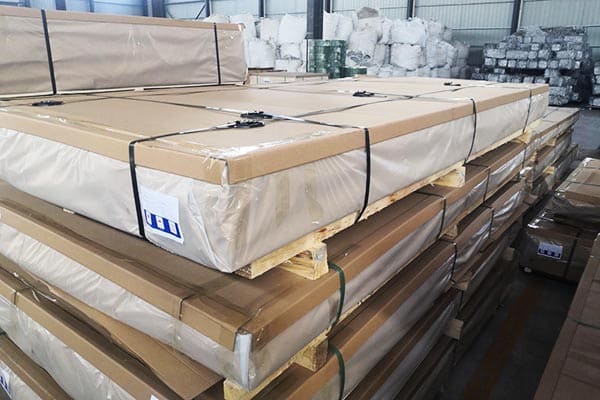
Aluminum Sheet Packaged By Huasheng
6061 is a heat-treatable alloy in which strength is enhanced through aging (T6 temper is widely used).
It blends good mechanical properties with excellent machinability, solid corrosion resistance for many environments, and broad commercial availability.
Key points:
– Heat-treatable alloy: Strength is adjusted through aging; T6 temper is common for maximum strength.
– Temper examples: T6 (quenched and artificially aged), T4 (solution heat-treated and naturally aged), and other tempers used for specific applications.
– Formability: Good, but not as forgiving as 5052 in complex forming or extremely deep draws. T6 can be more brittle than non-heat-treated alloys in some forming operations.
– Corrosion resistance: Good, especially with protective anodizing; however, in highly aggressive marine environments, 5052 may have the edge due to non-heat-treatable nature and slightly higher corrosion resistance in certain conditions.
– Weldability: Generally weldable, but heat-treatable alloys can suffer from heat-affected-zone issues if welded without proper filler metals and process control.
– Typical uses: Structural components, aircraft and automotive applications, extrusions, bike frames, and precision parts requiring higher strength-to-weight ratios and consistent mechanical properties.
Understanding the mechanical properties of alloys in typical tempers is essential when predicting performance in your specific application.
The numbers below reflect typical, widely cited ranges for common tempers—5052-H32 and 6061-T6. Real-world results will vary with thickness, processing, and environmental exposure.
Property comparison (typical values, room temperature):
– Ultimate Tensile Strength (UTS): 5052-H32: ~210–230 MPa; 6061-T6: ~310–360 MPa
– Yield Strength (0.2% offset): 5052-H32: ~125 MPa; 6061-T6: ~275 MPa
– Elongation at break: 5052-H32: ~12–25%; 6061-T6: ~8–12%
– Hardness (HB or equivalent): 5052-H32 moderate; 6061-T6 higher due to precipitation hardening
– Density: ~2.66–2.70 g/cc for both alloys (very similar)
– Modulus of Elasticity: ~69 GPa for both (approximate)
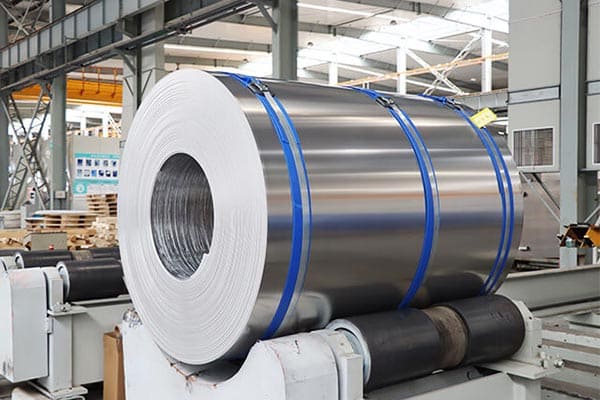
5052 Aluminum Coil Mill Finished
Interpretation:
– Strength gap: 6061-T6 substantially stronger than 5052-H32, which makes 6061 preferable when load-bearing capacity is critical.
– Formability trade-off: 5052-H32’s higher ductility and exceptional formability shine in complex shapes and heavy stamping.
– Corrosion behavior: 5052 generally wins in marine or chloride-rich environments; 6061 resists corrosion well but can be more vulnerable in certain long-term deployments where heat treatment contributes to microstructural changes.
These properties help explain the typical project outcomes: 5052 for forms and robustness in harsh environments; 6061 for strength and precision where machining and structural integrity matter.
Your manufacturing method choices—bending, stamping, extrusion, welding, and finishing—will interact differently with 5052 and 6061.
Here are practical considerations to guide your process planning.
Corrosion resistance is not a single-dimensional attribute; it depends on environment, protective coatings, and surface treatments.
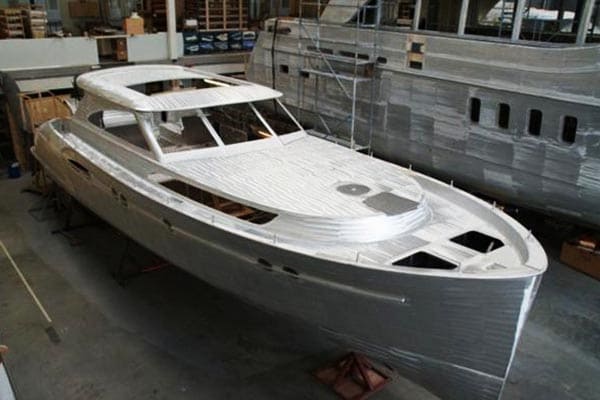
Here’s how 5052 and 6061 compare in typical service conditions.
An important nuance: anodizing 6061 creates a hard, protective anodic layer on the surface, which can dramatically improve wear and corrosion resistance, especially in outdoor or humid conditions. 5052 can also be anodized, but the results vary with temper and thickness of the oxide layer.
Welding strategy matters more for 6061 than for 5052 in some scenarios because 6061’s heat-treatable microstructure is more sensitive to heat input and subsequent aging behavior.
Understanding the real-world applications where each alloy excels can prevent over-engineering or under-engineering a project.
Here are representative use cases to illustrate the practical decision between 5052 and 6061.
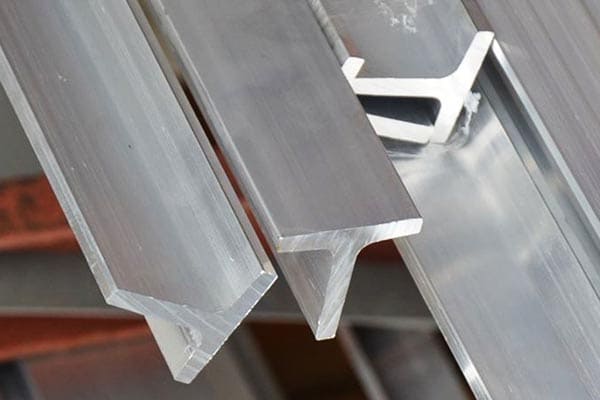
6061 Aluminum Structural Components
Economic and supply chain considerations are often decisive in material selection, especially for large-scale manufacturing or time-sensitive projects.
| Property | 5052 Aluminum | 6061 Aluminum |
|---|---|---|
| Alloy Series | 5xxx (Al-Mg) | 6xxx (Al-Mg-Si) |
| Primary Alloying Elements | Magnesium | Magnesium, Silicon |
| Heat Treatable | ❌ No | ✅ Yes |
| Typical Density | ~2.68 g/cm³ | ~2.70 g/cm³ |
| Strength (Typical) | Medium | Medium-High |
| Corrosion Resistance | Excellent (Marine-grade) | Good |
| Weldability | Excellent | Good |
| Formability | Excellent | Moderate |
| Machinability | Fair | Good |
| Fatigue Resistance | Good | Moderate |
| Common Tempers | H32, H34 | T6, T651 |
| Typical Sheet/Plate Uses | Marine panels, fuel tanks, enclosures | Structural parts, frames, brackets |
| Typical Extrusion Uses | Limited | Excellent |
| Cost | Slightly higher | Moderate |
| Best Choice When | Corrosion resistance & bending are critical | Higher strength & machining are required |
For teams looking to source reliable aluminum materials aligned with the 5052 and 6061 comparisons, Huasheng Aluminum offers a robust supplier profile worth considering.
Huasheng Aluminum is a well-established manufacturer and supplier of aluminum products, with capabilities spanning:
Choosing a supplier like Huasheng Aluminum can reduce procurement risk, especially when projects demand consistent material quality, traceability, and reliable lead times. When engaging with any supplier, request:
– Certifications (ISO, material compliance, etc.)
– Material test reports (MTRs) for batch traceability
– Detailed temper and finishing specs
– Sample availability for pre-purchase evaluation
– Clear terms on packaging, shipping, and returns
Remember: the procurement phase is a critical design decision. The material you receive should be traceable, meet your specified temper and thickness, and arrive with documentation that supports your quality assurance process.
Q: What is the main difference between 5052 Aluminum vs 6061 Aluminum?
A: 5052 is a non-heat-treatable alloy with excellent formability and corrosion resistance, especially in marine environments. 6061 is a heat-treatable alloy that provides higher strength and good machinability but requires careful heat treatment and joining considerations.
Q: Which alloy is better for a marine fuel tank?
A: 5052 is typically preferred for marine fuel tanks due to its superior corrosion resistance and formability. It handles bending and shaping well without cracking, which is important for complex tank geometries.
Q: Can I weld 6061?
A: Yes, 6061 can be welded, but it requires careful process control and appropriate filler materials to minimize issues in the heat-affected zone. Post-weld treatment or design measures to limit heat input are common.
Q: Is 6061 stronger than 5052?
A: Yes, in most cases, 6061-T6 offers significantly higher yield and tensile strength than 5052-H32. The trade-off is lower ductility under certain forming conditions and a greater sensitivity to heat treatment and welding.
Q: Which alloy is cheaper?
A: Generally, 5052 is less expensive because it is non-heat-treatable and easier to produce in a wide range of gauges. 6061 tends to be more costly due to alloy content and aging processes.
Q: How do I choose the right temper?
A: For maximum formability, 5052-H32 or H34 is often preferred. For higher strength and stiffness, 6061-T6 is commonly selected. Always verify that the temper aligns with your forming, joining, and finishing processes, and request MTRs to confirm material properties.
Q: Are there important finishing differences between 5052 aluminum VS 6061?
A: Yes. 6061 often accepts excellent anodizing finishes with uniform coloration and wear resistance. 5052 also accepts anodizing and coatings well, but the results can vary more with thickness and the complexity of the geometry.
The “ultimate metal showdown” between 5052 Aluminum and 6061 Aluminum is not simply about which alloy is stronger or cheaper; it’s about matching material properties to your design intent, manufacturing capabilities, and service environment.
5052’s exceptional formability and marine-grade corrosion resistance make it a strong choice for tanks, hull panels, and components that must endure corrosive environments without sacrificing shape.
6061’s superior strength, consistency, and machinability favor structural members, precision components, and assemblies that demand robust performance under load and after fabrication.
By understanding the core properties, processing considerations, and typical use cases presented here, you can make evidence-based decisions that optimize performance, durability, and total cost of ownership for your project.
If you’re sourcing materials and want a partner with proven capabilities in both 5052 and 6061, consider Huasheng Aluminum. Their focus on quality, customization, and reliability, combined with a portfolio of sheet, plate, and extrusion options, can support your procurement and production needs from prototype to production.
Share with PDF: Download

Henan Huasheng Aluminum Co., Ltd (HHALU for short), established in 2001, is located in Huiguo Town, the famous Aluminum capital of Henan Province, It's a professional manufacturer and engages in the research, development, production, sales and service of aluminum sheet plate, aluminum coil, aluminum foil, aluminum strip and aluminum circle.
In addition, HHALU also sell aluminum plate for construction and ships, aluminum mirror plate, and automotive aluminum alloy plate.
No.53, Dongming Road, Zhengzhou, Henan, China
Copyright © Huasheng Aluminum 2025. All rights reserved.
