Among the myriad of materials employed, aluminum foil for flexible packaging has emerged as an indispensable component, setting an unparalleled benchmark for protection and versatility.
Its unique properties enable packaging solutions that are not just efficient but also crucial for product integrity across diverse industries, from perishable foods to sensitive pharmaceuticals.
This comprehensive article delves into the inherent advantages, technical specifications, and strategic applications that firmly establish aluminum foil as the gold standard in flexible packaging, offering profound insights for engineers, brand managers, and material specifiers alike.
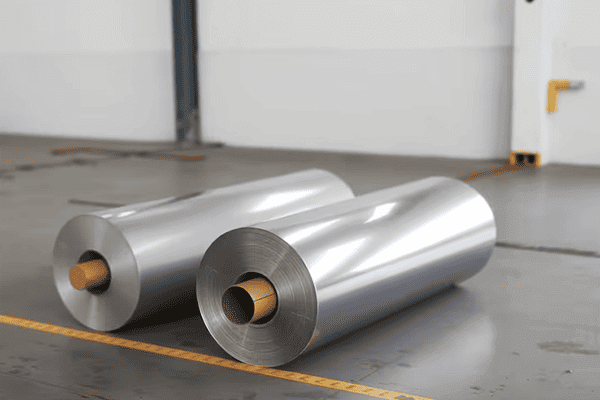
Aluminum Foil for Flexible Packaging
Aluminum foil, an extraordinarily thin sheet of pure aluminum, possesses a unique constellation of properties that render it supremely effective in flexible packaging.
These characteristics stem directly from aluminum’s metallic nature and the precise rolling processes that reduce it to micrometer thicknesses.
This is arguably the most critical advantage of aluminum foil for flexible packaging. Aluminum foil is virtually 100% impermeable to gases, moisture, light, and aroma.
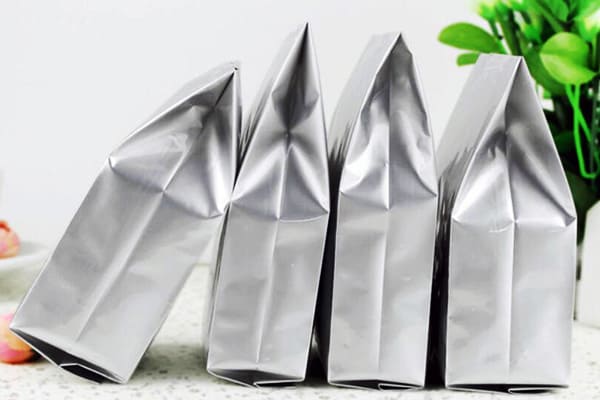
Aluminum Foil for Food Packaging
Aluminum foil is exceptionally malleable and ductile. It can be intricately shaped around products and, crucially, retains its folded or creased shape.
This “dead-fold” characteristic is vital for:
Aluminum is an excellent conductor and reflector of heat.
Aluminum foil is non-toxic, tasteless, and odorless. It is a chemically inert material, making it safe for direct contact with food and pharmaceuticals.
Regulatory bodies worldwide, including the FDA, approve it for such uses.
Despite its robust barrier properties, aluminum foil is incredibly lightweight, minimizing the overall mass of packaging.
This contributes to reduced transportation costs and a lower environmental footprint throughout the supply chain.
The creation of aluminum foil for flexible packaging is a marvel of metallurgical engineering, demanding immense precision. The process typically involves:
This highly controlled process ensures the consistent thickness, pinhole-free quality, and mechanical properties essential for high-performance flexible packaging.
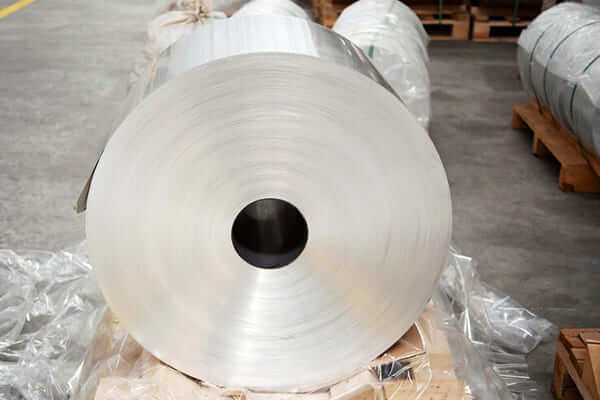
Huasheng Flexible Packaging 8011 Aluminum Foil
| Alloy | Key Properties | Applications |
|---|---|---|
| 8011 | – Excellent moisture, air, and light barrier – Good corrosion resistance – High strength-to-weight ratio | Food and beverage packaging (e.g., candy wrappers, yogurt lids), pharmaceutical blister packaging, and household foil. |
| 8021 | – Superior barrier properties – High puncture resistance – Good flexibility | High-performance pharmaceutical packaging (e.g., blister packs), food packaging for liquids and oils, and retort pouches. |
| 8079 | – Excellent flexibility – Good corrosion resistance – High strength | Pharmaceutical strip packs and laminates, aseptic packaging, and food pouches for sensitive items. |
| 1235 | – Soft and lightweight – Good corrosion resistance – Cost-effective | Laminated foil for food packaging (e.g., chips, tea, and coffee pouches), cigarette packaging, and household foil. |
| 3003 | – Moderate strength and corrosion resistance – Good formability – Lightweight | Food service foil, industrial packaging, and coated foil for heat-sealable applications. |
| 1145 | – Nearly pure aluminum – Excellent barrier properties – High corrosion resistance | Pharmaceutical packaging, heat-sealable pouches, and food packaging needing superior protection. |
| Alloy | Barrier Properties | Flexibility | Strength | Corrosion Resistance | Cost |
|---|---|---|---|---|---|
| 8011 | High | Moderate | Moderate | High | Affordable |
| 8021 | Very High | Moderate | High | High | Moderate |
| 8079 | High | High | Moderate | High | Affordable |
| 1235 | Moderate | High | Low | Moderate | Very Affordable |
| 3003 | Moderate | Moderate | Moderate | Moderate | Affordable |
| 1145 | Very High | Moderate | Low | Very High | Moderate |
Integrating aluminum foil for flexible packaging offers a host of critical benefits that directly impact product quality, consumer convenience, and operational efficiency:
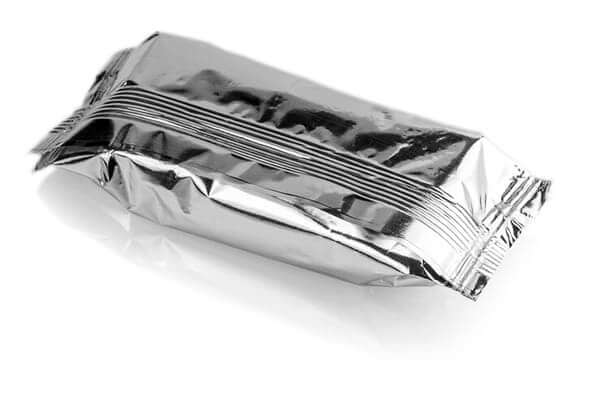
Advantages of Aluminum Foil for Flexible Packaging
The diverse and critical applications of aluminum foil for flexible packaging underscore its indispensable role across multiple industries.
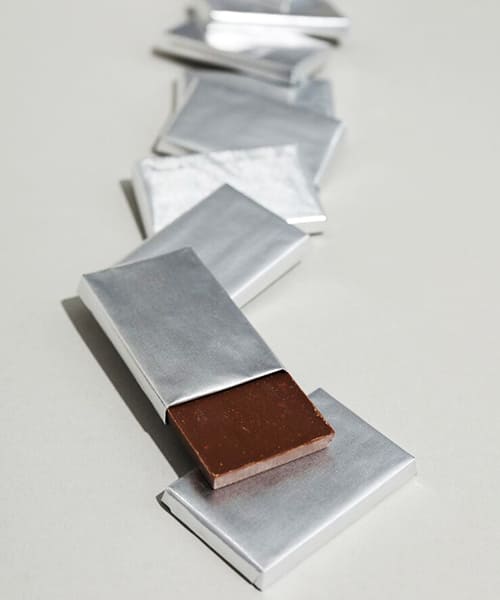
Chocolate packaging Aluminum Foil
While various materials offer barrier properties, aluminum foil for flexible packaging often stands distinct in its performance profile.
| Feature / Material | Aluminum Foil (as part of a laminate) | Plastic Films (e.g., PET, OPP, Nylon, EVOH) | Metallized Films (e.g., Met-PET, Met-OPP) |
| Barrier to Oxygen | Excellent (practically zero OTR) | Moderate to Poor (e.g., OTR 50-1000 cm³/(m²·day·atm)) | Good (e.g., OTR 1-10 cm³/(m²·day·atm)), but not absolute |
| Barrier to Moisture | Excellent (practically zero WVTR) | Moderate to Poor (e.g., WVTR 5-50 g/(m²·day)) | Good (e.g., WVTR 1-5 g/(m²·day)), but not absolute |
| Barrier to Light | Complete opacity | Transparent (requires UV additives if needed) | Good (opaque/translucent), but can transmit some light through pinholes |
| Barrier to Aroma | Excellent | Moderate to Poor | Good, but can be compromised |
| Formability | Excellent (dead-fold, deep draw) | Excellent (flexible, stretchable) | Good, but can be prone to flex cracking impacting barrier |
| Puncture Resistance | Moderate (can be pinholed) | Varies by polymer (good for nylon/polyester) | Moderate (very thin metal layer) |
| Weight | Very Lightweight | Very Lightweight | Very Lightweight |
| Cost | Moderate to High (depending on thickness/lamination) | Low to Moderate | Low to Moderate |
| Recyclability | High for pure foil; Challenging for multi-material laminates | Varies by polymer type (some recyclable, many not) | Challenging for multi-material laminates |
Insight: While plastic films offer transparency and metallized films provide an improved barrier at a lower cost, neither can match the absolute, multi-faceted barrier performance of aluminum foil. This makes foil the material of choice when product degradation from environmental factors must be entirely prevented.
Aluminum foil is rarely used alone in flexible packaging. It almost always forms part of a multi-layer laminate, where it is bonded to various plastic films (e.g., PET, PP, PE, Nylon) or paper.
This lamination process combines the best properties of each material, creating a synergistic structure that is far more capable than its individual components.
Common laminate structures involving foil include:
Benefits of lamination include:
The environmental impact of packaging is a critical concern, and aluminum foil for flexible packaging plays a complex yet often beneficial role in sustainability.
For manufacturers seeking reliable, high-quality aluminum foil for flexible packaging, partnering with an experienced and technologically advanced supplier is paramount.
Huasheng (e.g., Henan Huasheng Aluminum Co., Ltd.) stands as a reputable and significant player in the aluminum industry, recognized for its commitment to excellence in producing aluminum foil.
Companies like Huasheng leverage state-of-the-art rolling mills, stringent quality control systems, and a deep understanding of metallurgy to produce a comprehensive range of aluminum foil products, including various alloys (e.g., 8011, 8079) and tempers specifically optimized for flexible packaging applications.
Their focus on consistent thickness, superior surface quality, and adherence to international food-grade standards ensures that their aluminum foil meets the rigorous demands of food, pharmaceutical, and other critical industries globally, making them a trusted partner in enabling advanced packaging solutions.
Q1: Is aluminum foil truly 100% impermeable?
A1: For practical purposes in packaging, yes. A properly manufactured, undamaged aluminum foil sheet (typically 6–9 µm thick) provides an absolute barrier, with OTR and WVTR values essentially at zero.
Minor pinholes can occur in ultra-thin gauges, but these are statistically insignificant in well-made laminates, which further compensate.
Q2: What are typical thicknesses of aluminum foil used in flexible packaging?
A2: Thicknesses vary widely by application. For general food packaging, it’s often 6-9 micrometers (µm).
For pharmaceutical blister lidding, it might be 20-30 µm for increased strength. Coffee bags might use around 9-12 µm.
Q3: Is aluminum foil safe for direct food contact?
A3: Yes, food-grade aluminum foil is considered safe for direct food contact by regulatory bodies worldwide (e.g., FDA, EFSA).
Aluminum is inert and non-toxic. While trace amounts of aluminum can migrate into food, especially with acidic items, these levels are well below established safe thresholds.
Q4: Is aluminum foil from flexible packaging recyclable?
A4: Yes, aluminum itself is 100% recyclable.
However, recycling multi-material flexible packaging laminates (foil bonded to plastics) can be challenging due to the difficulty of separating the layers in standard recycling facilities.
Dedicated recycling streams or advanced de-lamination technologies are needed for efficient recovery, though efforts are ongoing to improve this.
Pure aluminum foil (like household foil) is readily recyclable in most municipal programs.
Q5: Does the “bright” or “dull” side of aluminum foil matter for its performance?
A5: For flexible packaging, the difference between the bright (shiny) and dull (matte) sides, which results from the manufacturing process (pack rolling), has virtually no impact on barrier properties or heat transfer.
The choice of which side faces outwards is typically for aesthetic or printing purposes.
The strategic deployment of aluminum foil for flexible packaging stands as a cornerstone of modern industrial integrity and consumer satisfaction.
Aluminum foil offers unmatched barrier properties against oxygen, moisture, light, and aroma, making it essential for extending shelf life, protecting quality, and ensuring safety in critical sectors.
Coupled with its excellent formability, thermal performance, and inherent lightness, aluminum foil empowers packaging solutions that are both highly efficient and environmentally intelligent.
Despite the challenges in recycling multi-material laminates, ongoing innovations and the material’s fundamental sustainability credentials ensure its enduring relevance.
Supported by the precision manufacturing and quality commitment of suppliers like Huasheng, aluminum foil will undoubtedly continue to be the indispensable guardian of quality, driving forward the evolution of flexible packaging for a more secure and sustainable future.

Henan Huasheng Aluminum Co., Ltd (HHALU for short), established in 2001, is located in Huiguo Town, the famous Aluminum capital of Henan Province, It's a professional manufacturer and engages in the research, development, production, sales and service of aluminum sheet plate, aluminum coil, aluminum foil, aluminum strip and aluminum circle.
In addition, HHALU also sell aluminum plate for construction and ships, aluminum mirror plate, and automotive aluminum alloy plate.
No.53, Dongming Road, Zhengzhou, Henan, China
Copyright © Huasheng Aluminum 2025. All rights reserved.
