Introducción
In the world of flexible packaging and high-capacity industrial applications, materials that combine lightness, muuk', barrier performance, and processability command premium attention. Among these, 12μm 8011 O coated aluminum foil stands out as a versatile option for packaging, aislamiento, and technical laminates. This post delves into the key aspects of 12μm 8011 O Coated Aluminum Foil, explaining what the specification means, how the coating enhances performance, and why this material can be a strategic choice for manufacturers and brands alike.
We’ll explore practical details—from the fundamental metallurgy of 8011 and the O temper to coating technologies, application niches, testing standards, supplier considerations, and procurement guidance.
Throughout, we will reference the supplier landscape, including Huasheng Aluminum, to illustrate real-world supply dynamics and capabilities for 12μm 8011 O coated foil.
If you’re evaluating thin aluminum foils for food packaging, pharmaceutical lidding, or laminated insulation products, understanding the interplay between alloy, atemperar, and coating is essential.
The phrase “12μm 8011 O Coated Aluminum Foil” captures a specific combination: extrafine foil with a soft, annealed temper and a coating layer designed to meet demanding barrier or sealant requirements.
This article uses that phrase intentionally to anchor a comprehensive discussion that is practical, data-informed, and aligned with Google SEO standards, so you can find reliable insights quickly and apply them to your product development, procurement, or quality assurance processes.
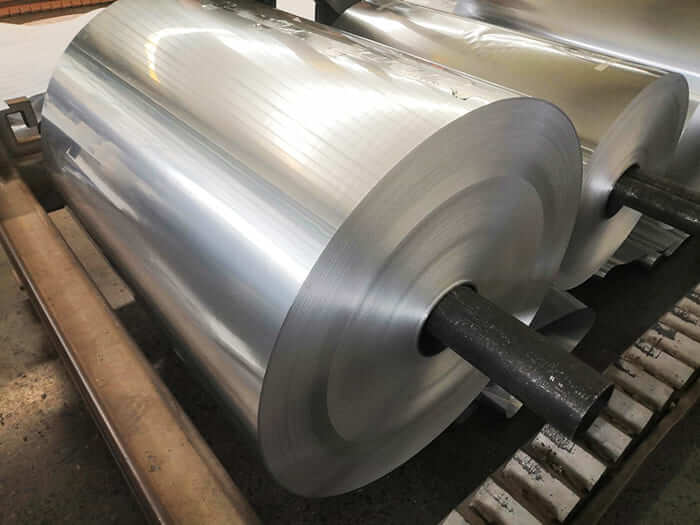
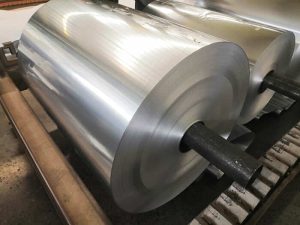
12μm 8011 O Coated Aluminum Foil
What is 12μm 8011 O Coated Aluminum Foil?
To understand the value proposition of 12μm 8011 O coated foil, we must unpack each component of the term and then synthesize why they work well together in many industrial settings.
Aleación 8011 and the O Temper
- Aleación 8011 ju'un aluminio is part of the 8000-series aluminum family, specifically developed for highly formable foil applications. It contains some manganese and limited magnesium to improve strength and workability while keeping the material lightweight and ductile.
- The “O” temper denotes an annealed condition, i.e., the foil is in its softest, most formable state. In the O temper, the material exhibits higher elongation and formability, which is important when the foil must be curled, laminated, or thermoformed without cracking.
- Typical properties of 8011-O foil include:
- High ductility and excellent formability
- Ma'alob resistencia ti' le corrosión
- Moderate surface finish options (mirror-like or matte)
- A relatively low strength level, which is suitable for wrapping, sealing, and lamination operations without fracturing
The Significance of 12μm Thickness
- A thickness of 12 micrometers (μm) places the foil at the thinnest end of many packaging foils, offering superior flexibility and low material weight. This thickness supports high-speed lamination and coating lines, reduces raw material costs per unit area, and enables tight roll form factors for consumer-friendly packaging.
- The thin profile also enhances surface contact during heat sealing and lamination, contributing to reliable seal integrity when paired with appropriate coatings.
The Role of Coating
- The term “coated” refers to applying a surface treatment or a thin polymer/biopolymer layer to aluminum foil to add properties such as improved heat sealability, enhanced moisture and gas barrier performance, anti-fogging behavior, better slip for handling, and compatibility with adhesives in laminates.
- Common coating chemistries include LDPE (low-density polyethylene), EVA (ethylene-vinyl acetate), PE (polyethylene), PP (polypropylene), PET (polyethylene terephthalate) or functionalized coatings that improve adhesion or barrier. In some cases, a functional coating is designed to act as an adhesive interlayer, enabling direct lamination, or to provide a moisture barrier that protects sensitive contents.
- The choice of coating depends on the final product requirements, Incluido:
- Propiedades barrera (water vapor, oxígeno)
- Heat-seal temperature range and seal strength
- Compatibility with other lamination layers (films, inks, Recubrimientos)
- Food contact compliance and regulatory standard alignment
- Printing or surface treatment requirements
Bey u, 12μm 8011 O coated aluminum foil is a thin, annealed aluminum foil with a coating that tailors barrier, sealability, and processing characteristics for a range of laminated packaging and industrial applications.
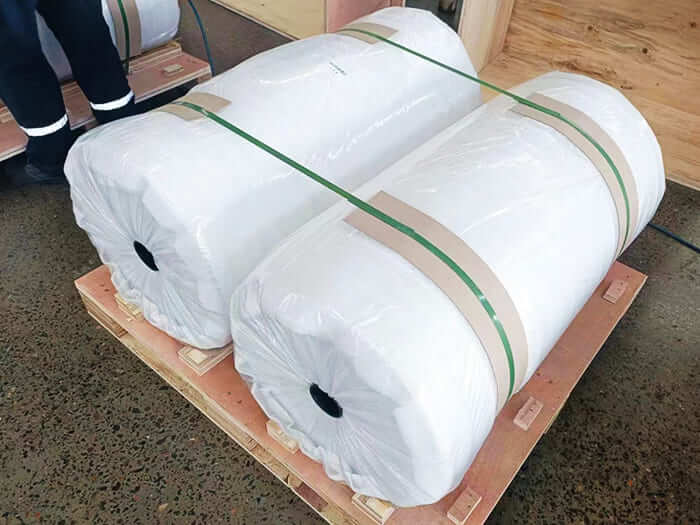
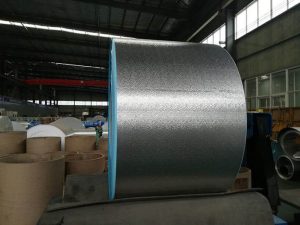
Huasheng Packaged 8011 O Coated Aluminum Foil
Key Properties and Performance of 12μm 8011 O Coated Foil
This section highlights the primary performance dimensions you can expect from 12μm 8011 O coated foil, along with practical implications for design, processing, and quality control.
Propiedades mecánicas yéetel meyajtbilo'
- Espesor: 12 μm. This ultra-thin profile supports high flexibility and low weight per unit area.
- Atemperar: O (Recocido). The foil is soft and highly formable, enabling robust wrapping, embutición taam, and complex lamination geometries.
- Resistencia le tracción: Lower than harder tempers, but sufficient for most packaging lamination processes when properly supported by coatings and downstream laminates.
- Alargamiento: High elongation is typical, which reduces cracking risk during bending, rodante, or micro-adhesive bonding steps.
- Acabado superficial: Options include bright (mirror-like) or matte surfaces, depending on the rolling and finishing process. Surface finish can influence adhesion and printability.
Barrier and Sealing Properties
- Moisture Barrier: The aluminum foil itself provides an excellent barrier to water vapor, but the overall barrier depends on the coating and lamination sequence. A high-quality coating can complement the foil’s barrier by improving sealing stability and reducing moisture ingress at interfaces.
- Oxygen Barrier: Aluminum foil is an excellent barrier to oxygen on its own, and coatings can be chosen to maintain or improve oxygen barrier in laminated structures, especially when combined with polymer layers.
- Seal Integrity: Heat-seal performance is influenced by the coating type and thickness, as well as the lamination temperature. A suitable coating improves seal strength and reduces seal leakage under typical consumer storage conditions.
Thermal and Chemical Compatibility
- Temperature Range: Foil with coatings designed for heat sealing can withstand typical packaging processes (p'el ej.., sealing around 90–180°C depending on the coating and adhesive system). It’s essential to ensure the coating is compatible with the intended sealing temperatures and the downstream product temperature exposure.
- Chemical Resistance: The coating can provide resistance against solvents or reagents used in the packaging process or product contents. For pharmaceutical and food applications, certification and migration data are critical.
Surface Treatment and Adhesion
- Coating adhesion is essential for the long-term performance of laminated structures. Proper surface preparation and coating selection yield robust adhesion to adhesives, printing inks, and other lamination layers.
- Adhesion tests commonly used include peel tests under defined conditions, cross-hatch tape tests, and functional lamination tests with representative adhesive formulations.
Regulatory and Food Safety Considerations
- Food-Contact Compliance: For any packaging intended for consumer foods, the coating and adhesive systems must comply with relevant food-contact regulations (p'el ej.., FDA in the United States, EFSA in the European Union, and other national regulatory bodies). Documentation should cover migration limits, approved substances, and safety data.
- Pharmaceutical and Medical Applications: When manufacturers use the foil for pharmaceutical packaging, they must meet additional regulatory requirements, including providing stability data and conducting pharmacopeial compatibility testing.
- Environmental Certifications: As sustainability considerations rise, documentation such as REACH compliance, RoHS, and environmental product declarations may be relevant for customers.
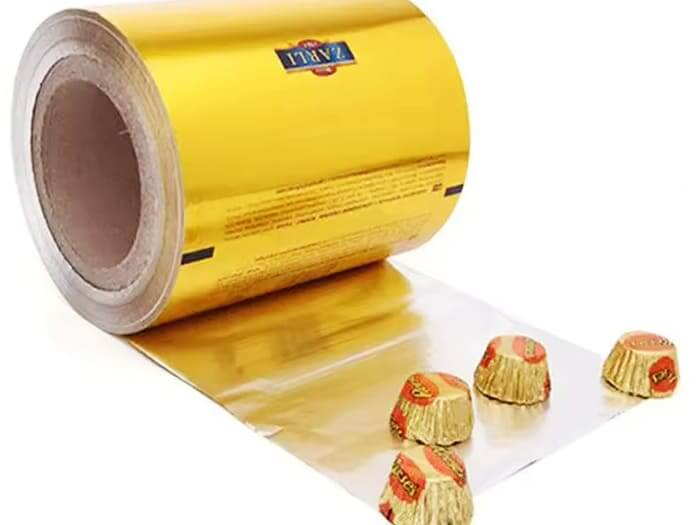
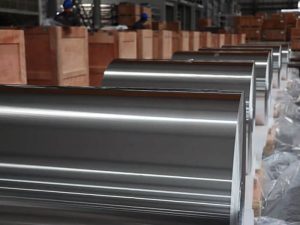
12μm 8011 O Coated Aluminum Foil for Chocolate Packaging
The Manufacturing Pathway of 12μm 8011 O Coated Foil
Understanding the journey from raw metal to finished product helps buyers design better specifications and fosters better collaboration with suppliers such as Huasheng Aluminum.
Casting and Metallic Preparation
- Primary aluminum is cast into billets or rolled from ingots, depending on supplier capabilities.
- Impurities are minimized by refining processes to achieve the desired alloy composition for 8011, with attention to achieving uniform distribution of alloying elements like manganese.
Rolling to Achieve 12 μm Thickness
- The foil is produced via successive cold rolling processes, with intermediate annealing steps to avoid work hardening while achieving the final thickness of 12 μm.
- Tension and speed control are critical to maintaining uniform thickness, surface quality, and dimensional stability across wide reels.
O Temper (Recocido) Ts'a'akal
- The foil is annealed to achieve the O temper, which enhances ductility and formability.
- Annealing conditions are tuned to strike a balance between softness and surface quality, ensuring that the foils can be easily laminated and sealed in downstream processes without cracking.
Surface Treatment and Cleaning
- Surface cleaning and conditioning remove oils and residues that could affect coating adhesion.
- Surface roughness and energy are measured to ensure proper coating application and subsequent adhesion performance.
U kaambalil yo'osal recubrimiento
- Coatings are applied to one or both sides of the foil, depending on the intended laminate structure and process flow.
- Coating methods include extrusion coating (where a polymer melt is extruded and layered onto the foil), lamination with pre-coated films, or direct application of functional coatings via gravure/slot-die methods.
- Coating thickness is controlled to achieve the desired barrier, seal, and adhesive compatibility while maintaining the foil’s ultra-thin profile.
Curado, Cooling, and Quality Checks
- Post-coating curing or cooling stabilizes the coating and ensures proper adhesion.
- Inline testing includes thickness measurements, coat weight checks, adhesion tests, and surface inspection to detect pinholes or defects.
Corte, Rewinding, and Packaging
- The coated foil is slit to customer-specified widths and rolled into master or jumbo rolls for downstream lamination.
- Packaging is designed to protect the foil from abrasion, moisture, and contamination during storage and transport.
A practical takeaway: when selecting a supplier, verify their end-to-end capabilities for 12μm 8011 O coated foil, including metallurgical control, coating chemistry expertise, process stability, and the ability to provide full traceability of lot numbers, Recubrimientos, and test results.

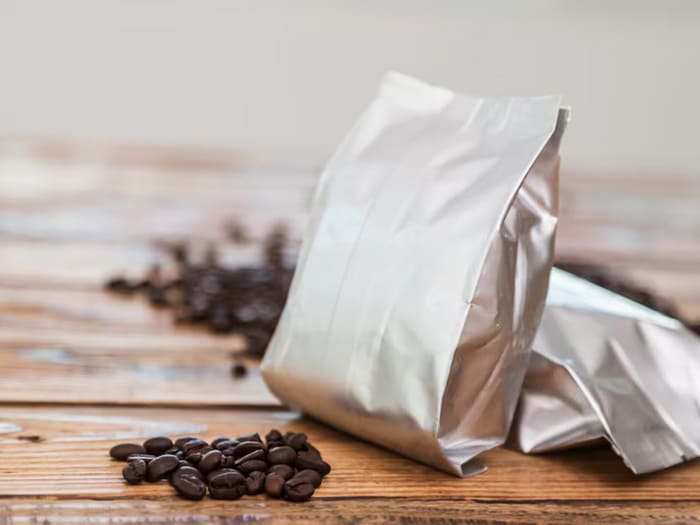
Flexible Packaging Coated Aluminum Foil
Coatings on 12μm 8011 O Foil: Types, Propiedades, and Selection
Coating selection is often the most consequential decision in designing a laminated structure.
Here we outline typical coating families, their benefits, and the trade-offs you should consider.
Common Coating Families
- LDPE and HDPE-based coatings: Provide good heat-sealability and moisture barrier, with relatively low cost. Ideal for simple lamination stacks and food packaging requiring straightforward sealants.
- EVA and PE-based functional coatings: Improve elasticity and bonding with various adhesives, expand sealing ranges, and offer good chemical resistance for certain products.
- PET and polyolefin multilayer coatings: Enhance barrier performance, chemical resistance, and printability where needed, often used in high-end laminates with multiple functional layers.
- Functional coatings (antistatic, barrier-enhancing, or anti-adhesion): Specialize in niche requirements such as electronics packaging, medical devices, or high-barrier applications. These coatings may require compatibility testing with inks and adhesives.
Comparative Properties by Coating Type (Illustrative)
| Coating Type |
Typical Barrier Benefit |
Heat-Seal Range (° C) |
Adhesion Compatibility |
Aplicaciones náats'al |
Typical Cost Impact |
| LDPE |
Moderate moisture barrier, good sealability |
90–130 |
High with compatible laminates |
Envasado janalbe'eno'ob, snack bags |
U jo'osa'al ti' moderada |
| EVA |
Enhanced sealing flexibility |
110–150 |
Good with polyolefins |
Fresh food packaging, lechería, Aperitivos |
Moderado |
| PET-coated |
High barrier, rigidity, good printability |
150–180 |
Moderado; often requires adhesive systems |
High-end laminates, medical packaging |
Higher |
| Functional coatings |
Tailored barrier, specialty functions |
Varía |
Varies by chemistry |
Electrónica, specialty packaging |
Higher, variable |
| Multi-layer coatings |
Optimized performance across several properties |
100–170 |
High if designed as a system |
Premium laminates, pharma |
Higher, system-level cost |
Notes:
– The table provides generic guidance; exact performance depends on coating thickness, adhesion layers, and lamination architecture. Always request data sheets and third-party test results for your specific product and process.
Adhesion and Compatibility Testing
- Peel tests: Determine the force required to delaminate the coating layer from the foil or from the laminate.
- Boiling water test: Assesses coating integrity under thermal cycling and moisture exposure; relevant for food and pharmaceutical packaging.
- In-use lamination tests: Simulate production line conditions to verify adhesion to adhesives and printing inks.
Selecting the Right Coating for Your Application
- Envasado janalbe'eno'ob: Prioritize food-contact compliant coatings with reliable heat-seal performance across your sealing equipment. Consider migration testing for sensitive foods.
- Pharmaceutical packaging: Require chemical inertness, strict regulatory compliance, and robust barrier properties to preserve drug stability.
- Electronics packaging: Favor low dust generation, precise adhesion, and anti-static or barrier properties to protect sensitive components.
- Insulation and construction laminates: Emphasize barrier to moisture and oxygen, long-term environmental stability, and compatibility with outer layers.
Applications of 12μm 8011 O Coated Foil
The intended uses of this material typically fall into four broad categories: embalaje, laminación, aislamiento, and specialty applications.
Envasado janalbe'eno'ob
- Inner liners for pouches and sachets
- Heat-sealed packaging in combination with barrier polymers
- Trays and lids where a thin, sealable foil provides a moisture barrier
Key considerations:
– Compliance with food-contact regulations
– Seal strength and seal temperature window
– Printability of coatings for branding and labeling
Beverage and Dairy Packaging
- Lidding foils and cap liners with coatings designed for heat sealing and compatibility with beverage contents
- Moisture barrier and barrier control in laminated structures
Pharmaceutical and Medical Packaging
- Blister and blister-lid foil alternatives that require precise barrier control and safe adhesive interactions
- Tamper-evident seals and barrier layers for drug stability
Industrial and Construction Laminates
- Insulation laminates with moisture barrier properties
- Protective films for agricultural storage, where a combination of barrier, light protection, and mechanical flexibility matters
Electronics and Specialty Markets
- EMI shielding potential in some laminates, depending on coating properties
- Cleanroom-grade films and packaging requiring low particle generation and high seal reliability
Supplier Spotlight: Aluminio Huasheng
In the supply chain for 12μm 8011 O coated foil, choosing the right partner matters as much as choosing the right material.
Aluminio Huasheng provides a practical case study of what to expect from a modern aluminum foil supplier in this niche.
About Huasheng Aluminum
- Huasheng Aluminum is a producer and supplier of aluminum foil products with a focus on thin foils, consumer packaging foils, and technical laminates. The company emphasizes integrated production capabilities, traceability, and customization options that align with the needs of brands seeking specialized foils.
- Core capabilities include:
- Tightly controlled rolling and finishing processes to achieve uniform 12 μm thickness across large reels
- In-house coating capabilities or strong relationships with coating partners to deliver 12μm 8011 O coated foil
- A quality management system aligned with international standards and customer-specific requirements
- Flexible service levels, including short lead times, tailored packaging, and technical support for lamination and sealing processes
Why Partners Choose Huasheng Aluminum
- Reliability: A track record of delivering consistent thickness and coating performance on large-volume orders.
- Personalización: Ability to tailor temper, coating type, Acabado superficial, and coating thickness to match customer needs and the lamination stack.
- Bix técnico: Access to process engineers who understand both foil metallurgy and coating chemistry, which helps optimize material compatibility with adhesives and laminates.
- Compliance: The supplier emphasizes quality control, regulatory compliance, and traceability across batches, which is essential for packaging, food, and medical applications.
What You Should Verify When Engaging a Supplier
- Coating data and compatibility: Request full coating data sheets, cure temperatures, film thickness, and adhesion data relevant to your adhesive system.
- Regulatory documentation: Ensure food-contact compliance, migration data, and any required certifications for your market.
- Lot traceability: Demand traceable lot numbers and certificates of analysis (COAs) for every batch.
- Sample testing: Obtain samples for your team’s own seal strength tests, adhesion tests, and barrier testing to validate performance before large-scale procurement.
- Lead times and MOQs: Confirm minimum order quantities, production lead times, and the supplier’s capacity to scale with your demand.
Aseguramiento le Calidad yéetel Certificaciones
Quality control is pivotal when working with thin foils and coatings, where small defects can compromise seal integrity, barrier performance, or downstream lamination.
Common Standards and Practices
- ISO 9001: Quality management system ensuring consistent process control, traceability, and continuous improvement.
- ISO 14001: Environmental management system addressing the environmental impact of production and waste management.
- Product-specific standards: Depending on the coated foil’s intended market, compliance with food-contact regulations (p'el ej.., FDA, EFSA), pharmaceutical packaging guidelines, or other regulatory frameworks may be required.
- Third-party testing: Independent testing or certification (p'el ej.., SGS, CIQ) confirming barrier properties, migration data, and mechanical performance.
Practical QA Steps
- In-process thickness monitoring: Inline gauges ensure the 12 μm target is maintained along the roll.
- Coating weight control: Uniform coating thickness with tight tolerances to guarantee seal strength consistency.
- Adhesion tests: Regular peel and cross-cut tests to keep lamination reliability high.
- Surface inspection: Automated optical inspections (AOI) flag pinholes, Arañazos, or coating delamination.
- Final product testing:
- Seal strength tests under defined temperatures
- Barrier tests (p'el ej.., WVTR for moisture, OTR for oxygen)
- Food-contact migration tests if applicable
Comparative Table: 12μm 8011 O Coated Foil vs Alternatives
To help decision-makers contrast options, here is a representative comparison table. Note that actual performance depends on the specific coating, lamination stack, and processing parameters.
| Parámetro |
12μm 8011 O Coated Foil |
9–12μm 8079 O Coated Foil |
15–20μm 3003/8011 Hybrid Foil |
Multi-layer Laminated Foil (with PET/PE) |
| Alloy/Tempered |
8011, O temper |
8079, O temper |
3003/8011 composite, O temper |
N/A (laminated structure) |
| Espesor |
12 μm |
9–12 μm (typical) |
15–20 μm (foil alone) |
Laminates, thickness varies by stack |
| Conformabilidad |
Ka'anal (due to O temper) |
Ka'anal, Utsil conformabilidad |
Moderate to high |
Determined by outer layers |
| Barrier (foil) |
Excellent to very good (foil-dominant) |
Excellent to good |
Jach ma'alo'ob (with polymer cores) |
Dependent on fully laminated stack |
| Heat Sealability |
Coated for reliable sealing |
Coated but typically higher seal temperature may be needed |
Higher seal window if coatings are optimized |
Determined by lamination film and adhesive |
| Costar |
Moderate to higher (coating adds cost) |
Similar or slightly lower depending on coating |
Higher due to complexity |
Higher (multi-layer processing) |
| Aplicaciones |
Envasado janalbe'eno'ob, lidding, thin laminates |
Similar markets; high-speed applications |
Premium laminates with extra protection |
Broad laminates and insulation |
Notes:
– This table provides illustrative guidance. Real-world results depend on exact coating chemistries, lamination structures, processing conditions, and quality control regimes. Always verify with supplier COAs and independent testing.
FAQs About 12μm 8011 O Coated Aluminum Foil
What does 12μm mean, and why is thickness important?
The 12μm thickness indicates a very thin foil, which provides low weight, high flexibility, and excellent drapability for complex laminates. The thin profile helps minimize material consumption while still delivering the barrier properties of aluminum.
Why use 8011 instead of another aluminum alloy for foil?
8011 is a widely used foil alloy for packaging due to its excellent formability, Ma'alob resistencia ti' le corrosión, and compatibility with a variety of coatings and lamination technologies. In the O temper, the foil is particularly easy to form, seal, and laminate.
What does “O coated foil” imply about processing?
“O” refers to the annealed temper, indicating softness and high ductility. “Coated” means a polymer or functional coating is applied to enhance sealing, adhesion, barrier, or processability. The combination supports robust, flexible laminates for a range of applications.
What tests should I request from a supplier?
Request COAs covering composition, coating weight, thickness tolerances, and cure conditions; obtain adhesion test data (peel or cross-hatch), barrier data (WVTR/OTR) for your laminate, and migration data if food or pharmaceutical contact applies; and secure samples for internal validation.
How do I choose between different coatings for the foil?
The choice depends on the intended lamination stack, seal temperature profile, regulatory constraints (especially for food and pharma), and aesthetic considerations (printability, Acabado superficial). Request compatibility data with your adhesives and inks.
How can Huasheng Aluminum meet my 12μm 8011 O coated foil needs?
Huasheng Aluminum emphasizes integrated production, coating capability, and quality control, with a focus on customizing temper, espesor, coating type, and surface finish to support diverse packaging and laminates. Contact their technical team for samples, COAs, and lead-time estimates.
Conclusion: Why 12μm 8011 O Coated Aluminum Foil Matters
In today’s packaging and materials landscape, the combination of 12μm 8011 O temper with a carefully selected coating represents a practical, credible option for manufacturers seeking reliable performance, regulatory compliance, and cost-effective lamination solutions.
By focusing on the alloy, atemperar, coating, and system-level compatibility, brands can optimize their packaging performance while maintaining efficient production workflows.
Should you require a reliable partner for your 12μm 8011 O coated foil needs, Huasheng Aluminum serves as a credible supplier profile with the capacity to support tailored solutions, robust QA, and scalable supply.
If you’re evaluating suppliers or preparing a specification, here are quick reference bullets to keep handy:
- Specification to request: 12 μm ± tolerance, 8011 aleación, O temper, coating type and thickness, cure/heat-seal data, surface finish options, dimensional tolerances, COA with migration/compatibility data, regulatory compliance docs.
- Testing to perform: inline thickness checks, coating weight checks, peel/adhesion tests, seal strength tests, WVTR/OTR tests, aging under expected environmental conditions.
- Documentation to obtain from supplier: full data sheets, sample COAs, certifications (ISO 9001, ISO 14001, food-contact/regulatory), and third-party testing results.
This comprehensive, data-driven approach will help you select the right material and partner for your project while maximizing performance, reliability, and regulatory compliance.
Share with PDF: Download