Az alumíniumgyártás világában, the rolling process plays a crucial role in determining the final properties and quality of aluminum coils. This blog post delves into the different rolling methods of aluminum coils, focusing on continuous cast-rolling and continuous casting and rolling, as well as hot rolling and cold rolling.
Continuous cast-rolling: aluminum slab 7-8 millimeters coiled, then cold rolled to the desired thickness;
Folyamatos öntés és gördülés: aluminum slab 15-20 milliméter, heated and three-stand hot rolled to 1-2 milliméter, finished or further cold rolled to thinner materials;
Forró befejezés gördülni 3-4 milliméter, cooled and coiled, then cold rolled to the desired thickness.
In terms of surface quality: continuous cast-rolling is superior to hot rolling, which is superior to continuous casting and rolling.
In terms of mechanical properties: A meleghengerlés jobb, mint a folyamatos öntés és hengerlés, amely felülmúlja a folyamatos öntvényhengerlést.
A hideghengerlésen átesett termékek finomabb felülettel rendelkeznek, pontosabb dimenziók, valamint a szakítószilárdság és a nyúlás jelentős növekedése, nélkülözhetetlenek az olyan alkalmazásokhoz, amelyek nagy későbbi deformációkat igényelnek.
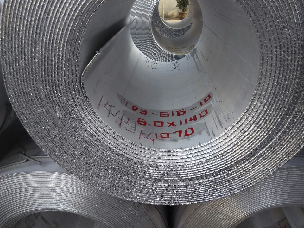
Folyamatos öntvénygörgés
Continuous cast-rolling, más néven közvetlen hűtőhengerlés vagy folyadékhengerlés, olyan eljárás, amelyben a folyékony fémet közvetlenül a hengerrésbe öntik félkész vagy késztermékek előállítására. A hengerek kristályosítóként működnek a folyékony fém számára, és egyidejűleg nyomást gyakorolnak a fém deformálására. Ahogy a folyékony alumínium egy adagolófúvókán keresztül belép az öntési és hengerlési zónába, találkozik a forgó öntő és gördülő hengerekkel.
The heat from the liquid aluminum is quickly absorbed by the cooling water in the rolls, causing a rapid temperature drop and solidification on the roll surface. The rolls then apply a certain amount of rolling reduction to form the cast-rolled coil. The input and output of metal in the casting and rolling zone are always balanced, ensuring a stable continuous casting and rolling process.
Jellemzően, the width of the slab is determined by the finished product width specified in the order. The conventional coiling thickness is 7-8 milliméter, with a maximum width of up to 2000 milliméter.
Since the process occurs at solid-state temperatures, the material produced has a larger grain structure. azonban, due to the low processing temperature, no oxide scale is formed on the surface, resulting in a high surface finish. But the ductility is relatively low.
Folyamatos öntés és hengerlés
Continuous casting and rolling involves the solidification of liquid metal into a slab in the mold of a continuous caster, which is then directly rolled in a rolling mill while still hot, or after a slight reheating, to complete the deformation process. Unlike continuous cast-rolling, there is no cooling and coiling step in continuous casting and rolling.
The slab is directly heated and then rolled. The presence of the heating step affects the material’s properties, making it easier to undergo plastic deformation compared to continuous cast-rolling. The finished product has better ductility and is more stable in applications requiring subsequent deformation processing.
Jelenleg, only Longding and Ding Sheng (Inner Mongolia) factories produce continuous casting and rolling materials using Hazelett continuous casting and rolling technology. This technology was commercially applied in the 1960s, but its application and research in China have been relatively short.
In 2009, Longyang Yuguang Longquan High-Precision Aluminum Plate Co., Kft. (now managed by Luoyang Longding Aluminum Industry) introduced China’s first Hazelett continuous casting and rolling line, which was put into production in March 2011. In 2013, Inner Mongolia Liansheng New Energy Materials introduced China’s second Hazelett continuous casting and rolling line, which was put into production in April 2018.
Both production lines have a design width of 2100 millimeters and a combined design capacity of 400,000 tonna. In 2018, the two lines produced a total of 250,000 tonna, and in 2019, 350,000 tonna. In terms of product structure, Longding mainly produces various single-zero foil, cable belt, decorative plate belt, deep-drawing material, and automobile radiator material billets, with an annual output of about 180,000 nak nek 200,000 tonna. Liansheng’s products mainly include double-zero foil, single-zero foil, air-conditioning foil, and automobile radiator material billets.
The composition of the continuous casting and rolling process includes a melting furnace group, an online degassing and dross removal device, a slab machine (the core process and the mark that distinguishes it from other process technologies), and hot three-stand rolling. The rectangular slab thickness is 15-20 milliméter, and the finished product thickness is 1-2 milliméter.
Temperature control is critical. Taking 8011 alloy as an example, the casting temperature is 690-700°C, the slab temperature is 450-550°C, the initial rolling temperature is 400-500°C, és a végső hengerlési hőmérséklet 120-250°C. Az átkristályosodási hőmérséklet 8011 az ötvözet általában 300-350 °C. Ilyen folyamatkörülmények között, előállítása 8011 Az alumínium szalag hatása hasonló a melegen hengerelt tekercsekéhez.
In terms of surface quality, a folyamatos öntvényhengerléshez képest, a födém felületén több a gödrösödés, a felületen a kémiai összetételű szegregációt pedig az egyenetlen hűtés okozza (a szennyeződések koncentrációja a határfelületen sokkal magasabb, mint a szervezetben).
A fő hibák az alumínium tekercs gyenge felületi fényében nyilvánulnak meg, nyilvánvaló világos és sötét csíkok, és súlyos esetekben, fekete selyemvonalak jelenléte. Az utóbbi években, technológiai optimalizálás révén, kivéve a rendkívül szigorú felületi követelményekkel rendelkező termékeket, mint például a CTP lemezalap, tükör alumínium, és oxidációs lemez, a legtöbb egyéb termékigény kielégíthető.
Mechanical properties are between continuous cast-rolling and hot rolling. Since the slab temperature remains above the recrystallization temperature when entering the hot continuous rolling, it belongs to the hot rolling category, and the performance is close to hot rolling.

Hot Rolling
Hot rolling is the rolling process carried out above the recrystallization temperature. Simply put, an aluminum billet is heated and then rolled through several passes, followed by edge trimming and straightening to form an aluminum plate, which is called hot rolling.
During hot rolling, the metal has high plasticity and low deformation resistance, significantly reducing the energy consumption of metal deformation. Hot rolling can improve the processing performance of metals and alloys. It breaks up the coarse grains in the cast state, jelentős repedéseket gyógyít, csökkenti vagy megszünteti az öntési hibákat, és az öntött szerkezetet deformált szerkezetté alakítja át, javítva ezzel az ötvözet feldolgozási teljesítményét.
A folyamat menete a következő: alumínium rúd – lapos ingot – marás – egységes lágyítás (fűtés) – forró durva hengerlés – melegen hengerlés – hűtés és tekercselés.
A melegítési folyamat és a durva hengerműbe szállítás során, a lapos tuskó reakcióba lép a levegő oxigénjével, oxidréteget képezve a felületen. Ha a hengerlés során az oxidréteg az anyagon marad, az alumínium anyag belsejébe tekerhető, befolyásolja a végtermék felületi minőségét. Ebből adódóan, durva hengerlés előtt marás szükséges.
A sík tuskó melegítési hőmérséklete a durva hengerlés előtt 400°C felett van.
Fogalmi szempontból, a meleghengerlési eljárás nem jár hideghengerléssel. azonban, tényleges gyártásban, a gyárak gyakran hideghengerlést alkalmaznak az energiafogyasztás minimalizálása érdekében, biztosítsa a késztermék méretpontosságát és felületi minőségét. Általában, a födém vastagságát a hengerlés után a fent szabályozzuk 3.0/4.7 milliméter.
A lemez rúd mérete a rendelési specifikációtól függ, de a konkrét összefüggés nem ismert.
Hideghengerlés
A hideghengerlés a fém hengerlési deformációját jelenti az átkristályosítási hőmérséklet alatt, általában azt jelenti, hogy az alumínium tekercseket közvetlenül szobahőmérsékleten hengerelik melegítés nélkül.
A folyamat menete a következő: öntött födém – hűtés és tekercselés – melegen hengerlés – hűtés és tekercselés – hideghengerlés.
Bár az alumínium tekercs hideg hengerlés után meleg tapintású lehet, még mindig hideghengerlésnek hívják.
A meleghengerléshez képest, A hideghengerlésnek a következő előnyei vannak:
Do you know the percentage of scrap aluminum in different alloy grades during the melting stage?
Most grades add scrap aluminum!
Thank you for your time and attention.

Henan Huasheng Aluminium Co., Kft (HHALU röviden), alapítva 2001, itt található: Huiguo Town, Henan tartomány híres alumínium fővárosa, Ez egy professzionális gyártó, és részt vesz a kutatásban, fejlesztés, Termelés, a alumínium laplemez, alumínium tekercs, alufólia, alumínium szalag és alumínium kör.
Továbbá, A HHALU alumíniumlemezeket is árusít építőiparhoz és hajókhoz, alumínium tükörlap, és autóipari alumíniumötvözet lemez.
No.53, Dongming út, Zhengzhou, Henan, Kína
Copyright © Huasheng Aluminium 2025. Minden jog fenntartva.
