Walang kapantay na tibay: Discover the Benefits of Marine Grade 5086 H116 Aluminum Plate for Your Toughest Projects
The marine grade 5086 H116 aluminum plate stands out as one of the most reliable choices for structures that face salt spray, wave action, and harsh environmental conditions. If your project demands a material that blends corrosion resistance, lakas ng loob, and high formability, 5086-H116 delivers.
This article dives deep into why this particular alloy and temper are favored for boats, mga barko, mga platform sa malayo sa pampang, and heavy-duty equipment, and it will help you compare options, plan fabrication, and partner with a trusted supplier such as Huasheng Aluminum for reliable supply and expert service.
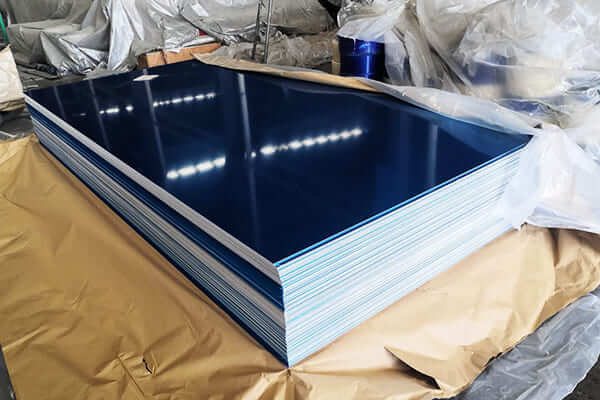
Marine Grade 5086 H116 aluminum plate
Pag unawa sa: Marine Grade 5086 H116 Aluminum Plate
Alloy fundamentals and the H116 temper
5086 is part of the 5xxx series (magnesium-containing aluminum alloys). These alloys are known for their excellent corrosion resistance, magandang weldability, and moderate-to-high strength.
The H116 temper denotes a strain-hardened state that has been identity-stabilized to a medium-hard condition. In practical terms, H116 means the plate has been work-hardened enough to gain higher strength while still offering good ductility and formability for fabrication.
This makes 5086-H116 particularly suitable for structural panels, hull plates, wheelhouse decks, and decking components where marine exposure and load demands intersect.
Key properties to keep in mind:
– Magnesium content provides inherent corrosion resistance in chloride environments.
– The tempering (H116) optimizes strength without sacrificing too much formability or weldability.
– The alloy can be joined with common filler metals suitable for marine aluminum, enabling robust, durable joints.
The value proposition for marine use
- Paglaban sa kaagnasan: The combination of alloy chemistry and the H116 work-hardening results in excellent resistance to seawater-induced corrosion, oksihenasyon, and galvanic interactions when properly joined and finished.
- Weight-to-strength ratio: As with most 5xxx alloys, 5086-H116 offers a strong strength-to-weight ratio, helping improve vessel performance, fuel efficiency, and payload capacity.
- Weldability: The 5xxx family is particularly well-suited to welded structures, with the right process controls producing durable bonds that resist corrosion at the welds.
- Formability and repairability: The temper maintains enough elongation to form complex hull shapes and allows for effective repair, patching, and reinforcement.
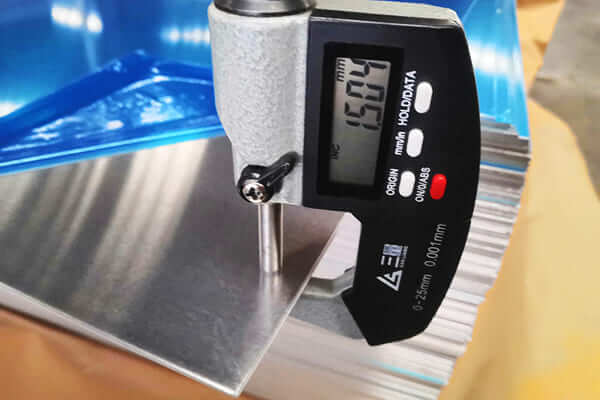
Aluminum Plate Thickness Test
Mechanical properties at a glance
To help you compare options quickly, here is a snapshot of typical properties you can expect from marine grade 5086 h116 aluminum plate, along with context about variability by plate thickness and production lot. Note that exact values depend on the supplier, manufacturing lot, and dimensional tolerances.
Talahanayan 1: Typical mechanical properties of 5086-H116 (marine-grade)
| Pag-aari |
Karaniwang Halaga |
Unit |
| Temper |
H116 |
— |
| Densidad ng katawan |
2.66 |
g/cm³ |
| Lakas ng Paghatak (tunay na) |
290 – 345 |
MPa |
| Yield Lakas (0.2% offset) |
≥ 215 |
MPa |
| Pagpapahaba (A50) |
≥ 10 – 12 |
% |
| nababanat na modulus |
~ 69 |
GPa |
| Lakas ng Paggupit |
~190 |
MPa |
| Lakas ng Pagkapagod (10⁷ cycles, R = –1) |
~110 |
MPa |
| Ang katigasan ng ulo (Brinell) |
~75 |
HB |
| Ang Ratio ni Poisson |
0.33 |
— |
| Thermal kondaktibiti |
~121 |
W/m·K |
| Koepisyent ng Thermal Expansion (20–100 °C) |
23.8 × 10⁻⁶ |
/K |
Notes on the table above:
– Values vary with batch, kapal naman, and processing. For design, rely on certified test data supplied by the plate manufacturer and verify with your engineer’s calculations.
Talahanayan 2: Comparative properties against common marine aluminum options (rough ranges)
| haluang metal |
tunay na lakas ng paghatak (Mga UTS) |
Yield Lakas |
Paglaban sa kaagnasan |
Weldability |
| 5083-H116 |
215–290 MPa |
130–185 MPa |
Excellent in saltwater; slightly less resistant than 5086 sa ilalim ng ilang mga kondisyon |
Napakahusay; good compatibility with 5183 filler |
| 5086-H116 |
230–300 MPa |
140–180 MPa |
Napakaganda; excellent performance in marine environments |
Napakaganda; robust joints achievable with appropriate filler |
| 5052-H32 |
210–230 MPa |
120–170 MPa |
Napakaganda; less robust than 5xxx series in highly chlorinated environments |
Napakahusay; widely used in marine structures |
Key takeaway: For seawater exposure, 5086-H116 often provides higher strength and robust corrosion resistance compared to many non-weldable options, with consistently good weld performance.
Why 5086-H116 is a preferred choice for tough projects
Superior corrosion resistance in saltwater environments
The magnesium content in the 5xxx family (kasama na ang 5086) forms a protective oxide film that resists pitting and crevice corrosion in marine settings.
H116 temper enhances surface hardness and reduces creep under sustained loads, while maintaining resistance to galvanic reaction when paired with properly selected aluminum filler materials and coatings.
- Salt spray testing and exposure data commonly show slower progression of uniform corrosion for 5086-H116 relative to many non-thermally-treated alloys.
- When paired with protective coatings or sealants in interfaces, 5086-H116 maintains integrity over long service life.
Strength-to-weight advantage for rugged applications
- The UTS range of 230–300 MPa means a structural plate can carry higher loads without a dramatic increase in mass.
- In hull and deck components, the lightweight strength reduces stress concentrations and improves dynamic response to waves and gusts.
Weldability that supports durable joints
- Fabricators can weld 5086-H116 using common processes (GMAW/MIG, GTAW/TIG, and FCAW) and compatible filler alloys such as 5356 o 5183, depending on joint design and corrosion requirements.
- Proper welding technique reduces heat-affected zone (HAZ) susceptibility to cracking and minimizes residual stresses in marine assemblies.
Formability and repairability for complex shapes
- The tempering allows for moderate work hardening while still offering enough ductility for forming complex hull profiles, panels, and reinforcement shapes.
- Repairs, patching, and replacement sections can be integrated without catastrophic loss of strength if performed to standard procedures.
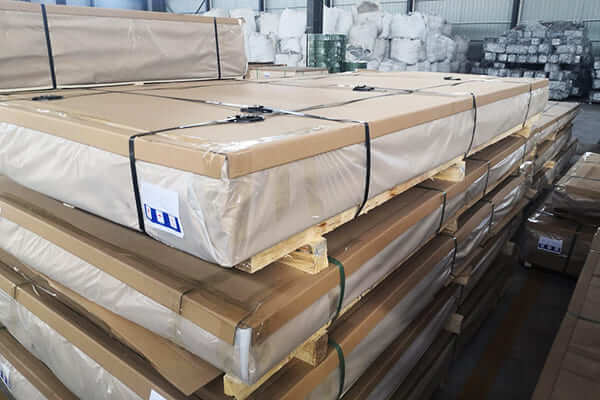
5086 H116 aluminum plate Packaged by Huasheng
Fabrication and processing: how to work with 5086-H116 to maximize durability
Welding considerations
- Pre-weld preparation: Malinis na ibabaw, remove oxides, and maintain clean environment to reduce porosity risk.
- Filler choice: When welding 5086-H116, Isipin ang 5356 filler for most marine structures; 5183 may be chosen for improved corrosion resistance in certain welds or when joining to other 5xxx alloys.
- Post-weld treatments: Lightly grinding and cleaning can help reduce micro-pitting; avoid excessive heat input to minimize HAZ softening and residual stresses.
Forming and cutting
- Bending radii: For tighter radii in thicker plates, plan for larger bend radii to reduce cracking risk in the HAZ and plate surface.
- Cutting methods: Plasma, waterjet, or CNC-driven milling are common. Ensure tool wear and kerf losses are accounted for in the final part tolerances.
- Heat treatment: Bilang isang hindi init na haluang metal, 5086-H116 does not respond to solution heat treatment; the temper remains through the life of the component, provided the alloy is not subjected to excessive thermal exposure in service that could alter the H116 state.
Post-fabrication finishing
- Surface finishes: Anodizing or protective coatings can significantly extend service life by reducing surface micro-pitting and maintaining appearance in marine environments.
- Inspection: Non-destructive testing (NDT) methods such as dye penetrant or ultrasonic testing help verify weld integrity and to identify potential micro-cracks in large hull panels or deck plates.
Machining guidance
- Tooling: Use sharp, high-quality cutting tools with appropriate feed rates to reduce heat buildup.
- Pamahid: For high-speed machining, apply cutting fluids suited for aluminum alloys to minimize built-up edge and tool wear.
- Mga Pagpaparaya: Expect minor deviations due to thermal conditions and handling; plan for tolerance allowances in assembly drawings.
Practical applications: where 5086-H116 excels
Marine and nautical applications
- Hull plates, mga bulkhead, and deck panels for boats and ships
- Offshore platform panels and secondary structures
- Corrosion-resistant liners for bilge areas and fuel tanks
- Structural reinforcements for superstructures and walkways
Industrial and structural use
- Heavy-duty frames, transport cabs, and safety cages requiring marine-grade corrosion resistance
- Offshore wind turbine components and marine infrastructure panels
- Armored enclosures and protective housings in corrosive environments
Case examples (illustrative scenarios)
- A 35-foot sailboat hull plate replacement: 5086-H116 provides durability and a strong weld zone with minimal corrosion risk in a salt-log environment.
- A small workboat deck and side panels: High strength and lightweight properties reduce overall weight while maintaining stiffness and resistance to marine weather effects.
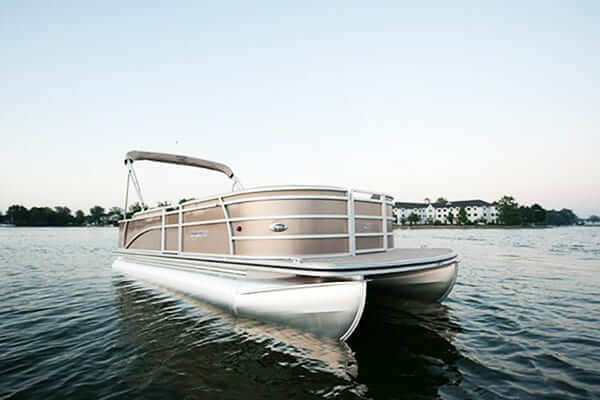
5086 H116 aluminum plate for boat
Comparative analysis: how 5086-H116 stacks up against similar products
- Lakas ng loob: 5086-H116 typically offers higher UTS than 5083-H116, which translates to better load-bearing capacity in load-intensive hull panels.
- Kaagnasan: Both alloys perform well in marine environments, pero 5086 can provide a slight edge in resistance due to composition and tighter microstructure in some tempers.
- Weldability: Both are weldable, pero 5086 tends to produce sturdier marine joints under similar process controls.
5052-H32 vs 5086-H116
- Lakas ng loob: 5086-H116 is significantly stronger than 5052-H32, making it more suitable for structural panels under higher loads.
- Kaagnasan: 5052-H32 remains excellent for many non-malt exposures; however, its corrosion resistance can be outpaced by the 5xxx-series alloys in continuous seawater exposure.
- Formability: 5052-H32 generally offers easier forming due to its lower strength; 5086-H116 provides a balance of formability and strength.
5086-H116 vs 5086-H32 (as a temper comparison)
- Higher temper number means more work-hardening; H116 implies a stable hardened state and typically higher yield and UTS than H32 in many thicknesses, while maintaining good ductility.
Supplier landscape: choosing a trustworthy partner for marine-grade plates
Why supplier selection matters
- Material consistency: Marine-grade aluminum requires consistent chemistry and temper control to ensure predictable performance in service.
- Certification and traceability: A credible supplier should provide composition analysis, heat treatment history, and test data for each batch.
- Lead times and logistics: In demanding projects, a dependable supplier will align inventory with your schedule and offer reliable shipping to your site or shop.
- Technical support: Access to engineers or technical specialists who can advise on welding procedures, pagbuo ng, and durability considerations.
Huasheng Aluminum: who they are and what they offer
Huasheng Aluminum is a well-regarded supplier specializing in aluminum plate products, including marine-grade alloys like 5086-H116.
The company emphasizes technical support, quality assurance, and on-time delivery for global customers. Notable strengths include:
- Broad product range: 5083, 5086, 5052, and related tempers and thicknesses, with stock in sheet and plate formats suitable for hull panels, mga deck, and structural reinforcements.
- Certification and quality control: Comprehensive chemical analysis, mechanical testing, and traceability for each batch; adherence to common industry standards to ensure material reliability.
- Pagpapasadya: Ability to cut to size, plate milling, and edge finishing to meet project specifications, reducing on-site processing and waste.
- Logistics and service: Efficient order processing, clear lead-time estimates, and responsive technical support for questions about welding, finishing, and compatibility with marine coatings.
- Customer-centric approach: Emphasis on practical engineering guidance, cross-functional support for design teams, and post-sales service.
Data-driven decision making: how to plan your 5086-H116 purchase
Size and thickness planning
- Common plate thicknesses: 2 mm sa 50 mm (and thicker in specialized applications)
- Plate size options: Standard width and length ranges (hal., 4 x 8 ft; 5 x 10 ft); custom-cut sizes are often available from marine-grade alloy stockists
- Mga Pagpaparaya: Industry-standard tolerances for plate thickness can vary; ensure you specify tolerance requirements in your purchase order
Surface finishes and coatings
- Tapos na ang gilingan: Basic surface suitable for primary fabrication, welding, and painting
- Pagpapahid ng langis: Improves surface hardness and corrosion resistance; typically used for decorative or protective purposes
- Powder coatings and marine coatings: Increase environmental protection for hull decks and exposed structures
Cost considerations
- Material costs: 5086-H116 is generally priced higher than standard 5052 due to marine-grade properties and temper
- Processing costs: Pagputol, pagbuo ng, and welding add to total cost, but may be offset by reduced fabrication complexity and fewer repair incidents over the life of the product
- Life-cycle cost: While initial costs may be higher, the long life and reduced maintenance of 5086-H116 can yield lower total cost of ownership for harsh marine environments
Kalidad, testing, and reliability: ensuring authenticity and performance
Quality practices you should expect from a reputable supplier
- Material traceability: Full batch traceability with MTRs
- Chemical composition verification: Regular validation of alloy content and impurity limits
- Mechanical property verification: Verified tensile and yield properties for critical sizes
Testing and inspection methods commonly used
- Tensile testing on representative samples
- Hardness testing to confirm temper state
- Non-destructive testing (NDT) on welds and critical joints
- Salt spray tests or accelerated corrosion testing data for long-term performance predictions
Mga FAQ
Q: What does H116 temper mean in practice?
– A: H116 indicates a stable, moderate work-hardened state. The plate is stronger than annealed forms but retains good ductility for fabrication and welding.
Q: Is 5086-H116 suitable for welding?
– A: Oo nga. Welding 5086-H116 can be done with common aluminum filler materials (hal., 5183, 5356) and standard fusion welding techniques. Pre-weld cleaning and proper shielding gas are essential to minimize porosity and HAZ issues.
Q: How does 5086-H116 compare to 5083-H116 in marine use?
– A: Both are marine-grade alloys with excellent corrosion resistance. 5086-H116 often delivers higher strength, while corrosion resistance is strong in both. Your choice may depend on the exact load requirements and the design specifics.
Q: Can 5086-H116 be anodized?
– A: Oo nga. Anodizing is a common surface treatment to improve corrosion resistance and wear characteristics, particularly for decks and exposed panels.
Q: What should I consider when ordering from a supplier like Huasheng Aluminum?
– A: Verify MTRs and certifications, ask for batch traceability, confirm lead times, discuss custom-cutting options, and ensure you understand the warranty and return policies.
Q: How durable is 5086-H116 in a marine environment over 10–20 years?
– A: With proper fabrication, mga patong na patong, and maintenance, 5086-H116 typically provides robust performance with limited corrosion and structural degradation in seawater exposure. Actual service life depends on coating quality, docking cycles, and environmental conditions.
Pangwakas na Salita
In environments where seawater, salt spray, and mechanical loads test materials daily, marine grade 5086 h116 aluminum plate provides a balanced combination of corrosion resistance, lakas ng loob, at pagiging formable.
For hulls, mga deck, panels, and structural reinforcements, this alloy offers reliable performance, a straightforward fabrication path, and a track record of long service life when paired with proper design, workmanship, and protective finishes.
Choosing the right supplier is just as important as selecting the right alloy. A trusted partner like Huasheng Aluminum can simplify procurement, ensure traceability, and provide technical support that helps you optimize design for durability and cost.
By combining material science with practical fabrication guidance, you can deliver projects that stand up to the harsh marine environment—time after time.
If you want to explore the 5086-H116 option further for your specific project, consider reaching out to Huasheng Aluminum for a technical consultation and a material pack tailored to your needs.
Their team can help translate these general guidelines into precise part specifications, shipping plans, and installation steps that maximize durability and performance in harsh marine environments.
Share with PDF: Download