In the world of metal fabrication, aluminum stands out for its lightweight, durability, and corrosion resistance.
Among various aluminum alloys, 5052 is among the most popular choices for industrial, automotive, marine, and everyday applications.
But a common question surfaces: Can 5052 aluminum be welded?
Understanding the properties of 5052 aluminum and how to weld it effectively is crucial for engineers, welders, hobbyists, and manufacturers who want reliable results.
This comprehensive guide dives deep into the characteristics of 5052 aluminum, explores welding techniques suitable for it, discusses potential challenges, and provides practical tips to ensure strong, durable welds.
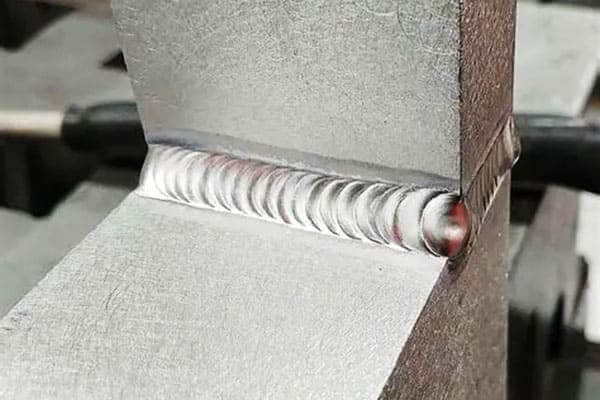
Can 5052 Aluminum Be Welded
Before addressing the welding potentials of 5052 aluminum, it’s essential to understand its properties, alloy composition, and common applications.
5052 aluminum belongs to the 5000 series of aluminum alloys, which are primarily alloyed with magnesium. It is renowned for:
| Element | Approximate Percentage | Function/Effect |
|---|---|---|
| Magnesium (Mg) | 2.2 – 2.8% | Provides strength and corrosion resistance |
| Chromium (Cr) | 0.15 – 0.35% | Enhances corrosion resistance |
| Silicon (Si) | ≤ 0.4% | Improves machinability |
| Iron (Fe) | ≤ 0.4% | Increases strength and fatigue life |
| Residuals (Cu, Mn, Ti, etc.) | Trace amounts | Minor effects; generally negligible |
Mechanical Properties:
In the realm of aluminum welding, certain alloys are more friendly to weld than others. Benefits and limitations of 5052 aluminum in welding contexts are vital to understanding whether it can be welded successfully.
Generally, 5052 aluminum is considered weldable with proper techniques. Its magnesium content allows it to respond well to many welding methods, such as TIG (GTAW), MIG (GMAW), and even some arc welding processes.
However, welding 5052 is not entirely free of challenges:
To weld 5052 aluminum effectively, selecting the right welding process, equipment, and filler materials is vital. Below, we outline the most recommended welding methods:
TIG welding is widely regarded as the preferred method for welding 5052 aluminum, especially when high-quality, precise, and aesthetically appealing welds are required.
MIG welding offers faster operation and is suitable for thicker materials or larger projects.
While technically possible, stick welding is less common for aluminum and not preferred because of poor control and higher defect rates.
In industrial applications, FSW shows promise for high-quality aluminum joints, especially in fabrication of large structures.
| Technique | Suitable for | Advantages | Limitations |
|---|---|---|---|
| TIG (GTAW) | Thin sheets, precise welds | High quality, aesthetics, control | Slower, requires skill |
| MIG (GMAW) | Thick sections, production speed | Faster, versatile | Less precise, possible porosity |
| Stick (SMAW) | Less common, simple repairs | Simplicity | Poor control, high defect risk |
| FSW | Industrial, large structures | Strong joints, minimal distortion | Equipment cost, specialized process |
Selecting an appropriate filler rod or wire is essential for achieving strong welds that match or surpass the parent material’s properties.
| Filler Type | Compatibility with 5052 Aluminum | Key Attributes |
|---|---|---|
| ER 4043 (Silicon-based) | Compatible, widely used | Good fluidity, smooth finish |
| ER 5356 (Magnesium-based) | Also suitable | Higher strength, better corrosion resistance |
Tip: Always match or slightly surpass the magnesium content within the filler to prevent weld cracking and porosity.
Successfully welding 5052 aluminum hinges on attention to detail during preparation, execution, and post-weld processes.
| Parameter | Recommended Range |
|---|---|
| Shielding gas | 100% Argon or Argon/helium mix |
| Gas flow rate | 15-20 CFH (Cubic Feet per Hour) |
| Electrode/Tip diameter | 1/16″ (1.6 mm) for thin materials; larger for thicker |
| Amperage | Adjust based on material thickness |
| Travel speed | Moderate; avoid excessive heat input |
Even with proper techniques, welders may encounter issues when working with 5052 aluminum. Here are some common problems and solutions:
Cause: Moisture or contamination.
Solution:
– Keep materials dry.
– Use proper shielding gas and flow rates.
– Clean surfaces thoroughly.
Cause: High residual stress or improper heat input.
Solution:
– Use controlled heat input.
– Avoid rapid cooling.
– Incorporate peening or post-weld stress relief.
Cause: Excessive heat or improper clamping.
Solution:
– Use appropriate fixturing.
– Employ proper welding sequences.
– Use cooling techniques like airflow or water quenching, if suitable.
Unlike some alloys, 5052 aluminum responds poorly to artificial aging or stress relieving, retaining its properties close to its original state.
Note: Always consult specific alloy specifications and project requirements before heat treating.
Adhering to established standards guarantees safety, quality, and durability.
| Standard | Description |
|---|---|
| AWS D1.2/D1.2M | Structural Welding Code — Aluminum |
| ASME Section IX | Qualification of welding procedures and welders |
| AWS A5.10/A5.10M | Filler metal specifications for aluminum |
The real-world success of welding 5052 aluminum hinges on understanding its specific application context.
Welded 5052 aluminum panels withstand harsh saltwater environments remarkably well. Proper welding ensures leak-proof hulls and structural durability.
Lightweight vehicle panels made of 5052 aluminum benefit from skilled TIG welding to meet safety and aesthetic standards.
Curtain walls, decorative panels, and structural elements welded with care and standards achieve high durability and aesthetic appeal.
Can 5052 aluminum be welded? Absolutely. Its excellent weldability makes it a popular choice in various industries. However, success hinges on understanding its properties, choosing appropriate welding techniques, preparing the material meticulously, and following best practices.
Welding 5052 aluminum opens a world of opportunities for creating durable, lightweight, and corrosion-resistant structures. With diligent application of proper techniques and an understanding of its unique properties, you can unlock the full potential of this versatile alloy.
Whether you’re a professional fabricator or an enthusiast tackling a hobby project, knowing that 5052 aluminum can be successfully welded empowers you to innovate and build with confidence. Remember, the key to success lies in preparation, technique, and adhering to best practices. With this knowledge, you can confidently navigate the welding challenges associated with this remarkable aluminum alloy.
This detailed exploration aims to enrich your understanding of 5052 aluminum welding, equipping you with practical insights, reliable techniques, and expert advice. Thanks for joining us in unlocking the secrets of this exceptional material.
Share with PDF: Download

Henan Huasheng Aluminum Co., Ltd (HHALU for short), established in 2001, is located in Huiguo Town, the famous Aluminum capital of Henan Province, It's a professional manufacturer and engages in the research, development, production, sales and service of aluminum sheet plate, aluminum coil, aluminum foil, aluminum strip and aluminum circle.
In addition, HHALU also sell aluminum plate for construction and ships, aluminum mirror plate, and automotive aluminum alloy plate.
No.53, Dongming Road, Zhengzhou, Henan, China
Copyright © Huasheng Aluminum 2025. All rights reserved.
