Aluminum sheets for boat decking combine lightweight structure, paglaban sa kaagnasan, ease of fabrication and recyclability.
Their adoption spans recreational boats, commercial workboats, ferries and military craft. But “aluminum deck” is not one thing — performance depends on haluang metal, Pamahiin, kapal naman, pattern/finish, fabrication practice and corrosion protection strategy.
This article expands each of those elements with practical data, design guidance, testing/standards references and procurement-ready specifications so naval architects, marine engineers and shipyards can make evidence-based choices.
For exposed saltwater decks where load and corrosion resistance matter, choose a 5xxx-series alloy (hal., 5083 o 5086) in a marine temper (H116/H321) with thickness selected for stiffness + local loading and with suitable slip control (diamond plate or non-skid topcoat).
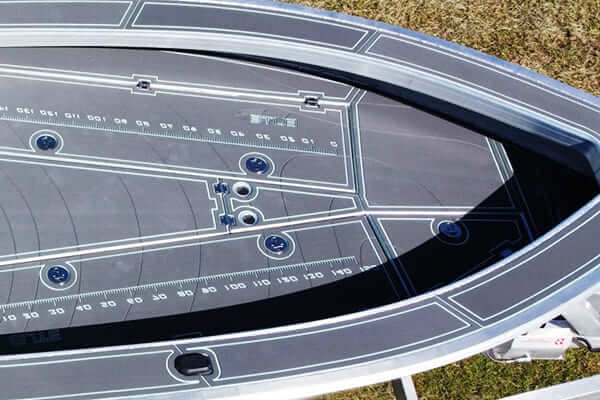
Aluminum Sheets For Boat Decking
| Serye ng haluang metal | Key Composition | Mga Katangian ng Mekanikal (Tensile Strength/Elongation) | Paglaban sa kaagnasan | Boat Decking Suitability |
|---|---|---|---|---|
| 5052-H32 | Al (95%+), Mg (2.2-2.8%), Cr (0.15-0.35%) | 230 MPa / 15% | Napakahusay (best in 5000 series for saltwater) | Small to medium boats (fishing, recreational) |
| 5083-H116 | Al (92%+), Mg (4.0-4.9%), Mn (0.4-1.0%) | 310 MPa / 12% | Superior (resists pitting in saltwater) | Large boats (yachts, commercial vessels) |
| 6061-T6 | Al (95%+), Mg (0.8-1.2%), Si Si (0.4-0.8%) | 310 MPa / 10% | Mabuti na lang (needs protective coating for harsh marine) | Decking with structural supports (pontoons, catamarans) |
| 6082-T6 | Al (94%+), Si Si (0.7-1.3%), Mg (0.6-1.2%) | 340 MPa / 8% | Mabuti na lang (high strength for heavy-duty decks) | Commercial boats (workboats, ferries) |
5000-series aluminum sheet is preferred due to superior chloride-based corrosion resistance, an essential factor for marine exposure.
Tempers define strength and ductility:
H116 and H321 tempers undergo strain hardening and controlled stabilization treatments ideal for saltwater immersion.
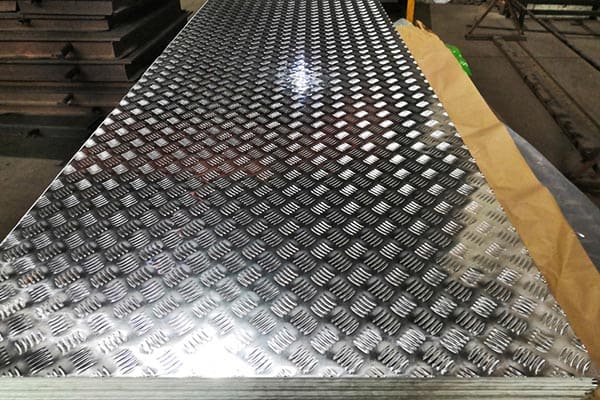
5083 Anti-slip Aluminum Plate For Boat Decking
| Finish | Pros | Cons | Karaniwang Paggamit |
|---|---|---|---|
| Tapos na ang gilingan (bare) | Cheapest, ready to coat/adhere | Oxidizes to dull finish, limited slip resistance | Underlayer for coatings/adhesives |
| Diamante / tread plate | Built-in slip resistance, matibay na matibay | Heavier per area; can be uncomfortable barefoot | Workboats, fishing decks, mga rampa |
| Anodized | Hard surface, corrosion protection, aesthetic | Limited coating thickness on 5xxx series; process control required | Passenger decks, mga pandekorasyon na panel |
| Powder coat / paint | Color options, Proteksyon ng UV | Requires surface prep; may chip | Mga yate, areas needing color/branding |
| Non-skid coatings / grit topcoat | Excellent slip resistance, comfortable walk | Recoating required periodically | Passenger walkways, gangways |
Slip performance data: diamond plate or grit systems typically increase measured coefficient of friction (COF) in wet conditions by ~20–40% versus smooth mill finish. Choose finish based on barefoot comfort, cleaning regime (fish slime, oil), and expected wear.
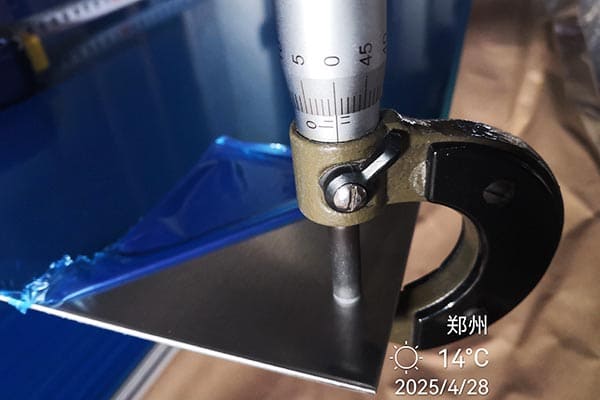
Huasheng Aluminum Plate Thickness Measurement
| Pagtutukoy ng Kategorya | Mga Karaniwang Pagpipilian / Mga Karaniwang Halaga | Notes and Engineering Relevance |
|---|---|---|
| Recommended Alloy Grades | 5052-H32, 5083-H111, 5086-H116, 6061-T6 | 5xxx-series for corrosion resistance; 6061 for structural/stiffened frames |
| Saklaw ng Kapal (Deck Panel Areas) | 2.0 mm - 12.7 mm (0.080” – 0.500”) | 2.0–3.0 mm for non-load-bearing trim; ≥5.0 mm for walkable deck plates; 6.35–12.7 mm for structural flooring |
| Standard Width | 1000 mm; 1200 mm; 1500 mm; 1600 mm | Wide sheets reduce seams and weld joints |
| Standard Length | 2400 mm; 3000 mm; 3660 mm; napapasadyang | Vessel layouts often require customized lengths |
| Densidad ng katawan | 2.66–2.72 g/cm³ | Alloy-dependent; relevant for weight calculations |
| Lakas ng Paghatak (MPa) | 5052-H32: 210–260 MPa
5083-H116: 275–350 MPa 6061-T6: 280–320 MPa |
Influences span and load capability |
| Yield Lakas (MPa) | 5052-H32: 130–180 MPa
5083-H116: 215–270 MPa 6061-T6: 240–260 MPa |
Higher yield = reduced plastic deformation |
| Pagpapahaba (%) | 12%–20% depending on alloy/temper | Critical for bending, forming during framing |
| Surface Type Options | Plain flat sheet
Marine tread plate (5-Bar) Diamond plate |
Tread plate improves wet-deck safety |
| Sheet Tolerance (Ang kapal) | ±0.05–0.25 mm depending on thickness | Based on ASTM & EN rolled tolerances |
| Corrosion Category | C5-M Marine grade protection | Highest corrosion category in near-shore applications |
| Ang katigasan ng ulo (HB) | 65–95 HB | Higher hardness improves abrasion durability |
| Thermal kondaktibiti | 120–150 W/m·K | Reduces heat-spot concentration in sun-exposed decks |
| Max Recommended Span Without Sub-Support | 400 mm - 1000 mm depending on thickness | ≥6 mm sheet recommended for spans >600 mm |
| Fabrication Suitability | Excellent bending (5052/5083)
Magandang weldability CNC cutting suitable |
6061-T6 requires preheat before forming |
| Mga Pagpipilian sa Tapos na Ibabaw | Tapos na ang gilingan, Anodized, Powder-coated, Anti-slip coating | Anti-slip coatings increase pedestrian safety |
| Applicable Standards / Mga Sertipikasyon | ASTM B209, EN 485, ISO 9001, DNV/ABS approvals | Required for professional shipbuilding |
Specify where required:

Anti-slip Boat Decking Display
Halimbawa: replacing 6mm steel deck with 6mm 5083 aluminyo (Mga patlang.) reduces deck mass by >60% (per same area).
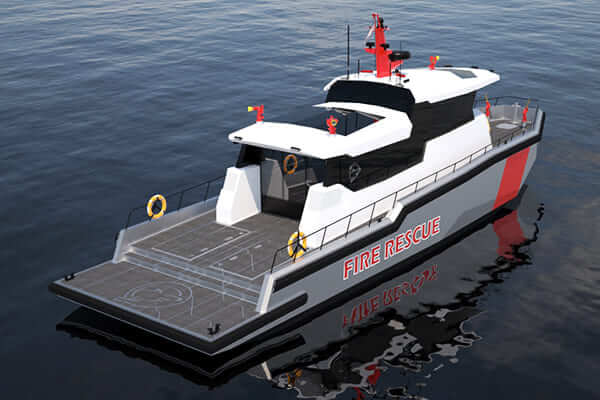
5052 Aluminum Sheets For Yachts
| Pamantayan | Mga Sheet ng Aluminyo | Marine Plywood | FRP / Composite | bakal na bakal |
|---|---|---|---|---|
| Timbang | Mababa ang | Katamtaman | Mababa ang | Mataas na |
| Corrosion/Rot | Napakahusay | Mga Maralita (rot) | Napakahusay | Requires coating |
| Strength-to-weight | Mataas na | Mababa ang | Mataas na (directional) | Napakataas na |
| Pagpapanatili | Mababa ang | Mataas na | Katamtaman | Medium-High |
| Fire behavior | Non-combustible (but melts) | Combustible | Depends (resin burns) | Non-combustible |
| Gastos (initial) | Medium–High | Mababa ang | Medium–High | Medium–High |
| Recyclability | Napakataas na | Mababa ang | Low–Medium | Mataas na |
Selection guidance: choose aluminum when weight, recyclability and long-term durability are priorities; choose FRP for complex curved layouts where material continuity benefits outweigh recyclability; choose plywood only for low-budget, low-duty leisure craft with regular replacement plan.
Aluminum sheets for boat decking offer a robust combination of lightweight structure, paglaban sa kaagnasan, fabrication flexibility and environmental advantages.
Correct alloy/temper selection, adequate thickness for structural needs, quality fabrication (welding and fastening), and considered surface treatment and drainage design are essential to realize the material’s benefits.
With predictable maintenance and proper detailing, aluminum decking is often the most cost-effective long-term solution for modern marine craft.
Q1. Ay 5083 better than 6061 for decking?
For exposed marine decking, yes: 5083 has superior corrosion resistance in seawater; 6061 is stronger but less corrosion resistant and better used for structural members protected from direct seawater exposure.
Q2. Can I weld aluminum deck panels in the field?
Oo nga, but adhere to WPS, use qualified welders and control heat input. For cosmetic areas, consider using bolts and sealants to avoid on-site welding issues.
Q3. How to prevent galvanic corrosion where aluminum contacts stainless steel?
Use insulating washers/gaskets (PTFE, nylon), avoid direct electrical contact, and maintain sacrificial anodes for adjacent metals.
Q4. Can aluminum decking be barefoot friendly?
Yes — with non-skid coatings, teak inlays, or EVA foam overlays. Diamond plate is durable but can be uncomfortable barefoot.
Q5. Is aluminum decking noisy or slippery?
Aluminum itself is not inherently noisy when properly insulated. Slip risk is managed via tread patterns or non-skid coatings; cleaning regimes are essential to remove slippery contaminants.
Q6. How thick should my aluminum boat decking be?
Pick 2.0–2.5 mm for small boats. Use 2.5–3.0 mm for pontoons. Piliin ang 3.0 mm or more for commercial vessels. Thicker sheets handle more weight and rough use.

Henan Huasheng Aluminyo Co., Ltd (HHALU para maikli), itinatag noong 2001, ay matatagpuan sa Huiguo Town, ang sikat na Aluminum capital ng Henan Province, Ito ay isang propesyonal na tagagawa at nakikibahagi sa pananaliksik, pag-unlad, produksyon ng, sales and service of aluminyo Plato ng Sheet, aluminyo likawin, aluminyo foil, aluminyo strip at aluminyo bilog.
Bukod pa rito, HHALU magbenta din ng aluminum plate para sa konstruksiyon at mga barko, aluminyo mirror plate, at automotive aluminyo haluang metal plate.
No.53, Dongming Road, Zhengzhou, Henan, Tsina
Copyright © Huasheng Aluminum 2025. Lahat ng karapatan ay nakalaan.
