Enkonduko
In modern building envelopes, la agado de izolaj sistemoj dependas ne nur de la kerna materialo, sed ankaŭ de la fasado kiu enhavas, protects, and interacts with the insulation. La 8011 Aluminia Folio por PIR Panelo estas vaste uzata alfronta materialo, kiu liveras efikan vaporbarieron, excellent moisture resistance, and reliable compatibility with lamination adhesives used in PIR (polyisocyanurate) insulation panels.
This article examines why 8011 aluminum foil is a preferred choice for PIR panels, explores its technical specifications, and provides practical guidance for specifiers, fabrikistoj, and installers.
Ni ankaŭ enkondukos Huasheng Aluminium, a reputable supplier of aluminum foil solutions, and show how to evaluate foil performance in real-world applications.
The phrase 8011 Aluminia Folio por PIR Panelo estas centra por ĉi tiu diskuto, because it captures the specific foil grade, the typical tempering used for flexible packaging and facing films, and the intended end-use in PIR panel systems.
Throughout this piece, you will find data-driven insights, credible guidance, and concrete recommendations designed to help you select the right foil and optimize lamination and installation outcomes.
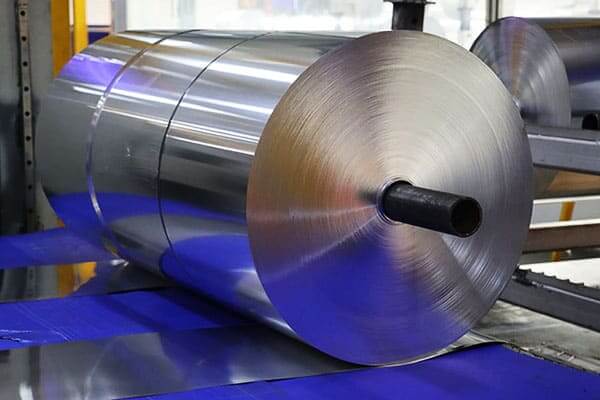
8011 Aluminia Folio por PIR Panelo
Overview of PIR panels and the foil role
PIR panels provide high thermal resistance with a lightweight profile, making them a common choice for walls and roofs in industrial, komerca, and residential buildings.
The PIR core is a rigid foam that delivers excellent insulation values and structural stability. The foil facing on PIR panels serves several essential roles:
- Vapor barrier: The facing prevents water vapor from migrating into the PIR core, reducing condensation risk, maintaining insulation performance, and enhancing durability.
- Moisture and gas barrier: Aluminum foil is highly impermeable to moisture and gases, protecting the foam core from environmental exposure and helping to preserve long-term R-value.
- Reflectivity and thermal management: Aluminum foil reflects radiant heat, contributing to thermal management characteristics in building assemblies.
- Surface for lamination: The foil provides an even, smooth surface suitable for adhesion with facing laminates, paints, or decorative layers.
- Mechanical protection: The foil adds a durable outer surface that can resist minor mechanical abuse during handling and installation.
- Fire performance considerations: Aluminum itself is noncombustible and contributes to stable, low-smoke behavior in many assemblies when used with proper adhesives and cores.
Why aluminum foil matters for PIR panels
- Structural synergy: La maldika, fleksebla 8011 aluminum foil can wrap and conform to complex shapes on PIR panels without compromising core integrity.
- Consistent barrier performance: Foil facing provides a predictable moisture and gas barrier, which helps preserve insulation performance across a building’s service life.
- Adhesion compatibility: The right foil temper and surface finish support strong adhesion to common PIR lamination adhesives, avoiding delamination risks.
- Sustainability considerations: Aluminum foil is recyclable and can be incorporated into sustainable building practices when selected in appropriate thicknesses and in line with recycling streams.
Key decisions for specifiers
- Alojo kaj temperamento: 8011 with a suitable temper (often H14 or similar) balances formability, baraj propraĵoj, and strength for lamination.
- Dikeco: Tipaj PIR-alfrontaj folioj varias de proksimume 9 al 20 mikrometroj; the chosen thickness depends on the lamination method, adhesive system, kaj media ekspozicio.
- Surfaca finpoluro kaj presado: Some installations require printable or matte finishes, or a surface suitable for printing logos and product information.
- Konformeco: Certigu, ke la folio konformas al lokaj konstrukodoj, normoj de fajro agado, and installation guidance for PIR panels in the target market.
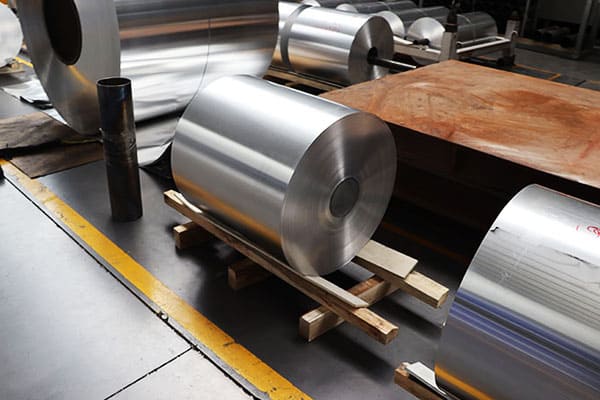
Huasheng 8011 Aluminum Foil Jumbo Roll
Teknikaj specifoj de 8011 Aluminia Folio por PIR Panelo
Thickness and gauge
- Common thickness range: 9–20 micrometers (μm) por PIR-panelo alfrontaj filmoj. In many markets, 12–15 μm is a standard compromise between barrier performance, mekanika forto, kaj kosto.
- Toleremoj: Typical thickness tolerances in foil production fall within ±1–2 μm, depende de mezurilo kaj ruliĝantaj kondiĉoj. Tighter tolerances are achievable with advanced rolling and quality control.
- Efiko sur rendimento: Thinner foils offer greater conformability and lower cost but may require careful lamination parameter optimization. Thicker foils resist tearing better but add cost and stiffness.
Mekanikaj proprietoj
- Temperaro: Commonly in the H14 or similar temper for 8011 folio, which provides a balance of strength and formability. The temper influences elongation, pintruo rezisto, and ease of handling during lamination.
- Formebleco: 8011 foils exhibit good formability, allowing them to conform to the irregular contours of PIR surface laminates and edge profiles without cracking.
- Tensile strength and elongation: While exact numbers vary by temper and processing, 8011 foils are designed to be ductile enough for molding and forming while maintaining barrier integrity.
Bariera agado
- Humideca baro: Aluminum foil is an excellent moisture barrier; its impermeability to water vapor is significantly better than most polymer films. This property helps minimize vapor ingress into the PIR core.
- Gas barrier: Foil offers very low gas permeability, contributing to the long-term stability of insulation performance by limiting diffusion of moisture-laden air and other gases.
- Oksigena baro: Aluminum foil provides a robust barrier to oxygen, which helps preserve the PIR core and any laminated coatings from oxidative degradation.
Surface finish and printing compatibility
- Surface smoothness: A smooth foil surface improves lamination uniformity, adhesion performance, and the appearance of the finished facing.
- Printing compatibility: Folioj uzitaj por PIR-paneloj povas esti preparitaj kun prineblaj surfacoj aŭ povas esti lasitaj nepresitaj depende de estetikaj postuloj kaj instalaĵpraktikoj..
- Adhesion interface: The surface finish interacts with lamination adhesives (ekz., poliuretano, akrila, aŭ aliaj kongruaj sistemoj) to achieve reliable peel strength and long-term bonding.
Termika kaj fajro-agado
- Thermal behavior: Aluminum foil has high thermal reflectivity and low emissivity for radiant heat. While the foil facing does not provide insulation itself, its reflective properties aid thermal performance in certain assemblies by reflecting radiant heat away from the interior of a building.
- Fire performance: Aluminum foil is noncombustible and does not contribute to flame spread; Tamen, the overall fire performance of a PIR panel depends on the core and the adhesive system. Foil facing should be compatible with fire-retardant PIR cores and adhesives used in the panel.
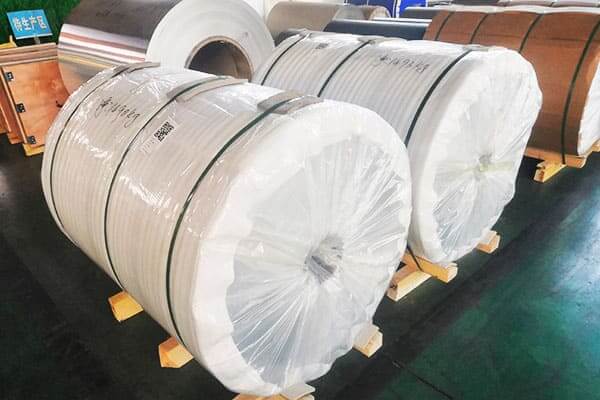
Export Packaged 8011 Aluminia Folio
Efikeco en PIR-panelasembleo
Lamination with PIR foam
- Laminado kongruo: 8011 aluminia folio works well with many PIR lamination adhesives, including solvent-based and waterborne systems, provided that surface energy and cleanliness are controlled.
- Optimumigo de aliĝo: Priming or surface treatments can enhance adhesion between foil and adhesive layers, reducing the risk of de-lamination under service conditions.
- Konsideroj pri ekipaĵo: In-line lamination equipment should be configured for thin foils—rollers, nip punktoj, and temperature profiles must minimize pinching, ŝirante, kaj sulkiĝo.
Adhesion compatibility with common PIR adhesives
- Polyurethane-based adhesives: Widely used in PIR panel manufacturing; 8011 foil with suitable surface energy adheres reliably under standard processing temperatures and dwell times.
- Lamenaĵoj bazitaj en akrilaj: Many PIR panels employ acrylics for decorative or protective layers; 8011 foil must maintain surface conditions to ensure adequate peel strength.
- Hot-mm adhesives: Foil must withstand processing temperatures during lamination without experiencing loss of barrier performance or deformation.
Environmental and durability considerations
- Moisture exposure: In dry environments, foil’s vapor barrier properties maintain PIR performance. In high-humidity environments, foil integrity must be maintained to prevent micro-gaps that could compromise the barrier.
- UV-ekspozicio: If the foil faces are exposed to sunlight before lamination, UV stability of the surface treatment and any printing must be considered to prevent surface degradation.
- Mechanical abrasion: The foil must resist scratches and minor abrasions during handling and installation, preserving barrier and appearance.
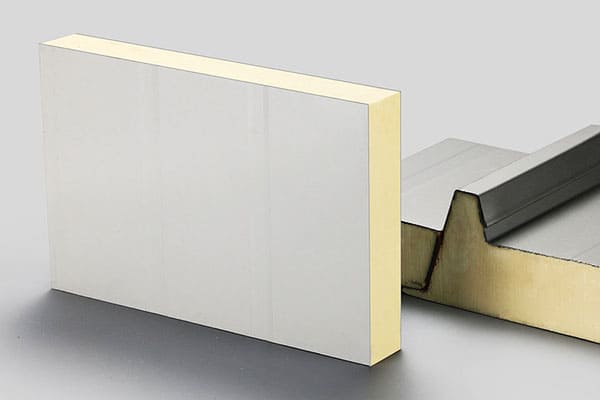
PIR Panel Display
Aplikoj kaj merkatoj
Residential buildings
- Eksteraj kaj internaj murpaneloj: PIR panels with 8011 foil facing can be used in residential envelope assemblies that require robust insulation combined with a smooth, farbebla surfaco aŭ ornama finaĵo.
- Retrofit projects: In retrofit scenarios, the foil-faced PIR panels can help minimize thermal bridging and improve overall energy performance.
Komercaj kaj industriaj konstruaĵoj
- Malvarma stokado kaj distribucentroj: The vapor barrier and moisture resistance are beneficial in cold chain environments where humidity and temperature swings are common.
- Commercial facades: PIR panels with foil facings provide a balance of thermal performance and façade aesthetics for office buildings, podetalaj spacoj, kaj lumindustriaj instalaĵoj.
Konsideroj pri klimatzono
- Cold climates: The foil’s vapor barrier properties help reduce moisture ingress, contributing to steady insulation performance in cold climates where dew point control is critical.
- Hot climates: High reflectivity of aluminum foil helps reflect radiant heat, supporting cooler interior conditions and potentially reducing cooling loads.
Kompara analizo
8011 foil vs other foils for PIR panel applications
| Atributo |
8011 Aluminia Folio (H14/H16) |
3003 Aluminia Folio |
1145 Aluminia Folio |
Notoj |
| Familio de alojoj |
8000-serio (Al-Mn, ne-varme traktebla) |
3000-serio (Al-Mg) |
1000-serio (essentially commercially pure Al) |
8011 is favored for barrier properties and formability; 3003 is common in flexible packaging; 1145 is very ductile for certain decorative uses. |
| Tipa humoro |
H14-H16 |
H14 |
O or H16 |
Temper affects strength, plilongigo, and lamination behavior. |
| Tipa dikeco |
9–20 μm (common 12–15 μm) |
9–20 μm |
9–15 μm |
All are thin foils; selection depends on barrier vs. cost goals. |
| Bariera agado |
Excellent moisture and gas barrier |
Very good moisture barrier; slightly higher permeability than 8011 in some cases |
Excellent moisture barrier, very high ductility |
Barrier performance varies with alloy and treatment, sed ĉiuj estas pli bonaj ol multaj polimeraj filmoj. |
| Formebleco |
Bonega, good tear resistance |
Bone, slightly lower than 8011 in some cases |
Bonega, very ductile |
Film handling and lamination compatibility vary by temper. |
| Presado/Surfaca preteco |
Bone; taŭga por mataj aŭ prespretaj finaĵoj |
Bone; common for packaging, printing may be more challenging for some finishes |
Bonega por brilaj finaĵoj |
Surface treatment and printing compatibility depend on surface energy. |
| Tipaj uzoj |
PIR panels, fleksebla pakado, izolaj fasadoj |
Manĝaĵo-pakaĵo, ĝenerala enpakado, some insulation facings |
Manĝaĵo-pakaĵo, chemical packaging, highly ductile uses |
Industry-specific requirements drive alloy choice. |
Notoj:
– The table reflects typical industry usage and general performance characteristics. Faktaj valoroj dependas de preciza humoro, surfaca traktado, tegaĵo, and lamination processes.
– The foil thickness and temper should be chosen based on the intended lamination adhesives, edge profiles, kaj serva medio.
PIR-panelo alfrontanta rendimentajn parametrojn
| Parametro |
Target or Typical Value / Gamo |
Kial gravas |
| Vapor barrier integrity |
Very low permeability |
Maintains PIR performance and prevents moisture accumulation in the core |
| Surface energy for adhesion |
≥ 35–40 mN/m (ĉ.) |
Ensures reliable lamination with polyurethane or acrylic adhesives |
| Reflektiveco (visible spectrum) |
85–92% |
Helps manage radiant heat transfer, particularly in hot climates |
| Tear resistance |
Sufficient for handling during lamination |
Reduces risk of pinholes and tears in production |
| Temperature stability during lamination |
50–120°C (tipa) |
Maintains bond strength and foil integrity during process |
| Fire performance compatibility |
Non-combustible foil; compatible with FR PIR core |
Supports compliance with fire safety standards when used with appropriate core and adhesive systems |
Supplier spotlight: Huasheng Aluminio
Pri Huasheng Aluminio
Huasheng Aluminio is a prominent manufacturer and supplier of aluminum foil products for packaging and construction applications, including specialized foils designed for PIR panels.
With a focus on consistent quality, environmental responsibility, kaj fidinda livero, Huasheng serves customers worldwide through a network of distributors and direct sales channels.
Their product portfolio includes 8011 aluminum foil in various temper ranges, dikaĵoj, and finishes tailored for PIR panel manufacturers and other adjacent applications.
Capabilities and production footprint
- Ruliĝanta kaj hardita: Huasheng operates multi-stand rolling mills and tempering lines to produce 8011 foils in H14/H16 and related tempers, enabling good balance between strength, formebleco, kaj bariera agado.
- Surface treatment and coating: They offer surface finish options suitable for lamination, including matte and printable surfaces, along with compatibility with common lamination adhesives.
- Kvalitaj sistemoj: Huasheng emphasizes quality assurance, with internal QC protocols and adherence to international standards such as ISO 9001 and environmental management standards.
- Personigo: They can tailor thickness tolerances, surfacaj finaĵoj, and packaging configurations to fit specific PIR panel production lines and delivery schedules.
Why choose Huasheng Aluminum for PIR panel foil
- Consistent material quality: A stable foil supply helps minimize process variability in lamination and reduces rework due to delamination or adhesion failures.
- Supplier reliability: A strong manufacturing footprint and robust logistics enable shorter lead times and reliable delivery to production facilities.
- Engineering support: Access to technical support for lamination parameters, surface energy optimization, and compatibility with specific adhesives helps streamline implementation.
- Compliance orientation: A focus on safety, environmental responsibility, and compliance with international standards supports global customers.
How to engage with Huasheng Aluminum
- RFPs and specifications: Share your PIR panel foil requirements, inkluzive de dikeco, humoro, surfaca finaĵo, and any printing or coating needs.
- Sample programs: Request material samples for adhesion tests, lamination trials, and peel strength testing to validate compatibility with your adhesives and lamination equipment.
- Certification alignment: Confirm certifications relevant to your market (ekz., ISO 9001, environmental standards) to ensure supplier alignment with procurement requirements.
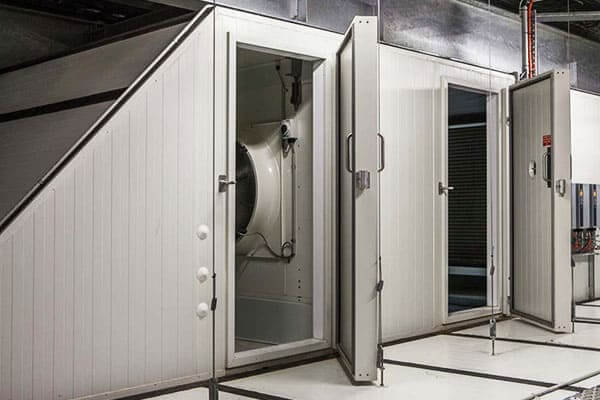
Construction Used 8011 Aluminia Folio por PIR Panelo
Quality assurance and testing
QA tests for PIR foil facing
- Thickness verification: Precise measurement to ensure consistency across coils and to minimize deviation from specification.
- Pinhole detection: Non-destructive testing to identify pinholes or defects that would compromise barrier performance.
- Surface energy and adhesion testing: Peel tests and surface energy measurements determine laminate compatibility.
- Vida inspektado: Check for surface defects, gratoj, or oxidation that could affect appearance or performance.
- Dimensia stabileco: Ensure foil does not warp, crease, or stretch excessively during lamination or service.
Data-driven results: lab to field
- Lab tests often simulate real-world lamination cycles, including heat, premo, and adhesive exposure, to verify that the foil maintains barrier properties and adhesion strength over time.
- Field data from installations can reveal how foil performance holds up under humidity, temperature swings, and mechanical handling typical in construction sites.
Oftaj Demandoj
Kio estas 8011 Aluminum Foil for PIR Panel used for?
It serves as a moisture and vapor barrier facing on PIR panels, providing barrier protection, reflektiveco, surface for lamination, and a durable exterior surface.
Why choose 8011 tavoleto super aliaj alojoj por PIR-paneloj?
8011 offers an excellent balance of barrier properties, formebleco, and compatibility with common lamination adhesives, making it a versatile choice for PIR panel facings.
What thickness is typical for PIR panel foil facing?
Oftaj intervaloj estas 9-20 μm, with 12–15 μm being a typical mid-range choice for many installations.
How does foil thickness affect lamination quality?
Thicker foils are more resistant to tearing and pinholes but may be less conformable; thinner foils offer better conformability but require careful lamination control to ensure barrier integrity.
How should foil be stored and handled to maintain quality?
Konservu en seka, pura medio; protect coils from moisture and mechanical damage; pritraktu zorge por eviti randfaldojn kaj faldojn.
What should I test before committing to a foil supplier?
Peel strength with the intended adhesive system, barrier integrity (pintruo-testado), surface energy compatibility, and printing or surface finish requirements, as well as dimensional stability and edge integrity.
How does Huasheng Aluminum support PIR panel manufacturers?
Huasheng offers 8011 foil in multiple tempers and thicknesses, opcioj de surfaca finaĵo, and customization for lamination compatibility, backed by QA processes and global logistics to support production lines.
Is aluminum foil in PIR panels recyclable?
Jes. Aluminum foil is widely recyclable, and recycling streams often accommodate foil faced products when properly separated from other materials at end-of-life.
Konkludo
In sum, 8011 Aluminum Foil for PIR Panel represents a balanced, practical solution for facing PIR insulation panels. It delivers robust barrier properties, fidinda laminado rendimento, and favorable processing characteristics that align with modern construction needs.
Integrante zorgan selektadon de materialoj, rigora provo, and strategic supplier partnerships—like that with Huasheng Aluminum—you can achieve durable, energy-efficient building envelopes that stand up to real-world service conditions.
If you’d like to explore a tailored specification for your PIR panel project or obtain sample foils for testing, consider reaching out to Huasheng Aluminum’s technical team.
Ili povas provizi materialajn datumajn foliojn, ebloj de tempero kaj dikeco, and guidance on lamination parameters to help you finalize a robust, konforma PIR-panelo alfronta solvo.
Kunhavigu kun PDF: Elŝuti