5083 extra-wide aluminum coils for containers are high-strength Al-Mg alloy coils designed for large container panels, refrigerated containers, tank containers, offshore containers, modular container structures, and transport equipment.
Alloy 5083 is widely recognized for its excellent corrosion resistance, strong weldability, and high strength among non-heat-treatable aluminum alloys.
The “extra-wide” coil format gives container manufacturers a major production advantage: it enables wider side panels and roof panels with fewer seams, less welding, better sealing, improved appearance, and higher material utilization.
For container applications exposed to rain, av noo, ntsev tsuag, road vibration, and marine atmosphere, 5083 aluminum offers a strong balance of durability, Luj txo kev txo, and lifecycle value.
5083 extra-wide aluminum coils for containers meet these needs particularly well.
Compared with ordinary aluminum alloys, 5083 provides higher strength and stronger marine corrosion resistance.
Piv nrog hlau, aluminum reduces structural weight and helps improve payload efficiency, especially in transport equipment where every kilogram matters.
5083 aluminum is a 5xxx series aluminum-magnesium alloy.
It contains magnesium as the main strengthening element and also includes manganese and chromium for structural stability.
It cannot be strengthened by heat treatment; xwb, rolling and strain hardening control its mechanical properties.
5083 is commonly used in shipbuilding, transport vehicles, cov hlab ntsha siab, marine structures, rail cars, and container systems because it combines strength, corrosion kuj, thiab weldability.
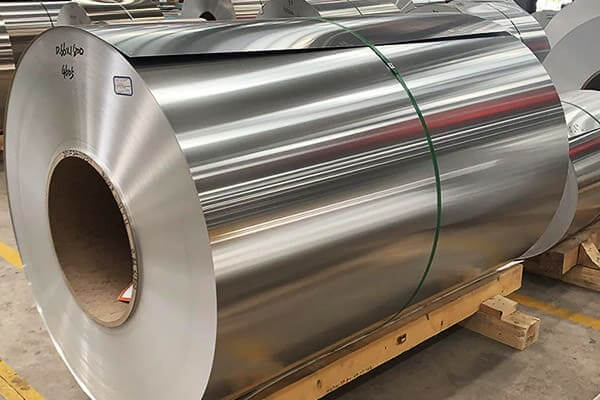
5083 Extra-Wide Aluminum Coils Display
| Element | Cov ntsiab lus raug | Muaj nuj nqi |
|---|---|---|
| Aluminium | Tshuav | Lightweight base metal |
| Magnesium | 4.0-4.9% | Improves strength and corrosion resistance |
| Manganese | 0.4-1.0% | Supports strength and structural stability |
| Chromium | 0.05-0.25% | Improves grain control and corrosion behavior |
| Hlau | I≤0.40% | Controlled for toughness and surface quality |
| Silicon | I≤0.40% | Controlled for processing stability |
| Tooj | ≤0.10% | Kept low to protect corrosion resistance |
| Zinc | ≤0.25% | Controlled for corrosion stability |
| Titanium | ≤0.15% | Supports grain refinement |
5083 has one of the highest strength levels among non-heat-treatable aluminum alloys.
Public reference data commonly lists ultimate tensile strength around 317 MPa and yield strength around 228 MPa, depending on temper and product form.
Key metallurgical advantages include:
| Kub | General Character | Container Use |
|---|---|---|
| O | Soft annealed | Strong formability for bending and shaping |
| H111 | Me ntsis strain-hardened | Cov qauv zoo thiab muaj zog nruab nrab |
| H112 | As-fabricated strain-hardened | General structural applications |
| H116 | Marine corrosion-resistant temper | Marine and offshore container structures |
| H321 | Stabilized marine temper | Improved resistance to exfoliation and stress-corrosion risk |
For containers exposed to marine environments, H116 and H321 often deserve special consideration because they are associated with improved corrosion-related performance in 5xxx marine alloys.
5083 performs well in seawater and industrial chemical environments. Its high magnesium content improves corrosion resistance, while its low copper level helps reduce galvanic and pitting-related concerns.
This makes it suitable for offshore containers, refrigerated containers, tank container components, and coastal transport equipment.
“Extra-wide” aluminum coils are coils supplied in wider-than-standard formats to produce large panels with fewer joints.
In container manufacturing, extra-wide coils can support full-width or large-format panels for walls, lub ru tsev, pem teb, and structural skins.
Exact dimensions depend on mill capability and project requirements. Common buyer-defined parameters include:
| Parameter | Typical Buyer Focus |
|---|---|
| Thickness | Usually customized by panel strength and forming requirement |
| Dav | Extra-wide format for large container panels |
| Coil weight | Matched to handling and production line capacity |
| Sab hauv txoj kab uas hla | Matched to decoiling equipment |
| Nto | Mill tiav, coated, pleev xim rau, or pretreated |
| Ntug | Trimmed, slit, low-burr edge |
Extra-wide coils help container manufacturers improve production efficiency and finished-panel quality.
| Qhov zoo | Practical Value |
|---|---|
| Fewer seams | Better appearance and lower leakage risk |
| Reduced welding | Lower labor input and less heat distortion |
| Larger panels | Faster assembly and cleaner structure |
| Better material yield | Less cutting waste in panel layout |
| More consistent surface | Improved painting or coating result |
| Improved sealing | Fewer joints exposed to rain and salt spray |
Extra-wide 5083 coil production requires advanced process control. Mills must manage crown, huv, thickness kam rau ua, nto zoo, coil winding tension, edge quality, and internal stress.
Wider coils magnify small rolling defects, so reliable suppliers need strong wide-width rolling and leveling capability.
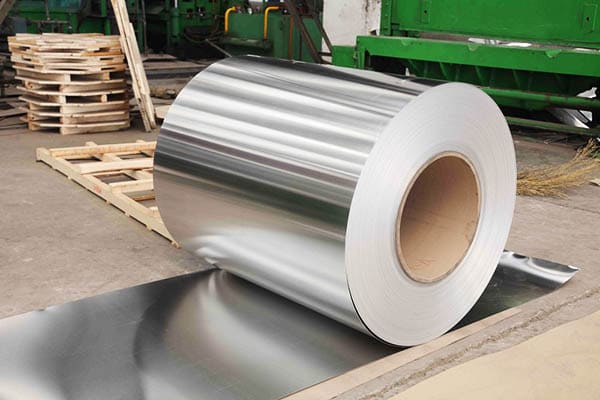
Huasheng 5083 Extra-Wide Aluminum Coils
| Kev xav tau | Vim Li Cas Nws Tseem Ceeb |
|---|---|
| Siab zog | Resists impact, loading stress, and panel deformation |
| Corrosion kuj | Protects against rain, dej hiav txwv, av noo, and salt spray |
| Weldability | Supports container panel and frame assembly |
| Formability | Allows bending, profiling, dov, and panel shaping |
| Fatigue resistance | Handles road, tsheb ciav hlau, and sea vibration |
| Flatness | Improves panel fit and visual quality |
| Dimensional raug | Reduces rework during assembly |
| Nto Zoo | Supports coating, pleev xim, and long service life |
| Lub teeb | Improves payload and transport efficiency |
Container-grade aluminum coils must meet stringent requirements regarding dimensions, mechanical zog, huv, nto zoo, thiab corrosion kuj.
As container structures often operate in harsh marine and industrial environments for decades, manufacturers demand highly consistent material quality.
Huasheng Aluminum supplies 5083 extra-wide aluminum coils in a wide range of specifications suitable for dry cargo containers, refrigerated containers, tank containers, offshore containers, and cryogenic transportation systems.
| Yam khoom | Specification |
|---|---|
| Alloy | 5083 |
| Kub | O, H111, H112, H116, H321 |
| Thickness | 1.5–12.0 mm |
| Dav | 2200–3000 mm |
| Sab hauv | 508 mm / 610 mm |
| Sab nraud | ≤2500 mm |
| Coil Nyhav | 5–20 tons |
| Nto tiav | Mill tiav |
| Txuj | ASTM B 209 Cov khoom siv, IN 485, GB / T 3880 |
Modern extra-wide rolling mills can achieve highly precise dimensional control.
Thickness kam rau ua
| Thickness Ntau | Ua siab ntev |
|---|---|
| 1.5-3.0 hli | ±0.03 mm |
| 3.0- 6.0 hli | ±0.05 mm |
| >6.0 mm | ±0.08 mm |
Dav Tolerance
Feem ntau:
±2 mm to ±5 mm
depending on product width and customer requirements.
Flatness Requirements
Container-grade products require excellent flatness to facilitate panel fabrication and welding.
Typical flatness deviation:
≤3 mm/m
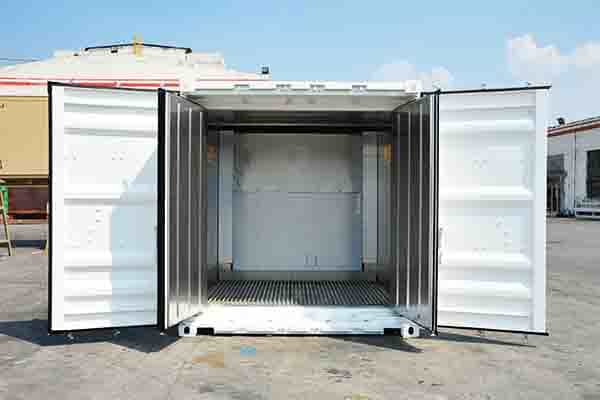
Containers Used 5083 Extra-Wide Aluminum Coils
The popularity of 5083 aluminium alloy in container manufacturing is largely due to its exceptional combination of strength, corrosion kuj, weldability, thiab lub teeb yuag yam ntxwv.
Typical Mechanical Properties
| Kub | Tensile zog (MPa) | Yield zog (MPa) | Elongation (%) |
|---|---|---|---|
| O | 275[50 | ≥125 | 12-20 |
| H111 | 290–360 | ≥145 | 12-18 |
| H112 | 300– 380 | ≥150 | 10-16 |
| H116 | 305–385 | ≥215 | 10-15 |
| H321 | 305–385 | ≥215 | 10-15 |
Strength Advantages
Compared with standard commercial aluminum alloys such as 1050 los yog 3003, 5083 offers significantly higher strength while maintaining excellent formability and weldability.
This allows manufacturers to:
| Khoom | Tus nqi |
|---|---|
| Qhov ntom | 2.66 g/cm³ |
| Elastic Modulus | 72 GPa |
| Thermal conductivity | 121 W/m·K |
| Hluav taws xob conductivity | 28–32% IACS |
| Melting ntau | 570-640 ° C |
| Thermal Expansion Coefficient | 23.8 ×10⁻⁶ /°C |
Lightweight Advantage
Piv nrog carbon steel:
| Khoom siv | Qhov ntom |
|---|---|
| 5083 Aluminium | 2.66 g/cm³ |
| Carbon Steel | 7.85 g/cm³ |
5083 aluminum weighs approximately:
66% Tsawg dua li cov hlau
while still delivering excellent structural performance.
One of the most important advantages of 5083 aluminum is its outstanding resistance to corrosion.
Corrosion Performance Highlights
Many marine structures manufactured from 5083 aluminum remain operational after:
20–30 years of exposure
with minimal corrosion-related degradation.
Unlike many structural materials, 5083 aluminum maintains toughness at cryogenic temperatures.
Typical Performance
At temperatures approaching:
-196°C
the alloy exhibits:
This makes it highly suitable for LNG containers and cryogenic transportation systems.
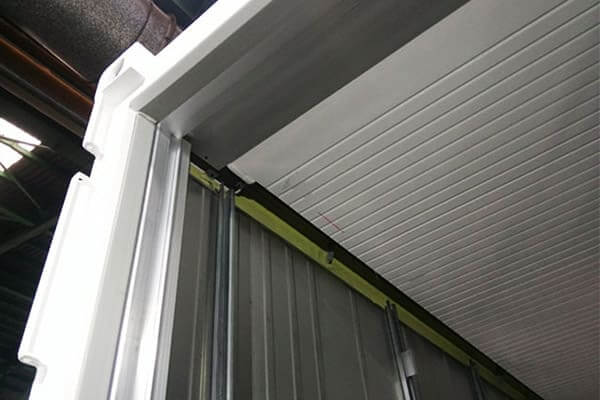
5083 Extra-Wide Aluminum Coils for Containers
The selection of container materials directly affects manufacturing costs, payload muaj peev xwm, maintenance requirements, and service life.
5083 extra-wide aluminum coils provide numerous advantages that make them one of the preferred materials for modern container production.
A key performance indicator in transportation equipment is strength-to-weight ratio.
Cov txiaj ntsig
For logistics operators, even a modest weight reduction can generate substantial savings over the container’s lifetime.
Container equipment frequently operates in harsh environments:
5083’s naturally protective oxide film significantly reduces corrosion risk.
Qhov zoo
Container fabrication involves extensive welding operations.
5083 aluminum offers excellent compatibility with:
Cov txiaj ntsig
Unlike some heat-treatable alloys, 5083 retains much of its mechanical performance after welding.
Transportation containers are subjected to repeated loading cycles throughout their operational life.
Sources of Fatigue Stress
5083 exhibits excellent fatigue performance, helping to reduce structural failures and maintenance requirements.
Extra-wide coils improve manufacturing efficiency.
Fewer Weld Seams
Larger panels require fewer joints.
Lower Labor Costs
Reduced welding translates to:
Improved Material Utilization
Material yield improvements can reach:
5–15%
compared with narrower coil products.
5083 is recognized globally as one of the premier marine-grade aluminum alloys.
Marine Advantages
This makes it ideal for:
Cryogenic applications demand materials that maintain toughness at extremely low temperatures.
5083 performs exceptionally well in:
Unlike some steels, 5083 does not become brittle under these conditions.
Sustainability has become a major factor in transportation equipment design.
Environmental Advantages
Producing recycled aluminum requires approximately:
95% Tsawg Zog
dua li ua thawj txhuas.
This supports global efforts to reduce emissions and improve resource efficiency.
The combination of siab zog, Ntsej Muag Corrosion Kuj, Zoo heev Weldability, thiab kev ua tau zoo tshaj plaws ua 5083 extra-wide aluminum coils an ideal material for a wide range of container applications. As transportation industries continue to pursue lightweight and sustainable solutions, demand for 5083 aluminum in container manufacturing continues to grow worldwide.
Dry freight containers remain the backbone of global logistics and international trade.
Refrigerated containers transport temperature-sensitive cargo such as:
Tank containers are widely used for transporting liquids and gases.
5083 is internationally recognized as a marine-grade aluminum alloy.
One of the most unique advantages of 5083 aluminum is its excellent low-temperature performance.
The modular construction industry has experienced rapid growth in recent years.
5083 extra-wide aluminum coils are increasingly used in custom-engineered transportation solutions.
| Khoom | 5083-H116/H321 Aluminum | 5052-H32 Aluminium | 6061-T6 Aluminium | Carbon Steel (Corten Steel) | Stainless hlau 304 |
|---|---|---|---|---|---|
| Hom alloy | Al-Mg Marine Grade | Al-Mg General Purpose | Heat-Treatable Al-Mg-Si | Low-Alloy Structural Steel | Austenitic Stainless Steel |
| Qhov ntom (g/cm³) | 2.66 | 2.68 | 2.70 | 7.85 | 8.00 |
| Weight Advantage | Los | Los | Los | ★★ | ★ |
| Tensile zog (MPa) | 305–385 | 210-290 | 29040 | 400-550 | 520–750 |
| Yield zog (MPa) | 215– 280 | 130– 210 | 240–275 | 250–450 | 210-310 |
| Elongation (%) | 10-15 | 12-20 | 8-12 | 18-25 | 40-50 |
| Strength-rau-Weight Ratio | Los | ★★★★ | ★★★★ | ★★★ | ★★ |
| Corrosion Resistance | Los | ★★★★ | ★★★ | ★★ | Los |
| Seawater Resistance | Zoo heev | Zoo | Nruab nrab | pluag | Zoo heev |
| Stress Corrosion Resistance | Zoo heev | Zoo heev | Nruab nrab | Zoo | Zoo heev |
| Weldability | Zoo heev | Zoo heev | Zoo | Zoo heev | Zoo |
| Strength Retention After Welding | Zoo heev | Zoo heev | Nruab nrab | Zoo heev | Zoo |
| Qeeb zog tsis kam | Zoo heev | Zoo | Zoo | Nruab nrab | Zoo |
| Low-Temperature Performance | Zoo heev (-196°C) | Zoo | Zoo | Nruab nrab | Zoo |
| Maintenance Requirement | Tsawg heev | Tsawg | Tsawg | Siab | Tsawg heev |
| Service Life in Marine Environment | 20–30+ Years | 15–25 Years | 10–20 Years | 8–15 Years | 20–30+ Years |
| Material Utilization with Extra-Wide Coils | Zoo heev | Zoo heev | Zoo heev | Nruab nrab | Nruab nrab |
| Fabrication Efficiency | Zoo heev | Zoo heev | Zoo | Zoo | Nruab nrab |
| Kev rov ua dua tshiab | 100% | 100% | 100% | 100% | 100% |
| Energy Consumption During Transportation | Tsawg heev | Tsawg heev | Tsawg heev | Siab | Siab |
| Initial Material Cost | Nruab nrab-siab | Nruab nrab | Nruab nrab-siab | Tsawg | Siab heev |
| Lifecycle Cost | Tsawg | Tsawg | Nruab nrab | Siab | Nruab nrab-siab |
| Suitability for Dry Freight Containers | Zoo heev | Zoo | Zoo | Zoo heev | Nruab nrab |
| Suitability for Refrigerated Containers | Zoo heev | Zoo | Zoo | Nruab nrab | Zoo |
| Suitability for Tank Containers | Zoo heev | Zoo | Nruab nrab | Zoo | Zoo heev |
| Suitability for Marine Containers | Zoo heev | Zoo | Nruab nrab | pluag | Zoo heev |
| Suitability for LNG/Cryogenic Containers | Zoo heev | txwv | txwv | pluag | Zoo |
| Overall Container Suitability | Los | ★★★★ | ★★★★ | ★★★ | ★★★★ |
Henan Huasheng Aluminium Co., Ltd., Ltd. supplies aluminum sheet, phaj, coil, strip, and foil products for industrial, thauj, dej hiav txwv, and packaging applications.
For buyers sourcing Huasheng 5083 extra-wide aluminum coils for containers, the key value lies in specification customization, export ntim, thiab kev sib txuas lus technical.
Huasheng can support container manufacturers with:
Before ordering, buyers should provide container type, required thickness, target width, npau taws, nto tiav, welding process, txheej xav tau, and performance standard.
5083 extra-wide aluminum coils for containers provide a strong material solution for modern container manufacturing.
They combine high strength, marine-qib corrosion kuj, weldability, lightweight performance, and extra-wide panel efficiency.
For container manufacturers, the most important value appears in lifecycle performance: fewer seams, Txo qhov hnyav, improved corrosion resistance, better panel appearance, and lower maintenance pressure.
To get reliable results, buyers should evaluate alloy chemistry, npau taws, width capability, huv, weldability, corrosion kuj, nto zoo, and supplier process control.
They are used for shipping containers, refrigerated containers, tank containers, offshore containers, storage containers, modular container buildings, tsheb lub cev, and rail freight containers.
5083 offers high strength, zoo heev corrosion kuj, zoo weldability, thiab kev ua tau zoo tshaj plaws, making it suitable for demanding transport and marine environments.
It means the coil is supplied in a wider format to produce large container panels with fewer seams and less assembly work.
Yog lawm. 5083 is widely recognized for strong resistance to seawater and marine atmosphere.
Yog lawm. 5083 has very good weldability and retains good strength after welding compared with many aluminum alloys.
5083 generally provides higher strength, thaum 5052 offers good corrosion resistance and formability for lighter-duty applications.
Store coils in a dry, clean warehouse. Keep them away from moisture, corrosive chemicals, impact damage, and condensation.

Henan Huasheng Aluminium Co., Ltd., Ltd (HHALU for short), tsim nyob rau hauv 2001, nyob hauv Huiguo Town, lub npe nrov Aluminium peev ntawm Henan Xeev, Nws yog ib lub chaw tsim khoom thiab koom nrog kev tshawb fawb, kev loj hlob, ntau lawm, Kev muag khoom thiab kev pabcuam ntawm aluminium daim ntawv phaj, aluminium coil, aluminium ntawv ci, aluminium strip thiab aluminium voj voog.
Ntxiv rau, HHALU kuj muag txhuas phaj rau kev tsim kho thiab nkoj, aluminium daim iav phaj, thiab automotive aluminium alloy phaj.
No.53, Dongming Txoj Kev, Zhengzhou, Henan, Tuam Tshoj
Copyright © Huasheng Aluminium 2025. Txhua txoj cai.
