Introduction
When designing high-performance transformers, every gram of copper and its alternatives counts. Among the most practical alternatives to copper for transformer windings is aluminum, particularly in the form of 1060 aluminium strip. The phrase “1060 Aluminium Strip for transformer winding” captures a core solution: a commercially pure aluminum strip with excellent electrical conductivity, outstanding formability, and reliable corrosion resistance.
This blog post delves into the material, its properties, processing, and practical considerations for transformer winding applications.
It also introduces Huasheng Aluminum, a supplier well-versed in producing high-quality 1060 aluminium strip for transformer winding, and explains why engineers and procurement teams turn to Huasheng for dependable supply, consistent quality, and tailored solutions.
Understanding 1060 Aluminium Strip for Transformer Winding
1060 aluminum is an almost pure aluminum grade, typically containing about 99.6% aluminum with very small amounts of impurities.
When we talk about “1060 Aluminium Strip for transformer winding,” we refer to a specific product form—thin, flat strips produced by cold rolling and processed to tight tolerances—that are suitable for use as winding conductors in transformer assemblies where aluminum is chosen as a lighter-weight, cost-competitive alternative to copper.
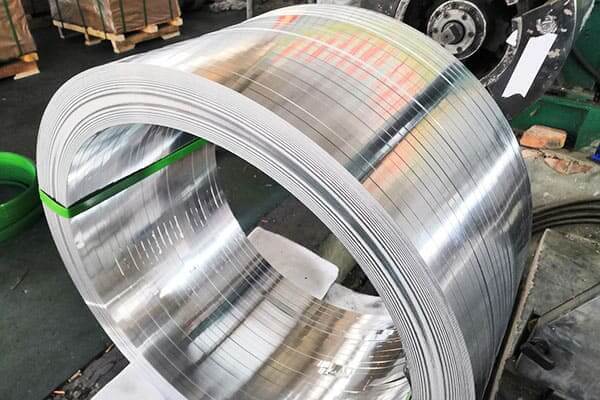
Huasheng 1060 Aluminium Strip
Chemical composition and purity
- Main element: Aluminum (Al)
- Typical purity: around 99.6% Al
- Impurities: traces of elements such as Fe, Si, Cu, Mn, Zn, Mg in very low percentages
- Implication: High electrical conductivity, excellent formability, and good solderability, with minimal internal alloying phases that might impact ductility or processing
Mechanical properties and temper
- Temper range: O (fully annealed) is common for 1060 strip used in winding applications, with potential for H-suitability (work-hardened) in certain fabrication steps
- Tensile strength (typical, annealed 1060): around 90–125 MPa, depending on exact processing
- Yield strength (typical, annealed 1060): often below 40 MPa
- Elongation (typical, annealed 1060): 20–35% in sheet form, higher in strip depending on thickness and processing
- Formability: Excellent; easy to bend, draw, and stamp with minimal cracking, particularly in thin strips
- Hardness: Low in annealed state; increases with work hardening
Electrical and thermal properties
- Electrical conductivity: Approximately 60–62% IACS (International Annealed Copper Standard) for commercially pure aluminum; while not equal to copper, aluminum 1060 offers favorable conductivity-to-weight ratio
- Thermal conductivity: High for aluminum, aiding heat dissipation in transformer windings and aiding thermal management
- Coefficient of thermal expansion: Moderate, which is important when paired with insulation materials and core laminations
Corrosion resistance and durability
- Corrosion resistance: Excellent in many environments, particularly when used in dry or mildly humid conditions
- Surface stability: Readily forms a protective oxide layer; compatible with common transformers insulation systems
- Weathering performance: Suitable for indoor and certain outdoor environments with protective finishes or coatings if required
Dimensional ranges and tolerances
- Thickness: Often in the range of 0.02 mm to 0.5 mm for winding strips, with tighter tolerances requested by customers
- Width: Wide width availability (e.g., 100 mm, 200 mm, 500 mm, and all sizes between) depending on rolling capabilities
- Flatness and straightness: Critical for winding uniformity; suppliers typically provide tight flatness tolerances and controlled bow/warp
Why 1060 Aluminium Strip Is Attractive for Transformer Winding
Weight and cost advantages
- Weight reduction: Aluminum is about one-third the density of copper, leading to significant weight savings in large transformers
- Cost considerations: Aluminum is generally cheaper per unit mass than copper, and 1060, as a highly pure aluminum grade, provides a favorable balance between cost and performance
- Locking in long-term savings: With similar electrical performance in specific designs, aluminum windings can deliver lower overall total cost of ownership due to reduced weight and material costs
Electrical performance and reliability
- Conductivity: While copper outperforms aluminum in pure conductivity, 1060 aluminum provides acceptable conductivity for many transformer classes, especially where weight reduction is prioritized
- Mechanical resilience: 1060 strips can be readily formed into coils and windings with consistent performance and reliable endurance under thermal cycling
- Bonding and insulation compatibility: Aluminum forms reliable interfaces with many insulation systems commonly used in transformers; appropriate surface preparation and coatings can further improve bond integrity
Fabrication and processing friendliness
- Formability: The strip’s ductility enables tight wind turns with minimal cracking, even in relatively thin gauges
- Slitting and shearing: Modern rolling mills and slitting lines can produce the precise widths and thicknesses required
- Surface treatments: Available with optional surface finishes (e.g., protective coatings or oxide layers) to improve corrosion resistance and insulation interaction
Durability in manufacturing and service
- Stress-relief behavior: Annealed 1060 displays favorable stress-relief characteristics under thermal cycling
- Long-term stability: When properly designed, wound aluminum strips maintain electrical and mechanical performance across the transformer’s service life
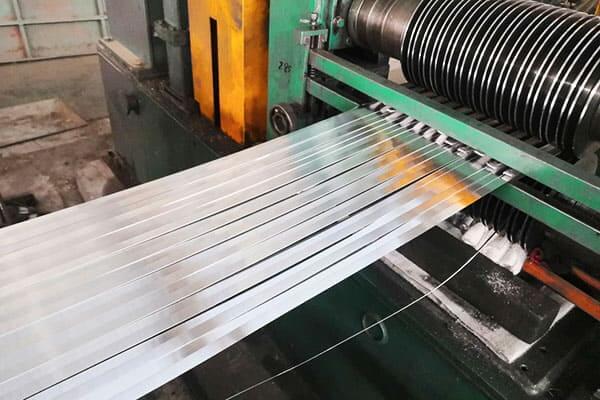
1060 Aluminium Strip Slitting Process
Applications in Transformer Winding: Design and Material Considerations
Key design criteria for winding strips
- Electrical performance: Target IACS, thickness, and cross-sectional area must meet transformer ratings
- Thermal management: Thickness and thermal conductivity influence winding temperature rise; adequate heat dissipation reduces insulation aging
- Mechanical integrity: Strips must withstand winding stresses during installation and operation; flatness and surface finish reduce micro-cracking risk
- Insulation compatibility: Edge burrs, surface roughness, and coating choices must not abrade insulation systems
- Corrosion protection: In humidity or corrosive environments, consider protective oxide or coatings compatible with insulation materials
Thickness and width selection
- Thinner strips improve winding flexibility and heat extraction but may raise resistance; thicker strips improve current-carrying capability but reduce flexibility
- A common approach is to select a thickness that balances electrical resistance, mechanical formability, and insulation interface requirements
- Width selection depends on winding geometry, coil dimensions, and machine capabilities for winding and impregnation
Surface finish and coatings
- Anodizing or oxide coatings: Can improve surface stability and reduce oxidation risk in certain environments (though care must be taken to avoid insulation incompatibilities)
- Bare surface with standard oxide layer: Often sufficient, especially when an appropriate insulation system is used
- Protective coatings: Some designs apply thin protective coatings at strip edges to reduce wear during winding
Annealing and heat treatment
- Post-rolling annealing helps restore ductility after any work-hardening during processing
- Controlled annealing reduces residual stresses and improves formability, aiding consistent winding operations
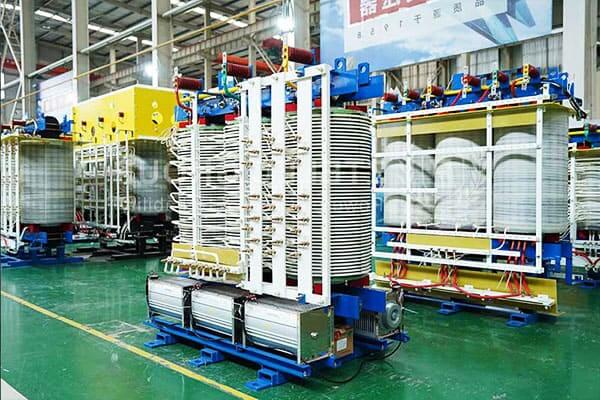
1060 Aluminium Strip for transformer winding
Production, Processing, and Quality Control
Rolling and annealing process overview
- Rolling: Continuous or batch rolling processes produce the strip from billets to achieve desired thickness and width
- Annealing: A controlled heating and cooling cycle restores ductility and reduces residual stresses
- Slitting: Precision slitting lines convert wide coils into narrower windable strips with tight tolerances
Surface preparation and inspection
- Deburring: Edges are deburred to prevent insulation abrasion
- Surface inspection: Visual and, if required, microscopic checks ensure no surface defects that could compromise performance
- Coating and finish verification: If surface treatments are applied, verification ensures coating thickness and adhesion are within specification
Quality control and testing (typical)
- Electrical conductivity testing: Ensures IACS percentage falls within specified range
- Tensile testing: Confirms strength and ductility appropriate for annealed or lightly tempered strips
- Elongation measurement: Validates ductility for winding operations
- Dimensional checks: Thickness, width, and flatness tolerances
- Surface quality inspection: Checks for surface defects, scratches, and burrs
- Packaging and humidity control: Ensures safe transport and storage, protecting against corrosion and mechanical damage
Packaging and logistics
- Packaging: Protective wrapping, waterproofing, and stacking to prevent edge damage
- Storage: Cool, dry, and ventilated conditions; away from corrosive substances
- Shipping: LTL or full container loads depending on customer demand and project scale
Quality Standards, Certification, and Compliance
- Material standards: 1060 aluminum strip typically complies with regional standards (such as GB for China and equivalent National Standards in other regions) for purity and tolerances
- Compliance: Many suppliers maintain ISO 9001 quality management systems and factory production controls to ensure consistent product quality
- Traceability: Batch numbers, heat numbers, and material certifications accompany shipments for traceability
Performance Comparison: 1060 Aluminium Strip vs Copper and Other Aluminum Alloys
| Parameter |
1060 Aluminium Strip (transformer winding) |
Copper (EC or OFC used in windings) |
1050 Aluminum Strip |
1100 Aluminum Strip |
| Purity |
~99.6% Al |
99.9%+ Cu; high purity Cu |
~99.5% Al |
~99.0% Al |
| Electrical conductivity (IACS) |
~60–62% |
~100% (IACS) |
~61–62% |
~61–62% |
| Density (g/cm3) |
2.70 |
8.96 |
2.70 |
2.70 |
| Relative weight per cross-section vs copper |
~1/3 |
1 |
~1/3 |
~1/3 |
| Typical tensile strength (annealed) |
~90–125 MPa |
~210–230 MPa |
~70–120 MPa |
~60–120 MPa |
| Formability |
Excellent |
Moderate |
Good |
Excellent |
| Corrosion resistance |
Excellent |
Moderate to good |
Excellent |
Excellent |
| Cost per kg |
Lower than copper; depends on market |
Highest among conductors |
Moderate |
Moderate |
| Typical applications in winding |
When weight reduction and cost are priorities; suitable for moderate current densities |
High-current, compact designs |
General purpose sheets for light windings |
Similar to 1050 with better formability |
Notes:
– Copper provides superior conductivity, but aluminum offers weight savings and cost advantages, making 1060 a practical choice in many transformer winding applications where weight and cost matter.
– The table reflects typical trends; actual performance depends on design, insulation, cooling strategy, and manufacturing tolerances.
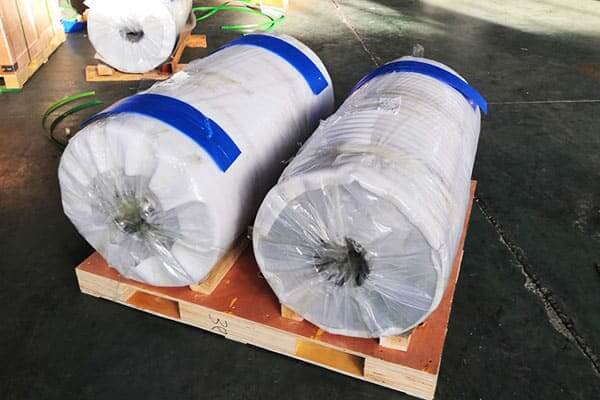
Export packaging of 1060 Alu Strip
Supplier Spotlight: Huasheng Aluminum
Huasheng Aluminum is a leading supplier in the aluminum strip market, with a specialization in 1060 aluminium strip for transformer winding.
Why engineers and procurement teams choose Huasheng:
- Extensive product line: Huasheng offers a wide range of thicknesses, widths, and temper options tailored for transformer winding applications, including fully annealed 1060 strips and lightly tempered variants for specific winding designs.
- Consistent quality: The company maintains strict quality assurance procedures, including in-process inspections, traceability, and material certifications for every batch. This reliability is crucial for critical transformer winding components where performance cannot be left to chance.
- Advanced processing capabilities: Huasheng operates modern rolling mills, slitting lines, and surface finishing operations that enable precise tolerances and customization for specific customer needs.
- Customer-centric service: The supplier provides technical guidance on thickness selection, surface finish, and compatibility with insulation systems. They also offer flexible packaging and timely delivery to meet project schedules.
- Global reach with local support: Huasheng serves domestic and international clients, providing technical documentation, certificates of conformity, and after-sales support to ensure a smooth procurement process.
If you are designing transformer windings and considering aluminum as an alternative to copper, Huasheng Aluminum’s 1060 strip products can offer reliable, well-documented performance with the kind of technical support and customization that engineers value in project development and procurement.
FAQs About 1060 Aluminium Strip for Transformer Winding
1) What is 1060 aluminium strip best suited for in transformer windings?
– 1060 aluminum strip is well-suited for transformer windings where light weight, good formability, and adequate electrical conductivity are essential. It can deliver a favorable balance of performance and cost, particularly in medium and large transformers where copper weight becomes a significant consideration.
2) How does 1060 strip compare to copper in winding applications?
– Copper offers higher electrical conductivity and mechanical strength, but it is heavier and more expensive. 1060 strip provides significant weight savings and cost advantages while delivering acceptable electrical performance for many winding designs. The choice depends on current density targets, efficiency, and total cost of ownership.
3) What thickness range is typical for 1060 strip used in windings?
– Typical thickness ranges from 0.02 mm to 0.5 mm, with exact thickness chosen to balance current-carrying capacity, winding geometry, and impedance requirements.
4) What surface finishes are common for 1060 strip used in windings?
– Bare (uncoated) oxide surfaces are common. In some cases, protective coatings or oxide treatments are used to enhance corrosion resistance and compatibility with insulation systems.
5) How important is edge quality for winding strips?
– Very important. Burrs or rough edges can wear insulation or damage winding turns. Deburring and quality-controlled edge finishing are standard parts of the manufacturing process.
6) Why should I consider Huasheng Aluminum as a supplier?
– Huasheng offers a combination of product breadth, quality controls, and technical support. Their capability in producing 1060 strips with tight tolerances, uniform surface quality, and reliable delivery makes them a strong partner for transformer windings.
7) What testing should I expect to accompany 1060 strip shipments?
– Expect material certificates, electrical conductivity tests (IACS), mechanical tests (tensile and elongation), and dimensional checks (thickness and width), plus visual inspection for surface quality and coating integrity if applicable.
8) How does aging and thermal cycling impact 1060 strip in windings?
– In annealed condition, 1060 strip remains formable and stable under typical thermal cycling. Proper insulation interaction and thermal design ensure longevity and minimize insulation aging.
Conclusion
1060 Aluminium Strip for transformer winding represents a compelling option for engineers seeking a balance between weight, cost, and performance.
Its purity, formability, corrosion resistance, and compatibility with insulation systems make it a viable choice in many transformer designs, particularly when the benefits of reduced weight and lower material costs align with project requirements.
By understanding the material’s properties, processing steps, and design considerations, electrical engineers and procurement teams can design windings that meet performance targets while controlling total cost of ownership.
Suppliers like Huasheng Aluminum provide the necessary technical support, customization options, and quality assurance frameworks that ensure consistent, reliable supply for even the most demanding transformer projects.
For teams pursuing optimized windings, a careful examination of 1060 strip alternatives—balanced against copper and other aluminum alloys—can reveal opportunities to improve efficiency, reduce weight, and deliver robust electrical performance over the transformer’s lifecycle.
The key lies in aligning material selection with design intent, rigorous quality control, and a partner with a track record of supporting transformer manufacturers with reliable 1060 strip solutions.
If you’re ready to explore 1060 aluminium strip for transformer winding, reach out to Huasheng Aluminum or your preferred supplier to discuss thickness, width, temper, coatings, and lead times.
With the right specifications and a dependable supplier, your transformer winding project can achieve the desired balance of performance, cost, and reliability.
Share with PDF: Download